Wild Apples
Folio
length
9,292 words
a few pages a day
~8 min
finished in
5 days
full read
39 min
At Folio's default of ten pages a day, you finish Wild Apples in about 5 days — roughly 8 minutes of reading each morning.
The opening
the first pages of Wild Apples, free
It is remarkable how closely the history of the Apple-tree is connected with that of man. The geologist tells us that the order of the Rosaceæ, which includes the Apple, also the true Grasses, and the Labiatæ, or Mints, were introduced only a short time previous to the appearance of man on the globe.
It appears that apples made a part of the food of that unknown primitive people whose traces have lately been found at the bottom of the Swiss lakes, supposed to be older than the foundation of Rome, so old that they had no metallic implements. An entire black and shrivelled Crab-Apple has been recovered from their stores.
Tacitus says of the ancient Germans that they satisfied their hunger with wild apples, among other things.
Niebuhr[1] observes that “the words for a house, a field, a plough, ploughing, wine, oil, milk, sheep, apples, and others relating to agriculture and the gentler ways of life, agree in Latin and Greek, while the Latin words for all objects pertaining to war or the chase are utterly alien from the Greek.” Thus the apple-tree may be considered a symbol of peace no less than the olive.
[1] A German historical critic of ancient life.
The apple was early so important, and so generally distributed, that its name traced to its root in many languages signifies fruit in general. Μῆλον (Mēlon), in Greek, means an apple, also the fruit of other trees, also a sheep and any cattle, and finally riches in general.
The apple-tree has been celebrated by the Hebrews, Greeks, Romans, and Scandinavians. Some have thought that the first human pair were tempted by its fruit. Goddesses are fabled to have contended for it, dragons were set to watch it, and heroes were employed to pluck it.[2]
[2] The Greek myths especially referred to are The Choice of Paris and The Apples of the Hesperides.
The tree is mentioned in at least three places in the Old Testament, and its fruit in two or three more. Solomon sings, “As the apple-tree among the trees of the wood, so is my beloved among the sons.” And again, “Stay me with flagons, comfort me with apples.” The noblest part of man’s noblest feature is named from this fruit, “the apple of the eye.”
The apple-tree is also mentioned by Homer and Herodotus. Ulysses saw in the glorious garden of Alcinous “pears and pomegranates and apple-trees bearing beautiful fruit.” And according to Homer, apples were among the fruits which Tantalus could not pluck, the wind ever blowing their boughs away from him. Theophrastus knew and described the apple-tree as a botanist.
According to the prose Edda,[3] “Iduna keeps in a box the apples which the gods, when they feel old age approaching, have only to taste of to become young again. It is in this manner that they will be kept in renovated youth until Ragnarök” (or the destruction of the Gods).
[3] The stories of the early Scandinavians.
I learn from Loudon[4] that “the ancient Welsh bards were rewarded for excelling in song by the token of the apple-spray;” and “in the Highlands of Scotland the apple-tree is the badge of the clan Lamont.”
[4] An English authority on the culture of orchards and gardens.
The apple-tree belongs chiefly to the northern temperate zone. Loudon says, that “it grows spontaneously in every part of Europe except the frigid zone, and throughout Western Asia, China and Japan.” We have also two or three varieties of the apple indigenous in North America. The cultivated apple-tree was first introduced into this country by the earliest settlers, and is thought to do as well or better here than anywhere else. Probably some of the varieties which are now cultivated were first introduced into Britain by the Romans.
Keep going from exactly here — Folio remembers your place and serves the next portion tomorrow.
continue reading Wild ApplesAbout this free edition
Wild Apples by Henry David Thoreau (1817-1862) is free to read in full. Folio serves it in daily portions you can actually finish, tracks your streak and reading position across devices, and reads every page aloud with a built-in narrator. The text comes from Project Gutenberg.
More like Wild Apples

Walden
Henry David Thoreau
On the Duty of Civil Disobedience
Folio
On the Duty of Civil Disobedience
Henry David Thoreau
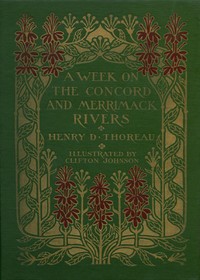
A Week on the Concord and Merrimack Rivers
Henry David Thoreau
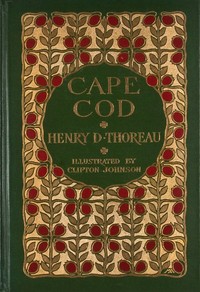
Cape Cod
Henry David Thoreau
The Service
Folio
The Service
Henry David Thoreau
Paradise (to be) Regained
Folio
Paradise (to be) Regained
Henry David Thoreau
A Plea for Captain John Brown
Folio
A Plea for Captain John Brown
Henry David Thoreau
Meditations
Folio
Meditations
Marcus Aurelius