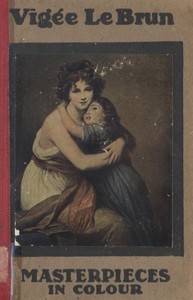
length
11,730 words
a few pages a day
~8 min
finished in
7 days
full read
49 min
At Folio's default of ten pages a day, you finish Vigée Le Brun in about 7 days — roughly 8 minutes of reading each morning.
The opening
the first pages of Vigée Le Brun, free
In Paris, in the Rue Coquillière, Louis the Fifteenth being King of France--or rather the Pompadour holding sway thereover--there lived a witty, amiable fellow who plied the art of painting portraits in oils and pastels after the mediocre fashion that is called "pleasing." This Louis Vigée and his wife, Jeanne Maissin, moved in the genial enthusiastic circle of the lesser artists, passing through their sober day without undue excitement; for fame and wealth and the prizes of life were not for them. Boucher was lord of art; and La Tour and Greuze and Chardin were at the height of their genius; but honest Louis Vigée could but plod on at his pleasing portraits, and sigh that the gods had not borne to him the immortal flame.
Yet he was to come near to the glory of it--nearer than he thought. 'Twas a pity that he was robbed of the splendour of basking in the reflected radiance, and by a fish's bone.
It was to have its beginning in that year after the indolent but obstinate king, having fallen foul of his Parliaments in his game of facing-both-ways in the bitter strife 'twixt Church and people, patched up a peace with the Parliament men.
=====================================================================
PLATE II.--MADAME VIGÉE LE BRUN AND CHILD
(In the Louvre)
In Vigée Le Brun's portrait of herself and her child we see in full career the Greek ideals that were come upon France--a France weary of light trifling with life, and of mere butterfly flitting from flower to flower.
[Illustration: Plate II.]
=====================================================================
Our worthy mediocre Vigée could remember the banished Parliament re-entering Paris in triumph on that fourth day of September in 1754 amidst the exultant shouts of the people; the clergy looking on with a scowl the while. On that same day was born to the Dauphin a son--the little fellow called the Duke de Berry--whom we shall soon see ascending the throne as the ill-starred Louis the Sixteenth, for the Dauphin was to be taken before the old king died.
Honest waggish Vigée, painting industriously at his pleasing portraits, would recall it well; since, early in the following year, there was that to happen under his own modest roof which was to bring fame to his name, though he should not live to bask in its full glow.
On the 10th of April 1755 there was born to him a little girl-child, whom they christened Elizabeth Louise Vigée, or as she herself wrote it across the title-page of her Souvenirs, Louise Elizabeth Vigée. Into her little fingers Destiny set the skill that had been denied to her father; the flame was given to her. And by the whimsy of things, there was also born in far-away Vienna, in this same year of 1755, in the palace of the Emperors of Austria, a little princess whom they christened Marie Antoinette; who was to marry the little seven-month old princeling that lay sucking his thumb in the Royal palace near by, and thereby to become future Queen of France.
Like François Boucher, the great painter to the king, Elizabeth Vigée came to the pretty business with the advantage of being an artist's child; like him, she received her first lessons at an early age from her father; and, like him, she moved from earliest childhood in an atmosphere of art and artists.
From her father she inherited a talent and taste for art, an amiable temper, a gift of wit; from her mother, a very handsome woman, she was dowered with a beauty for which she was as remarkable, and to which her many portraits of herself bear abundant witness. From very childhood she began to display the proofs of her inheritance--that happy disposition and that charm of manner that were to make her one of the most winsome personalities of her time. At the convent to which her parents sent her in her tenth year she fell to drawing on the margins of her books, filling them with little portrait-heads--an incessant habit that set her teachers grumbling at her lack of respect towards grammar and history. But to her delighted father the grumbles were matter for laughter; in him she found an ally who was hugely proud to discover in his girl an inheritor of his gifts. It is told of the fond father that the girl having taken to him one day a drawing, Vigée cried out exultantly: "You will be a painter, my girl, or there never was one!"
Keep going from exactly here — Folio remembers your place and serves the next portion tomorrow.
continue reading Vigée Le BrunAbout this free edition
Vigée Le Brun by Haldane Macfall (1860-1928) is free to read in full. Folio serves it in daily portions you can actually finish, tracks your streak and reading position across devices, and reads every page aloud with a built-in narrator. The text comes from Project Gutenberg.
More like Vigée Le Brun
Boucher
Haldane Macfall
Fragonard
Haldane Macfall

The Autobiography of Benjamin Franklin
Benjamin Franklin
Narrative of the Life of Frederick Douglass
Folio
Narrative of the Life of Frederick Douglass
Frederick Douglass
My Bondage and My Freedom
Folio
My Bondage and My Freedom
Frederick Douglass
The Story of My Life
Folio
The Story of My Life
Helen Keller

Up from Slavery
Booker T. Washington
Incidents in the Life of a Slave Girl
Folio
Incidents in the Life of a Slave Girl
Harriet Jacobs