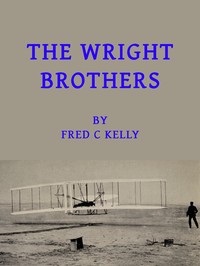
The Wright Brothers
first published 1943 · free to read
length
92,757 words
a few pages a day
~8 min
finished in
49 days
full read
6h 26m
At Folio's default of ten pages a day, you finish The Wright Brothers in about 49 days — roughly 8 minutes of reading each morning.
The opening
the first pages of The Wright Brothers, free
The aim in this book has been to satisfy the curiosity of the average, non-technical reader regarding the work of the Wright Brothers, and to do so as simply as possible. No attempt has been made to go into minute technical details. Nor does the book cover the scientific researches and numerous inventions by Orville Wright since the death of his brother.
To give credit to everyone who has been gracious with help in the preparation of what I have written would require so long a list, with risk of names being unintentionally omitted, that I shall not attempt it.
But one name naturally and obviously comes first and foremost--that of Orville Wright himself. He has read my manuscript and given generously of his time in verifying the accuracy of various statements and in correcting inaccuracies which otherwise would have appeared.
Next in importance to that of Orville Wright has been the help received from his secretary, Miss Mabel Beck, whose memory and knowledge of Mr. Wright’s voluminous files enabled her quickly to produce documentary evidence to make certain of accuracy.
FRED C. KELLY
Peninsula, Ohio
CONTENTS
Author’s Preface vii
Prologue 3
I. BOYHOOD 5
II. BACKGROUND 19
III. PRINTING--AND BICYCLES 29
IV. FIRST THOUGHTS OF FLIGHT 45
V. GLIDING AT KITTY HAWK 58
VI. FIRST POWER FLIGHT 84
VII. AFTER THE EVENT 112
VIII. EXPERIMENTS OF 1904-’05 120
IX. IT STILL WASN’T “NEWS” 139
X. U. S. ARMY NOT INTERESTED 147
XI. EUROPE DISCOVERS THE WRIGHTS 166
XII. THE WRIGHTS IN EUROPE 194
XIII. A DEAL WITH THE U. S. 207
XIV. END OF DISBELIEF 226
XV. WHEN WILBUR WRIGHT WON FRANCE 233
XVI. FURTHER ADVENTURES IN 1909 254
XVII. IN AVIATION BUSINESS 268
XVIII. PATENT SUITS 287
XIX. WHY THE WRIGHT PLANE WAS EXILED 300
Index 335
LIST OF ILLUSTRATIONS
THE FIRST CAMP AT KITTY HAWK 52
THE 1902 GLIDER 53
INSIDE THE 1902 CAMP 84
FROM ORVILLE WRIGHT’S DIARY 85
FIRST FLIGHT 116
THE FIRST POWER PLANE 117
THE HUFFMAN PASTURE 148
THE WRIGHT PATENT 149
THE U. S. ARMY TEST 180
AT FORT MYER 181
THE WRIGHT PLANE IN FRANCE 212
THE WRIGHTS AND WILBUR’S FRENCH PUPILS 213
THE OLD AND THE NEW IN TRANSPORTATION 244
DEMONSTRATION AT PAU 245
TWO ACES AND KING 276
THE WRIGHT HOME AND SHOP 277
THE WRIGHT BROTHERS
PROLOGUE
In a corner of the Pullman smoking compartment, by the window, the man who had been explaining the whole economic system mentioned inventors as an example of the fortunate relationship between desire for money and scientific progress.
“Take the Wright brothers,” he said. “Would they have worked all those years trying to fly just for their health?”
Another passenger ventured to ask: “Don’t people sometimes become curious about a problem and work to see what they can find out?”
The man by the window chuckled tolerantly as he replied: “Do you think those Wright brothers would have kept on pouring money into their experiments and risking their lives if they hadn’t hoped to get rich at it? No, sir! It was the chance to make a fortune that kept them going.” Most of the other passengers in the compartment nodded in agreement.
Not long afterward, one of those who had overheard that conversation was in Dayton, Ohio, and inquired of his friend Orville Wright: “Do you think the expectation of profit is the main incentive to inventors?”
Keep going from exactly here — Folio remembers your place and serves the next portion tomorrow.
continue reading The Wright BrothersAbout this free edition
The Wright Brothers by Fred C. Kelly (1882-1959) is free to read in full. Folio serves it in daily portions you can actually finish, tracks your streak and reading position across devices, and reads every page aloud with a built-in narrator. The text comes from Project Gutenberg.
More like The Wright Brothers

The Autobiography of Benjamin Franklin
Benjamin Franklin
Narrative of the Life of Frederick Douglass
Folio
Narrative of the Life of Frederick Douglass
Frederick Douglass
My Bondage and My Freedom
Folio
My Bondage and My Freedom
Frederick Douglass
The Story of My Life
Folio
The Story of My Life
Helen Keller

Up from Slavery
Booker T. Washington
Incidents in the Life of a Slave Girl
Folio
Incidents in the Life of a Slave Girl
Harriet Jacobs
Twelve Years a Slave
Solomon Northup
The Narrative of Sojourner Truth
Folio
The Narrative of Sojourner Truth
Sojourner Truth