The Wonderful Visit
Folio
The Wonderful Visit
first published 1895 · free to read
length
38,020 words
a few pages a day
~8 min
finished in
21 days
full read
2h 38m
At Folio's default of ten pages a day, you finish The Wonderful Visit in about 21 days — roughly 8 minutes of reading each morning.
The opening
the first pages of The Wonderful Visit, free
On the Night of the Strange Bird, many people at Sidderton (and some nearer) saw a Glare on the Sidderford moor. But no one in Sidderford saw it, for most of Sidderford was abed.
All day the wind had been rising, so that the larks on the moor chirruped fitfully near the ground, or rose only to be driven like leaves before the wind. The sun set in a bloody welter of clouds, and the moon was hidden. The glare, they say, was golden like a beam shining out of the sky, not a uniform blaze, but broken all over by curving flashes like the waving of swords. It lasted but a moment and left the night dark and obscure. There were letters about it in Nature, and a rough drawing that no one thought very like. (You may see it for yourself--the drawing that was unlike the glare--on page 42 of Vol. cclx. of that publication.)
None in Sidderford saw the light, but Annie, Hooker Durgan's wife, was lying awake, and she saw the reflection of it--a flickering tongue of gold--dancing on the wall.
She, too, was one of those who heard the sound. The others who heard the sound were Lumpy Durgan, the half-wit, and Amory's mother. They said it was a sound like children singing and a throbbing of harp strings, carried on a rush of notes like that which sometimes comes from an organ. It began and ended like the opening and shutting of a door, and before and after they heard nothing but the night wind howling over the moor and the noise of the caves under Sidderford cliff. Amory's mother said she wanted to cry when she heard it, but Lumpy was only sorry he could hear no more.
That is as much as anyone can tell you of the glare upon Sidderford Moor and the alleged music therewith. And whether these had any real connexion with the Strange Bird whose history follows, is more than I can say. But I set it down here for reasons that will be more apparent as the story proceeds.
THE COMING OF THE STRANGE BIRD.
II.
Sandy Bright was coming down the road from Spinner's carrying a side of bacon he had taken in exchange for a clock. He saw nothing of the light but he heard and saw the Strange Bird. He suddenly heard a flapping and a voice like a woman wailing, and being a nervous man and all alone, he was alarmed forthwith, and turning (all a-tremble) saw something large and black against the dim darkness of the cedars up the hill. It seemed to be coming right down upon him, and incontinently he dropped his bacon and set off running, only to fall headlong.
He tried in vain--such was his state of mind--to remember the beginning of the Lord's Prayer. The strange bird flapped over him, something larger than himself, with a vast spread of wings, and, as he thought, black. He screamed and gave himself up for lost. Then it went past him, sailing down the hill, and, soaring over the vicarage, vanished into the hazy valley towards Sidderford.
And Sandy Bright lay upon his stomach there, for ever so long, staring into the darkness after the strange bird. At last he got upon his knees and began to thank Heaven for his merciful deliverance, with his eyes downhill. He went on down into the village, talking aloud and confessing his sins as he went, lest the strange bird should come back. All who heard him thought him drunk. But from that night he was a changed man, and had done with drunkenness and defrauding the revenue by selling silver ornaments without a licence. And the side of bacon lay upon the hillside until the tallyman from Portburdock found it in the morning.
The next who saw the Strange Bird was a solicitor's clerk at Iping Hanger, who was climbing the hill before breakfast, to see the sunrise. Save for a few dissolving wisps of cloud the sky had been blown clear in the night. At first he thought it was an eagle he saw. It was near the zenith, and incredibly remote, a mere bright speck above the pink cirri, and it seemed as if it fluttered and beat itself against the sky, as an imprisoned swallow might do against a window pane. Then down it came into the shadow of the earth, sweeping in a great curve towards Portburdock and round over the Hanger, and so vanishing behind the woods of Siddermorton Park. It seemed larger than a man. Just before it was hidden, the light of the rising sun smote over the edge of the downs and touched its wings, and they flashed with the brightness of flames and the colour of precious stones, and so passed, leaving the witness agape.
Keep going from exactly here — Folio remembers your place and serves the next portion tomorrow.
continue reading The Wonderful VisitAbout this free edition
The Wonderful Visit by H. G. Wells (1866-1946) is free to read in full. Folio serves it in daily portions you can actually finish, tracks your streak and reading position across devices, and reads every page aloud with a built-in narrator. The text comes from Project Gutenberg.
More like The Wonderful Visit

The Wheels of Chance: A Bicycling Idyll
H. G. Wells
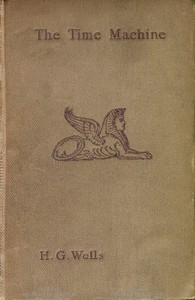
The Time Machine
H. G. Wells
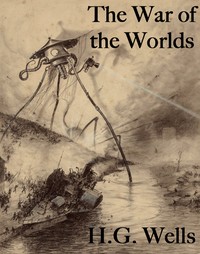
The War of the Worlds
H. G. Wells
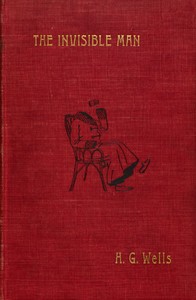
The Invisible Man
H. G. Wells
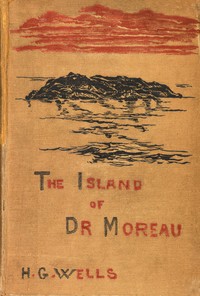
The Island of Doctor Moreau
H. G. Wells
The First Men in the Moon
H. G. Wells
The Sleeper Awakes
Folio
The Sleeper Awakes
H. G. Wells
The Food of the Gods and How It Came to Earth
Folio
The Food of the Gods and How It Came to Earth
H. G. Wells