
The Wheels of Chance: A Bicycling Idyll
free to read
length
55,350 words
a few pages a day
~8 min
finished in
30 days
full read
3h 51m
At Folio's default of ten pages a day, you finish The Wheels of Chance: A Bicycling Idyll in about 30 days — roughly 8 minutes of reading each morning.
The opening
the first pages of The Wheels of Chance: A Bicycling Idyll, free
If you (presuming you are of the sex that does such things)—if you had gone into the Drapery Emporium—which is really only magnificent for shop—of Messrs. Antrobus & Co.—a perfectly fictitious “Co.,” by the bye—of Putney, on the 14th of August, 1895, had turned to the right-hand side, where the blocks of white linen and piles of blankets rise up to the rail from which the pink and blue prints depend, you might have been served by the central figure of this story that is now beginning. He would have come forward, bowing and swaying, he would have extended two hands with largish knuckles and enormous cuffs over the counter, and he would have asked you, protruding a pointed chin and without the slightest anticipation of pleasure in his manner, what he might have the pleasure of showing you. Under certain circumstances—as, for instance, hats, baby linen, gloves, silks, lace, or curtains—he would simply have bowed politely, and with a drooping expression, and making a kind of circular sweep, invited you to “step this way,” and so led you beyond his ken; but under other and happier conditions,—huckaback, blankets, dimity, cretonne, linen, calico, are cases in point,—he would have requested you to take a seat, emphasising the hospitality by leaning over the counter and gripping a chair back in a spasmodic manner, and so proceeded to obtain, unfold, and exhibit his goods for your consideration. Under which happier circumstances you might—if of an observing turn of mind and not too much of a housewife to be inhuman—have given the central figure of this story less cursory attention.
Now if you had noticed anything about him, it would have been chiefly to notice how little he was noticeable. He wore the black morning coat, the black tie, and the speckled grey nether parts (descending into shadow and mystery below the counter) of his craft. He was of a pallid complexion, hair of a kind of dirty fairness, greyish eyes, and a skimpy, immature moustache under his peaked indeterminate nose. His features were all small, but none ill-shaped. A rosette of pins decorated the lappel of his coat. His remarks, you would observe, were entirely what people used to call cliché, formulae not organic to the occasion, but stereotyped ages ago and learnt years since by heart. “This, madam,” he would say, “is selling very well.” “We are doing a very good article at four three a yard.” “We could show you something better, of course.” “No trouble, madam, I assure you.” Such were the simple counters of his intercourse. So, I say, he would have presented himself to your superficial observation. He would have danced about behind the counter, have neatly refolded the goods he had shown you, have put on one side those you selected, extracted a little book with a carbon leaf and a tinfoil sheet from a fixture, made you out a little bill in that weak flourishing hand peculiar to drapers, and have bawled “Sayn!” Then a puffy little shop-walker would have come into view, looked at the bill for a second, very hard (showing you a parting down the middle of his head meanwhile), have scribbled a still more flourishing J. M. all over the document, have asked you if there was nothing more, have stood by you—supposing that you were paying cash—until the central figure of this story reappeared with the change. One glance more at him, and the puffy little shop-walker would have been bowing you out, with fountains of civilities at work all about you. And so the interview would have terminated.
But real literature, as distinguished from anecdote, does not concern itself with superficial appearances alone. Literature is revelation. Modern literature is indecorous revelation. It is the duty of the earnest author to tell you what you would not have seen—even at the cost of some blushes. And the thing that you would not have seen about this young man, and the thing of the greatest moment to this story, the thing that must be told if the book is to be written, was—let us face it bravely—the Remarkable Condition of this Young Man’s Legs.
Keep going from exactly here — Folio remembers your place and serves the next portion tomorrow.
continue reading The Wheels of Chance: A Bicycling IdyllAbout this free edition
The Wheels of Chance: A Bicycling Idyll by H. G. Wells (1866-1946) is free to read in full. Folio serves it in daily portions you can actually finish, tracks your streak and reading position across devices, and reads every page aloud with a built-in narrator. The text comes from Project Gutenberg.
More like The Wheels of Chance: A Bicycling Idyll
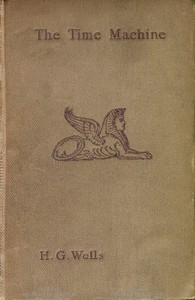
The Time Machine
H. G. Wells

The War of the Worlds
H. G. Wells
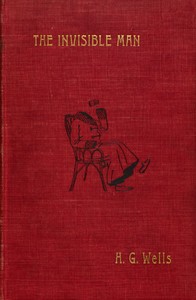
The Invisible Man
H. G. Wells
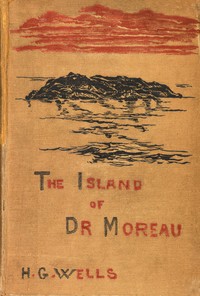
The Island of Doctor Moreau
H. G. Wells
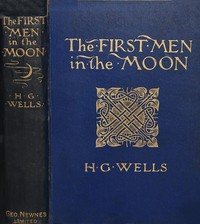
The First Men in the Moon
H. G. Wells
The Sleeper Awakes
Folio
The Sleeper Awakes
H. G. Wells
The Food of the Gods and How It Came to Earth
Folio
The Food of the Gods and How It Came to Earth
H. G. Wells
A Modern Utopia
Folio
A Modern Utopia
H. G. Wells