
The Outline of History
first published 1920 · free to read
length
463,507 words
a few pages a day
~8 min
finished in
244 days
full read
32h 11m
At Folio's default of ten pages a day, you finish The Outline of History in about 244 days — roughly 8 minutes of reading each morning.
The opening
the first pages of The Outline of History, free
“_A philosophy of the history of the human race, worthy of its name, must begin with the heavens and descend to the earth, must be charged with the conviction that all existence is one--a single conception sustained from beginning to end upon one identical law._”--FRIEDRICH RATZEL.
This Outline of History is an attempt to tell, truly and clearly, in one continuous narrative, the whole story of life and mankind so far as it is known to-day. It is written plainly for the general reader, but its aim goes beyond its use as merely interesting reading matter. There is a feeling abroad that the teaching of history considered as a part of general education is in an unsatisfactory condition, and particularly that the ordinary treatment of this “subject” by the class and teacher and examiner is too partial and narrow. But the desire to extend the general range of historical ideas is confronted by the argument that the available time for instruction is already consumed by that partial and narrow treatment, and that therefore, however desirable this extension of range may be, it is in practice impossible. If an Englishman, for example, has found the history of England quite enough for his powers of assimilation, then it seems hopeless to expect his sons and daughters to master universal history, if that is to consist of the history of England, plus the history of France, plus the history of Germany, plus the history of Russia, and so on. To which the only possible answer is that universal history is at once something more and something less than the aggregate of the national histories to which we are accustomed, that it must be approached in a different spirit and dealt with in a different manner. This book seeks to justify that answer. It has been written primarily to show that history as one whole is amenable to a more broad and comprehensive handling than is the history of special nations and periods, a broader handling that will bring it within the normal limitations of time and energy set to the reading and education of an ordinary citizen. This outline deals with ages and races and nations, where the ordinary history deals with reigns and pedigrees and campaigns; but it will not be found to be more crowded with names and dates, nor more difficult to follow and understand. History is no exception amongst the sciences; as the gaps fill in, the outline simplifies; as the outlook broadens, the clustering multitude of details dissolves into general laws. And many topics of quite primary interest to mankind, the first appearance and the growth of scientific knowledge for example, and its effects upon human life, the elaboration of the ideas of money and credit, or the story of the origins and spread and influence of Christianity, which must be treated fragmentarily or by elaborate digressions in any partial history, arise and flow completely and naturally in one general record of the world in which we live.
The need for a common knowledge of the general facts of human history throughout the world has become very evident during the tragic happenings of the last few years. Swifter means of communication have brought all men closer to one another for good or for evil. War becomes a universal disaster, blind and monstrously destructive; it bombs the baby in its cradle and sinks the food-ships that cater for the non-combatant and the neutral. There can be no peace now, we realize, but a common peace in all the world; no prosperity but a general prosperity. But there can be no common peace and prosperity without common historical ideas. Without such ideas to hold them together in harmonious co-operation, with nothing but narrow, selfish, and conflicting nationalist traditions, races and peoples are bound to drift towards conflict and destruction. This truth, which was apparent to that great philosopher Kant a century or more ago--it is the gist of his tract upon universal peace--is now plain to the man in the street. Our internal policies and our economic and social ideas are profoundly vitiated at present by wrong and fantastic ideas of the origin and historical relationship of social classes. A sense of history as the common adventure of all mankind is as necessary for peace within as it is for peace between the nations.
Keep going from exactly here — Folio remembers your place and serves the next portion tomorrow.
continue reading The Outline of HistoryAbout this free edition
The Outline of History by H. G. Wells (1866-1946) is free to read in full. Folio serves it in daily portions you can actually finish, tracks your streak and reading position across devices, and reads every page aloud with a built-in narrator. The text comes from Project Gutenberg.
More like The Outline of History

The Wheels of Chance: A Bicycling Idyll
H. G. Wells
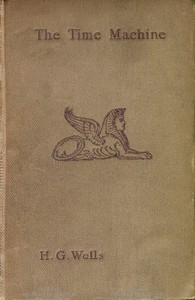
The Time Machine
H. G. Wells

The War of the Worlds
H. G. Wells
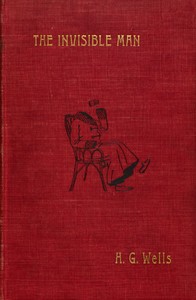
The Invisible Man
H. G. Wells
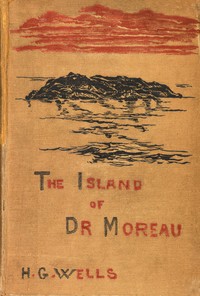
The Island of Doctor Moreau
H. G. Wells
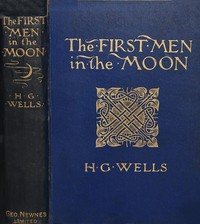
The First Men in the Moon
H. G. Wells
The Sleeper Awakes
Folio
The Sleeper Awakes
H. G. Wells
The Food of the Gods and How It Came to Earth
Folio
The Food of the Gods and How It Came to Earth
H. G. Wells