The Education of Henry Adams
Folio
The Education of Henry Adams
first published 1907 · free to read
length
175,796 words
a few pages a day
~8 min
finished in
93 days
full read
12h 12m
At Folio's default of ten pages a day, you finish The Education of Henry Adams in about 93 days — roughly 8 minutes of reading each morning.
The opening
the first pages of The Education of Henry Adams, free
THIS volume, written in 1905 as a sequel to the same author's "Mont Saint Michel and Chartres," was privately printed, to the number of one hundred copies, in 1906, and sent to the persons interested, for their assent, correction, or suggestion. The idea of the two books was thus explained at the end of Chapter XXIX: --
"Any schoolboy could see that man as a force must be measured by motion from a fixed point. Psychology helped here by suggesting a unit--the point of history when man held the highest idea of himself as a unit in a unified universe. Eight or ten years of study had led Adams to think he might use the century 1150-1250, expressed in Amiens Cathedral and the Works of Thomas Aquinas, as the unit from which he might measure motion down to his own time, without assuming anything as true or untrue, except relation. The movement might be studied at once in philosophy and mechanics. Setting himself to the task, he began a volume which he mentally knew as 'Mont-Saint-Michel and Chartres: a Study of Thirteenth-Century Unity.' From that point he proposed to fix a position for himself, which he could label: 'The Education of Henry Adams: a Study of Twentieth-Century Multiplicity.' With the help of these two points of relation, he hoped to project his lines forward and backward indefinitely, subject to correction from any one who should know better."
The "Chartres" was finished and privately printed in 1904. The "Education" proved to be more difficult. The point on which the author failed to please himself, and could get no light from readers or friends, was the usual one of literary form. Probably he saw it in advance, for he used to say, half in jest, that his great ambition was to complete St. Augustine's "Confessions," but that St. Augustine, like a great artist, had worked from multiplicity to unity, while he, like a small one, had to reverse the method and work back from unity to multiplicity. The scheme became unmanageable as he approached his end.
Probably he was, in fact, trying only to work into it his favorite theory of history, which now fills the last three or four chapters of the "Education," and he could not satisfy himself with his workmanship. At all events, he was still pondering over the problem in 1910, when he tried to deal with it in another way which might be more intelligible to students. He printed a small volume called "A Letter to American Teachers," which he sent to his associates in the American Historical Association, hoping to provoke some response. Before he could satisfy himself even on this minor point, a severe illness in the spring of 1912 put an end to his literary activity forever.
The matter soon passed beyond his control. In 1913 the Institute of Architects published the "Mont-Saint-Michel and Chartres." Already the "Education" had become almost as well known as the "Chartres," and was freely quoted by every book whose author requested it. The author could no longer withdraw either volume; he could no longer rewrite either, and he could not publish that which he thought unprepared and unfinished, although in his opinion the other was historically purposeless without its sequel. In the end, he preferred to leave the "Education" unpublished, avowedly incomplete, trusting that it might quietly fade from memory. According to his theory of history as explained in Chapters XXXIII and XXXIV, the teacher was at best helpless, and, in the immediate future, silence next to good-temper was the mark of sense. After midsummer, 1914, the rule was made absolute.
The Massachusetts Historical Society now publishes the "Education" as it was printed in 1907, with only such marginal corrections as the author made, and it does this, not in opposition to the author's judgment, but only to put both volumes equally within reach of students who have occasion to consult them.
Keep going from exactly here — Folio remembers your place and serves the next portion tomorrow.
continue reading The Education of Henry AdamsAbout this free edition
The Education of Henry Adams by Henry Adams (1838-1918) is free to read in full. Folio serves it in daily portions you can actually finish, tracks your streak and reading position across devices, and reads every page aloud with a built-in narrator. The text comes from Project Gutenberg.
More like The Education of Henry Adams
Mont-Saint-Michel and Chartres
Folio
Mont-Saint-Michel and Chartres
Henry Adams
The Autobiography of Benjamin Franklin
Benjamin Franklin
Narrative of the Life of Frederick Douglass
Folio
Narrative of the Life of Frederick Douglass
Frederick Douglass
My Bondage and My Freedom
Folio
My Bondage and My Freedom
Frederick Douglass
The Story of My Life
Folio
The Story of My Life
Helen Keller
Up from Slavery
Booker T. Washington
Incidents in the Life of a Slave Girl
Folio
Incidents in the Life of a Slave Girl
Harriet Jacobs
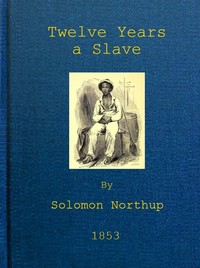
Twelve Years a Slave
Solomon Northup