The Cumberland Road
Folio
length
32,143 words
a few pages a day
~8 min
finished in
17 days
full read
2h 14m
At Folio's default of ten pages a day, you finish The Cumberland Road in about 17 days — roughly 8 minutes of reading each morning.
The opening
the first pages of The Cumberland Road, free
For material used in this volume the author is largely in the debt of the librarians of the State Libraries of Maryland, Pennsylvania, Ohio, Indiana, and Illinois. From the Honorable C. B. Galbreath, of the Ohio State Library, he has received much assistance covering an extended period. To the late Thomas B. Searight's valuable collection of biographical and colloquial sketches, The Old Pike, the author wishes to express his great indebtedness. As Mr. Searight gave special attention to the road in Pennsylvania, the present monograph deals at large with the story of the road west of the Ohio River, especially in the state of Ohio.
The Cumberland Road was best known in some parts as the "United States" or "National" Road. Its legal name has been selected as the most appropriate for the present monograph which is revised from a study of the subject The Old National Road formerly published by the Ohio State Archæological and Historical Society.
A. B. H.
MARIETTA, OHIO, May 15, 1903.
The Cumberland Road
_It is a monument of a past age; but like all other monuments, it is interesting as well as venerable. It carried thousands of population and millions of wealth into the West; and more than any other material structure in the land, served to harmonize and strengthen, if not to save, the Union._--VEECH.
CHAPTER I
OUR FIRST NATIONAL ROAD
_The middle ages had their wars and agonies, but also their intense delights. Their gold was dashed with blood, but ours is sprinkled with dust. Their life was intermingled with white and purple; ours is one seamless stuff of brown._--RUSKIN.
A person cannot live in the American Central West and be acquainted with the generation which greets the new century with feeble hand and dimmed eye, without realizing that there has been a time which, compared with today, seems as the Middle Ages did to the England for which Ruskin wrote--when "life was intermingled with white and purple."
This western boy, born to a feeble republic-mother, with exceeding suffering in those days which "tried men's souls," grew up as all boys grow up. For a long and doubtful period the young West grew slowly and changed appearance gradually. Then, suddenly, it started from its slumbering, and, in two decades, could hardly have been recognized as the infant which, in 1787, looked forward to a precarious and doubtful future. The boy has grown into the man in the century, but the changes of the last half century are not, perhaps, so marked as those of the first, when a wilderness was suddenly transformed into a number of imperial commonwealths.
When this West was in its teens and began suddenly outstripping itself, to the marvel of the world, one of the momentous factors in its progress was the building of a great national road, from the Potomac River to the Mississippi River, by the United States Government--a highway seven hundred miles in length, at a cost of seven millions of treasure. This ribbon of road, winding its way through Maryland, Pennsylvania, Ohio, Indiana, and Illinois, toward the Mississippi, was one of the most important steps in that movement of national expansion which followed the conquest of the West. It is probably impossible for us to realize fully what it meant to this West when that vanguard of surveyors came down the western slopes of the Alleghenies, hewing a thoroughfare which should, in one generation, bind distant and half-acquainted states together in bonds of common interest, sympathy, and ambition. Until that day, travelers spoke of "going into" and "coming out of" the West as though it were a Mammoth Cave. Such were the herculean difficulties of travel that it was commonly said, despite the dangers of life in the unconquered land, if pioneers could live to get into the West, nothing could, thereafter, daunt them. The growth and prosperity of the West was impossible, until the dawning of such convictions as those which made the Cumberland Road a reality.
Keep going from exactly here — Folio remembers your place and serves the next portion tomorrow.
continue reading The Cumberland RoadAbout this free edition
The Cumberland Road by Archer Butler Hulbert (1873-1933) is free to read in full. Folio serves it in daily portions you can actually finish, tracks your streak and reading position across devices, and reads every page aloud with a built-in narrator. The text comes from Project Gutenberg.
More like The Cumberland Road
The Paths of Inland Commerce
Archer Butler Hulbert
The Future of Road-making in America
Archer Butler Hulbert
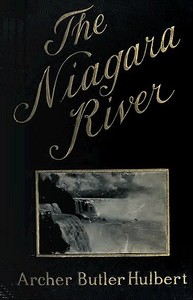
The Niagara River
Archer Butler Hulbert
Boone's Wilderness Road
Folio
Boone's Wilderness Road
Archer Butler Hulbert
The History of the Peloponnesian War
Folio
The History of the Peloponnesian War
Thucydides
The History of Herodotus
Folio
The History of Herodotus
Herodotus
The Gallic Wars
Folio
The Gallic Wars
Julius Caesar
Anabasis
Folio
Anabasis
Xenophon