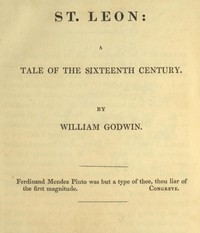
St. Leon: A Tale of the Sixteenth Century
first published 1799 · free to read
length
185,594 words
a few pages a day
~8 min
finished in
98 days
full read
12h 53m
At Folio's default of ten pages a day, you finish St. Leon: A Tale of the Sixteenth Century in about 98 days — roughly 8 minutes of reading each morning.
The opening
the first pages of St. Leon: A Tale of the Sixteenth Century, free
The Publishers of the Collection of “STANDARD NOVELS” are extremely desirous that I should furnish them with a few lines, by way of introduction to the appearance of ST. LEON in its present form. I am however at a loss how to oblige them. In the original Preface I frankly stated the sources upon which I had drawn for the idea and conduct of the work. I have therefore no remarks to offer, but these which follow:--
In 1794 I produced the novel of Caleb Williams. I believed myself fortunate in the selection I had made of the ground-plot of that work. An atrocious crime committed by a man previously of the most exemplary habits, the annoyance he suffers from the immeasurable and ever-wakeful curiosity of a raw youth who is placed about his person, the state of doubt in which the reader might for a time be as to the truth of the charges, and the consequences growing out of these causes, seemed to me to afford scope for a narrative of no common interest. I was not disappointed. Caleb Williams was honoured with the public favour.
The consequence was that I was solicited to try my hand again in a work of fiction. I hesitated long. I despaired of finding again a topic so rich of interest and passion. In those days it was deemed a most daring thought to attempt to write a novel, with the hope that it might hereafter rank among the classics of a language. The most successful English writers in that province of literature had scarcely gone beyond three. It had not then been conceived that the same author might produce twenty or thirty, at the rate of two or three per annum, and might still at least retain his hold upon the partiality of his contemporaries. To Sir Walter Scott we are indebted for this discovery.
At length, after having passed some years in a state of diffidence and irresolution, I ventured on the task. It struck me that if I could “mix human feelings and passions with incredible situations,” I might thus attain a sort of novelty that would conciliate the patience, at least, even of some of the severest judges. To this way of thinking ST. LEON was indebted for a “local habitation, and a name.”
One of my most valued friends [Mr. Northcote] has often told me, that the public may sometimes be interested in the perusal of a book, but that they never give themselves any trouble about the author. He therefore kindly advised me on no occasion to say any thing in print about myself. The present race of readers seem scarcely disposed to verify this maxim. They are understood to be desirous to learn something of the peculiarities, the “life, character, and behaviour,” of an author, before they consign him to the gulph of oblivion, and are willing to learn from his own testimony what train of thoughts induced him to adopt the particular subject and plan of the work, upon the perusal of which they are engaged.
June, 1831.
PREFACE.
The following passage from a work, said to be written by the late Dr. John Campbel, and entitled Hermippus Redivivus, suggested the first hint of the present performance:--
“There happened in the year 1687, an odd accident at Venice, that made a very great stir then, and which I think deserves to be rescued from oblivion. The great freedom and ease with which all persons, who make a good appearance, live in that city, is known sufficiently to all who are acquainted with it; such will not therefore be surprised, that a stranger, who went by the name of signor Gualdi, and who made a considerable figure there, was admitted into the best company, though nobody knew who or what he was. He remained at Venice for some months; and three things were remarked in his conduct. The first was, that he had a small collection of fine pictures, which he readily showed to any body that desired it; the next, that he was perfectly versed in all arts and sciences, and spoke on every subject with such readiness and sagacity, as astonished all who heard him; and it was, in the third place, observed, that he never wrote or received any letter, never desired any credit, or made use of bills of exchange, but paid for every thing in ready money and lived decently, though not in splendour.
Keep going from exactly here — Folio remembers your place and serves the next portion tomorrow.
continue reading St. Leon: A Tale of the Sixteenth CenturyAbout this free edition
St. Leon: A Tale of the Sixteenth Century by William Godwin (1756-1836) is free to read in full. Folio serves it in daily portions you can actually finish, tracks your streak and reading position across devices, and reads every page aloud with a built-in narrator. The text comes from Project Gutenberg.
More like St. Leon: A Tale of the Sixteenth Century
Caleb Williams; Or, Things as They Are
Folio
Caleb Williams; Or, Things as They Are
William Godwin
Damon and Delia: A Tale
Folio
Damon and Delia: A Tale
William Godwin
Imogen: A Pastoral Romance
Folio
Imogen: A Pastoral Romance
William Godwin
Thoughts on Man, His Nature, Productions and Discoveries
Folio
Thoughts on Man, His Nature, Productions and Discoveries
William Godwin
Four Early Pamphlets
Folio
Four Early Pamphlets
William Godwin
Lives of the Necromancers
Folio
Lives of the Necromancers
William Godwin
Dracula
Bram Stoker
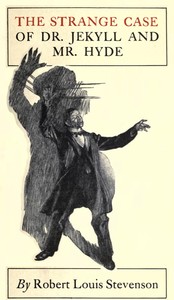
The Strange Case of Dr. Jekyll and Mr. Hyde
Robert Louis Stevenson