Napoleon's Letters to Josephine, 1796-1812
Folio
Napoleon's Letters to Josephine, 1796-1812
by Emperor of the French Napoleon I (1769-1821)
free to read
length
94,663 words
a few pages a day
~8 min
finished in
50 days
full read
6h 34m
At Folio's default of ten pages a day, you finish Napoleon's Letters to Josephine, 1796-1812 in about 50 days — roughly 8 minutes of reading each morning.
The opening
the first pages of Napoleon's Letters to Josephine, 1796-1812, free
I have no apology to offer for the subject of this book, in view of Lord Rosebery's testimony that, until recently, we knew nothing about Napoleon, and even now "prefer to drink at any other source than the original."
"Study of Napoleon's utterances, apart from any attempt to discover the secret of his prodigious exploits, cannot be considered as lost time." It is then absolutely necessary that we should, in the words of an eminent but unsympathetic divine, know something of the "domestic side of the monster," first hand from his own correspondence, confirmed or corrected by contemporaries. There is no master mind that we can less afford to be ignorant of. To know more of the doings of Pericles and Aspasia, of the two Cæsars and the Serpent of old Nile, of Mary Stuart and Rizzio, of the Green Faction and the Blue, of Orsini and Colonna, than of the Bonapartes and Beauharnais, is worthy of a student of folklore rather than of history.
Napoleon was not only a King of Kings, he was a King of Words and of Facts, which "are the sons of heaven, while words are the daughters of earth," and whose progeny, the Genii of the Code, still dominates Christendom.[1] In the hurly-burly of the French War, on the chilling morrow of its balance-sheet, in the Janus alliance of the Second Empire, we could not get rid of the nightmare of the Great Shadow. Most modern works on the Napoleonic period (Lord Rosebery's "Last Phase" being a brilliant exception) seem to be (1) too long, (2) too little confined to contemporary sources. The first fault, especially if merely discursive enthusiasm, is excusable, the latter pernicious, for, as Dr. Johnson says of Robertson, "You are sure he does not know the people whom he paints, so you cannot suppose a likeness. Characters should never be given by a historian unless he knew the people whom he describes, or copies from those who knew him."
Now, if ever, we must fix and crystallise the life-work of Napoleon for posterity, for "when an opinion has once become popular, very few are willing to oppose it. Idleness is more willing to credit than inquire ... and he that writes merely for sale is tempted to court purchasers by flattering the prejudices of the public."[2] We have accumulated practically all the evidence, and are not yet so remote from the aspirations and springs of action of a century ago as to be out of touch with them. The Vaccination and Education questions are still before us; so is the cure of croup and the composition of electricity. We have special reasons for sympathy with the first failures of Fulton, and can appreciate Napoleon's primitive but effective expedients for modern telegraphy and transport, which were as far in advance of his era as his nephew's ignorance of railway warfare in 1870 was behind it. We must admire The Man[3] who found within the fields of France the command of the Tropics, and who needed nothing but time to prosper Corsican cotton and Solingen steel. The man's words and deeds are still vigorous and alive; in another generation many of them will be dead as Marley--"dead as a door-nail." Let us then each to his task, and each try, as best he may, to weigh in honest scales the modern Hannibal--"our last great man,"[4] "the mightiest genius of two thousand years."[5]
H. F. HALL.
FOOTNOTES
[1] See infra, Napoleon's Heritage, p. xxiv., Introduction.
[2] Dr. Johnson (Gentleman's Magazine, 1760), in defence of Mary Stuart.
[3] L'Homme, so spoken of during the Empire, outside military circles.
[4] Carlyle.
[5] Napier.
INTRODUCTION
Difficulties of translation--Napoleon as lexicographer and bookworm--Historic value of his Bulletins--A few aspects of Napoleon's character--"Approfondissez!"--The need of a Creator--The influence of sea power--England's future rival---Napoleon as average adjuster--His use of Freemasonry--Of the Catholics and of the Jews--His neglect of women in politics--Josephine a failure--His incessant work, "which knew no rest save change of occupation"--His attachment to early friendships--The Bonaparte family--His influence on literary men--Conversations with Wieland and Müller--Verdict of a British tar--The character of Josephine--Sources of the Letters--The Tennant Collection--The Didot Collection--Archibald Constable and Sir Walter Scott--Correspondence of Napoleon I.--Report of the Commission--Contemporary sources--The Diary--Napoleon's heritage.
Keep going from exactly here — Folio remembers your place and serves the next portion tomorrow.
continue reading Napoleon's Letters to Josephine, 1796-1812About this free edition
Napoleon's Letters to Josephine, 1796-1812 by Emperor of the French Napoleon I (1769-1821) is free to read in full. Folio serves it in daily portions you can actually finish, tracks your streak and reading position across devices, and reads every page aloud with a built-in narrator. The text comes from Project Gutenberg.
More like Napoleon's Letters to Josephine, 1796-1812

The Autobiography of Benjamin Franklin
Benjamin Franklin
Narrative of the Life of Frederick Douglass
Folio
Narrative of the Life of Frederick Douglass
Frederick Douglass
My Bondage and My Freedom
Folio
My Bondage and My Freedom
Frederick Douglass
The Story of My Life
Folio
The Story of My Life
Helen Keller
Up from Slavery
Booker T. Washington
Incidents in the Life of a Slave Girl
Folio
Incidents in the Life of a Slave Girl
Harriet Jacobs
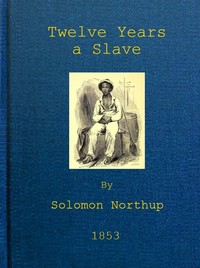
Twelve Years a Slave
Solomon Northup
The Narrative of Sojourner Truth
Folio
The Narrative of Sojourner Truth
Sojourner Truth