Memoir and Letters of Francis W. Newman
Folio
Memoir and Letters of Francis W. Newman
free to read
length
119,480 words
a few pages a day
~8 min
finished in
63 days
full read
8h 18m
At Folio's default of ten pages a day, you finish Memoir and Letters of Francis W. Newman in about 63 days — roughly 8 minutes of reading each morning.
The opening
the first pages of Memoir and Letters of Francis W. Newman, free
Rightly understood, the two points of view, as regards Religion, of the brothers, Cardinal Newman and Francis Newman, which most separated them, would, together, have approached the realization of a great conception.
For the Cardinal, Authority was the sine quâ non without which there could be no real faith. Authority was the pilot, without whose steering he could not feel secure in his personal ship. But with Authority at the helm, his fears dispersed, his doubts removed.
"I was not ever thus..... I loved to choose and see my path, but now Lead Thou me on!"
Over Francis Newman, dogma and the authority of the Church had no sway. He dimly discerned a religion which should move forward with men's advance in knowledge. He imagined an unformalized inward revelation which should reveal new truths to those who passionately desired Truth above all things. And when all is said, the union of Authority given in the past, with the very real mental development which makes for spiritual progress in the present, is not antagonistic to a wise, strong breadth of view in the conception of a perfect Church.
But in both points of view, carried to extremes, there are grave perils to the man who thinks. And I find it impossible to avoid saying here that Francis Newman did not realize this risk when he refused to "ask for the old paths," and determined to "see and choose his path" alone and unaided. We know what the endeavour to found a new church in Syria ended in. We know how, later, he wrote, held back by no reverence for revealed religion, no reverence for other men's belief in it. Many of his writings therefore are painful reading. Though from very early boyhood he had been really a keen seeker after true religion, an earnest student of the Holy Scriptures, and a deep thinker, yet, very soon after he had reached young manhood, it began to be realized by all who knew him that he was very evidently breaking away from all definite dogmatic faith. He was bent, so to speak, on inventing a new religion for himself.
Gradually every year made the spiritual breach wider between him and those who held the Christian Faith. Soon he did not hesitate to say out, in very unguarded language, what he really thought of doctrines which he knew were precious to them. Sometimes to-day, indeed, in reading his books, one comes across some statement in letter, article, or lecture flung out almost venomously; and one steps back mentally as if a spiritual hiss had whipped the air from some inimical sentence which had suddenly lifted its heretical head from amongst an otherwise quiet group of words.
At the end of life it is said that he showed signs of some return to the early faith of his boyhood. That he said, just before his death, to Rev. Temperley Grey, who was visiting him in his last illness, "I feel Paul is less and less to me; and Christ is more and more."
And those who knew that side of him which was splendid in its untiring effort for the betterment of mankind--for the righting of wrongs to women, and others unable to achieve it for themselves--cannot but hope that the faith of earlier days was his once more, before he passed into the silence that lies--as far as we are concerned in this world--at the back of Death.
I remember being told once, that of Stanley it was said by someone who knew him well, that she had always felt that "he believed more than he knew he did."
And when one thinks how Francis Newman looked up in faith--even though it was an absolutely undogmatic, formless faith--to a God who watched over mankind, one may hope that he too "believed more than he knew he did."
Keep going from exactly here — Folio remembers your place and serves the next portion tomorrow.
continue reading Memoir and Letters of Francis W. NewmanAbout this free edition
Memoir and Letters of Francis W. Newman by I. Giberne Sieveking is free to read in full. Folio serves it in daily portions you can actually finish, tracks your streak and reading position across devices, and reads every page aloud with a built-in narrator. The text comes from Project Gutenberg.
More like Memoir and Letters of Francis W. Newman
The Autobiography of Benjamin Franklin
Benjamin Franklin
Narrative of the Life of Frederick Douglass
Folio
Narrative of the Life of Frederick Douglass
Frederick Douglass
My Bondage and My Freedom
Folio
My Bondage and My Freedom
Frederick Douglass
The Story of My Life
Folio
The Story of My Life
Helen Keller
Up from Slavery
Booker T. Washington
Incidents in the Life of a Slave Girl
Folio
Incidents in the Life of a Slave Girl
Harriet Jacobs
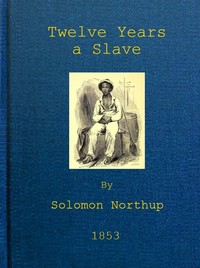
Twelve Years a Slave
Solomon Northup
The Narrative of Sojourner Truth
Folio
The Narrative of Sojourner Truth
Sojourner Truth