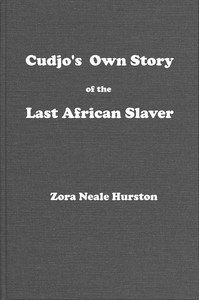
length
5,732 words
a few pages a day
~8 min
finished in
4 days
full read
24 min
At Folio's default of ten pages a day, you finish Cudjo's own story of the last African slaver in about 4 days — roughly 8 minutes of reading each morning.
The opening
the first pages of Cudjo's own story of the last African slaver, free
About four miles above Mobile, at the mouth of the Chickasabogue Creek (now called Three Mile Creek), on red clay bluffs, on the Old Telegraph Road, but now reached by the new Bay Bridge Road and Craft Highway, is African Town. The site was once and still is to a large extent the possession of the Meaher Brothers, Tim, Lim and Burns; these men had a mill and shipyard at the mouth of the creek and built vessels for blockade running, river trade and filibustering expeditions.
The three Meaher brothers were natives of Maine. They had associated with them in business one Captain Foster, born of English parentage in Nova Scotia. He was the actual owner of the Clotilde. She was selected because of her fleetness to make the voyage for a cargo of slaves.
Once on the African Coast, there was little trouble in procuring a cargo of slaves; for it had long been a part of the trader’s policy to instigate the tribes against each other and in this manner keep the markets stocked. News of the trade was often published in the papers. An excerpt from The Mobile Register of Nov. 9, 1858, said: “From the West Coast of Africa we have advice dated Sept. 21st. The quarreling of the tribes on Sierra Leone River rendered the aspect of things very unsatisfactory. The King of Dahomey was driving a brisk trade in slaves at from fifty to sixty dollars apiece at Whydah. Immense numbers of Negroes were collected along the Coast for export.” Foster, with a crew of Northern men, sailed directly for Whydah.
The slaves who made up the cargo of the Clotilde were captured by Dahomey’s warriors and women warriors (perhaps Amazons), Cudjo, or more accurately, Kujjo Lewis says in this manner. In the early part of the nineteenth century one of the Dahomey kings organized a battalion of women warriors.
For a long time the King of Dahomey and his tribe had been raiding the weaker and more peaceful tribes that lay within striking distance of his empire. They lived by war and slavery. The King of Dahomey’s house was built of skulls. They made war upon Togo.
Togo was “many days from the water.” About fourteen, Cudjo estimated.[2] The people of the Togo were a peaceful, agricultural people, raising hogs, goats, sheep, chickens, and a few cows. They planted corn, beans and yams. Plenty of bananas and pineapples grow wild. The most important natural resource was the palm tree. They produced palm oil, their greatest industry. They made cord for all purposes by twisting strips of palm leaves. They made cloth from the fibre, and beer from the nuts. The men and women tilled the fields alike and held property in common. There was no hunger, no poverty.
Their methods of farming are interesting. A plot of ground is tilled by the tenant for seven years. By that time the fertility is about exhausted and they choose another plot. The yams are produced from the eye of the seed as we do our white potatoes. The vines grow very long, so they are poled like string beans. The earth is hilled up about the shoot and the weeds kept away until it gets a start. “Then,” says Cudjo, “we go way, we come back, push, dig de dirt--great beeg yam like keg, nail keg. We cut off vine with little piece of yam and cover it up again. Another beeg yam. Whole family couldn’t eat at one time. For seven years don’t need no new seed, it keep making yams.”
A sort of melon grows on tall plants and is eaten with salt as one does cantaloupe, but it grows very much larger. It is without doubt the melon tree found everywhere in the tropics, probably of the papaya family. Beer is also made from bananas and is used as commonly as the “vin rouge” of France.
Foods are roasted and boiled. The roasting and boiling is done over and among the coals, but the boiling is done over the fire in clay pots. There is a definite fire place--built in. Three clay pillars or pot-rests about eighteen inches high are molded of clay and allowed to dry. The fire is built among these posts and the pot rested on them.
Keep going from exactly here — Folio remembers your place and serves the next portion tomorrow.
continue reading Cudjo's own story of the last African slaverAbout this free edition
Cudjo's own story of the last African slaver by Zora Neale Hurston (1891-1960) is free to read in full. Folio serves it in daily portions you can actually finish, tracks your streak and reading position across devices, and reads every page aloud with a built-in narrator. The text comes from Project Gutenberg.
More like Cudjo's own story of the last African slaver

The Autobiography of Benjamin Franklin
Benjamin Franklin
Narrative of the Life of Frederick Douglass
Folio
Narrative of the Life of Frederick Douglass
Frederick Douglass
My Bondage and My Freedom
Folio
My Bondage and My Freedom
Frederick Douglass
The Story of My Life
Folio
The Story of My Life
Helen Keller

Up from Slavery
Booker T. Washington
Incidents in the Life of a Slave Girl
Folio
Incidents in the Life of a Slave Girl
Harriet Jacobs
Twelve Years a Slave
Solomon Northup
The Narrative of Sojourner Truth
Folio
The Narrative of Sojourner Truth
Sojourner Truth