length
56,522 words
a few pages a day
~8 min
finished in
30 days
full read
3h 56m
At Folio's default of ten pages a day, you finish Addison in about 30 days — roughly 8 minutes of reading each morning.
The opening
the first pages of Addison, free
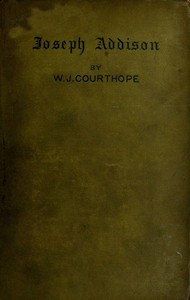
Of the four English men of letters whose writings most fully embody the spirit of the eighteenth century, the one who provides the biographer with the scantiest materials is Addison. In his Journal to Stella, his social verses, and his letters to his friends, we have a vivid picture of those relations with women and that protracted suffering which invest with such tragic interest the history of Swift. Pope, by the publication of his own correspondence, has enabled us, in a way that he never intended, to understand the strange moral twist which distorted a nature by no means devoid of noble instincts. Johnson was fortunate in the companionship of perhaps the best biographer who ever lived. But of the real life and character of Addison scarcely any contemporary record remains. The formal narrative prefixed to his works by Tickell is, by that writer's own admission, little more than a bibliography. Steele, who might have told us more than any man about his boyhood and his manner of life in London, had become estranged from his old friend before his death. No writer has taken the trouble to preserve any account of the wit and wisdom that enlivened the "little senate" at Button's. His own letters are, as a rule, compositions as finished as his papers in the Spectator. Those features in his character which excite the greatest interest have been delineated by the hand of an enemy--an enemy who possessed an unrivalled power of satirical portrait-painting, and was restrained by no regard for truth from creating in the public mind such impressions about others as might serve to heighten the favourable opinion of himself.
This absence of dramatic incident in Addison's life would lead us naturally to conclude that he was deficient in the energy and passion which cause a powerful nature to leave a mark upon its age. Yet such a judgment would certainly be erroneous. Shy and reserved as he was, the unanimous verdict of his most illustrious contemporaries is decisive as to the respect and admiration which he excited among them. The man who could exert so potent an influence over the mercurial Steele, who could fascinate the haughty and cynical intellect of Swift, whose conversation, by the admission of his satirist Pope, had in it something more charming than that of any other man; of whom it was said that he might have been chosen king if he wished it; such a man, though to the coarse perception of Mandeville he might have seemed no more than "a parson in a tye-wig," can hardly have been deficient in force of character.
Nor would it have been possible for a writer distinguished by mere elegance and refinement to leave a lasting impress on the literature and society of his country. In one generation after another, men representing opposing elements of rank, class, interest, and taste, have agreed in acknowledging Addison's extraordinary merits. "Whoever wishes," says Johnson--at the end of a biography strongly coloured with the prepossessions of a semi-Jacobite Tory--"whoever wishes to attain an English style, familiar but not coarse, and elegant but not ostentatious, must give his days and nights to the volumes of Addison." "Such a mark of national respect," says Macaulay, the best representative of middle-class opinion in the present century, speaking of the statue erected to Addison in Westminster Abbey, "was due to the unsullied statesman, to the accomplished scholar, to the master of pure English eloquence, to the consummate painter of life and manners. It was due, above all, to the great satirist who alone knew how to use ridicule without abusing it; who, without inflicting a wound, effected a great social reform, and who reconciled wit and virtue after a long and disastrous separation, during which wit had been led astray by profligacy, and virtue by fanaticism."
Keep going from exactly here — Folio remembers your place and serves the next portion tomorrow.
continue reading AddisonAbout this free edition
Addison by William John Courthope (1842-1917) is free to read in full. Folio serves it in daily portions you can actually finish, tracks your streak and reading position across devices, and reads every page aloud with a built-in narrator. The text comes from Project Gutenberg.
More like Addison
The Autobiography of Benjamin Franklin
Benjamin Franklin
Narrative of the Life of Frederick Douglass
Folio
Narrative of the Life of Frederick Douglass
Frederick Douglass
My Bondage and My Freedom
Folio
My Bondage and My Freedom
Frederick Douglass
The Story of My Life
Folio
The Story of My Life
Helen Keller
Up from Slavery
Booker T. Washington
Incidents in the Life of a Slave Girl
Folio
Incidents in the Life of a Slave Girl
Harriet Jacobs
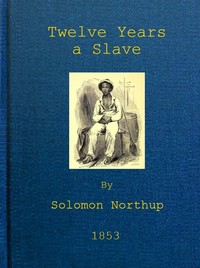
Twelve Years a Slave
Solomon Northup
The Narrative of Sojourner Truth
Folio
The Narrative of Sojourner Truth
Sojourner Truth