A Poor Man's House
Folio
length
77,372 words
a few pages a day
~8 min
finished in
41 days
full read
5h 22m
At Folio's default of ten pages a day, you finish A Poor Man's House in about 41 days — roughly 8 minutes of reading each morning.
The opening
the first pages of A Poor Man's House, free
"We understand the artificial better than the natural. More soul, but less talent, is contained in the simple than in the complex."--NOVALIS.
London: John Lane The Bodley Head New York: John Lane Compy. MCMIX All rights reserved
Turnbull and Spears, Printers, Edinburgh
TO BOB AND TO EDWARD GARNETT
A few chapters, chosen from the completed work, have appeared in the Albany Review, the Daily News and Country Life. To the editors of those periodicals the author's acknowledgments are due.
PREFACE
The substance of "A Poor Man's House" was first recorded in a journal, kept for purposes of fiction, and in letters to one of the friends to whom the book is dedicated. Fiction, however, showed itself an inappropriate medium. I was unwilling to cut about the material, to modify the characters, in order to meet the exigencies of plot, form, and so on. I felt that the life and the people were so much better than anything I could invent. Besides which, I found myself in possession of conclusions, hot for expression, which could not be incorporated at all into fiction. "A Poor Man's House" consists then of the journal and letters, subjected to such slight re-arrangement as should enable me to draw the truest picture I could within the limits of one volume.
Primarily the book aims at presenting a picture of a typical poor man's house and life. Incidentally, certain conclusions are expressed which--needless to say--are very tentative and are founded not alone on this poor man's house. Of the book as a picture, it is not the author's place to speak. But its opinions, and the manner of arriving at them, do require some explanation; the right to hold such opinions some substantiation.
Educated people usually deal with the poor man's life deductively; they reason from the general to the particular; and, starting with a theory, religious, philanthropic, political, or what not, they seek, and too easily find, among the millions of poor, specimens--very frequently abnormal--to illustrate their theories. With anything but human beings, that is an excellent method. Human beings, unfortunately, have individualities. They do what, theoretically, they ought not to do, and leave undone those things they ought to do. They are even said to possess souls--untrustworthy things beyond the reach of sociologists. The inductive method--reasoning from the particular to the general--though it lead to a fine crop of errors, should at least help to counterbalance the psychological superficiality of the deductive method; to counterbalance, for example, the nonsense of those well-meaning persons who go routing about among the poor in search of evil, and suppose that they can chain it up with little laws. Chained dogs bite worst.
For myself, I can only claim--I only want to claim--that I have lived among poor people without preconceived notions or parti pris; neither as parson, philanthropist, politician, inspector, sociologist nor statistician; but simply because I found there a home and more beauty of life and more happiness than I had met with elsewhere. So far as is possible to a man of middle-class breeding, I have lived their life, have shared their interests, and have found among them some of my closest and wisest friends. Perhaps I may reasonably anticipate one type of criticism by adding that I have felt something of the pinch and hardship of the life, as well as enjoyed its picturesqueness. Since the book was first written, it has fallen to me, on an occasion of illness, to take over for some days all the housekeeping and cooking; and I have worked on the boats sometimes fifteen hours a day, not as an amateur, but for hard and--what is more to the point--badly-needed coin. It took the gilt off the gingerbread, but it didn't spoil the gingerbread!
Keep going from exactly here — Folio remembers your place and serves the next portion tomorrow.
continue reading A Poor Man's HouseAbout this free edition
A Poor Man's House by Stephen Sydney Reynolds (1881-1919) is free to read in full. Folio serves it in daily portions you can actually finish, tracks your streak and reading position across devices, and reads every page aloud with a built-in narrator. The text comes from Project Gutenberg.
More like A Poor Man's House

The Autobiography of Benjamin Franklin
Benjamin Franklin
Narrative of the Life of Frederick Douglass
Folio
Narrative of the Life of Frederick Douglass
Frederick Douglass
My Bondage and My Freedom
Folio
My Bondage and My Freedom
Frederick Douglass
The Story of My Life
Folio
The Story of My Life
Helen Keller
Up from Slavery
Booker T. Washington
Incidents in the Life of a Slave Girl
Folio
Incidents in the Life of a Slave Girl
Harriet Jacobs
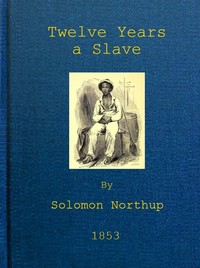
Twelve Years a Slave
Solomon Northup
The Narrative of Sojourner Truth
Folio
The Narrative of Sojourner Truth
Sojourner Truth