What's Wrong with the World
Folio
length
59,812 words
a few pages a day
~8 min
finished in
32 days
full read
4h 9m
At Folio's default of ten pages a day, you finish What's Wrong with the World in about 32 days — roughly 8 minutes of reading each morning.
The opening
the first pages of What's Wrong with the World, free
I originally called this book “What is Wrong,” and it would have satisfied your sardonic temper to note the number of social misunderstandings that arose from the use of the title. Many a mild lady visitor opened her eyes when I remarked casually, “I have been doing ‘What is Wrong’ all this morning.” And one minister of religion moved quite sharply in his chair when I told him (as he understood it) that I had to run upstairs and do what was wrong, but should be down again in a minute. Exactly of what occult vice they silently accused me I cannot conjecture, but I know of what I accuse myself; and that is, of having written a very shapeless and inadequate book, and one quite unworthy to be dedicated to you. As far as literature goes, this book is what is wrong and no mistake.
It may seem a refinement of insolence to present so wild a composition to one who has recorded two or three of the really impressive visions of the moving millions of England. You are the only man alive who can make the map of England crawl with life; a most creepy and enviable accomplishment. Why then should I trouble you with a book which, even if it achieves its object (which is monstrously unlikely) can only be a thundering gallop of theory?
Well, I do it partly because I think you politicians are none the worse for a few inconvenient ideals; but more because you will recognise the many arguments we have had, those arguments which the most wonderful ladies in the world can never endure for very long. And, perhaps, you will agree with me that the thread of comradeship and conversation must be protected because it is so frivolous. It must be held sacred, it must not be snapped, because it is not worth tying together again. It is exactly because argument is idle that men (I mean males) must take it seriously; for when (we feel), until the crack of doom, shall we have so delightful a difference again? But most of all I offer it to you because there exists not only comradeship, but a very different thing, called friendship; an agreement under all the arguments and a thread which, please God, will never break.
Yours always,
G. K. Chesterton.
PART ONE. THE HOMELESSNESS OF MAN
I. THE MEDICAL MISTAKE
A book of modern social inquiry has a shape that is somewhat sharply defined. It begins as a rule with an analysis, with statistics, tables of population, decrease of crime among Congregationalists, growth of hysteria among policemen, and similar ascertained facts; it ends with a chapter that is generally called “The Remedy.” It is almost wholly due to this careful, solid, and scientific method that “The Remedy” is never found. For this scheme of medical question and answer is a blunder; the first great blunder of sociology. It is always called stating the disease before we find the cure. But it is the whole definition and dignity of man that in social matters we must actually find the cure before we find the disease.
The fallacy is one of the fifty fallacies that come from the modern madness for biological or bodily metaphors. It is convenient to speak of the Social Organism, just as it is convenient to speak of the British Lion. But Britain is no more an organism than Britain is a lion. The moment we begin to give a nation the unity and simplicity of an animal, we begin to think wildly. Because every man is a biped, fifty men are not a centipede. This has produced, for instance, the gaping absurdity of perpetually talking about “young nations” and “dying nations,” as if a nation had a fixed and physical span of life. Thus people will say that Spain has entered a final senility; they might as well say that Spain is losing all her teeth. Or people will say that Canada should soon produce a literature; which is like saying that Canada must soon grow a new moustache. Nations consist of people; the first generation may be decrepit, or the ten thousandth may be vigorous. Similar applications of the fallacy are made by those who see in the increasing size of national possessions, a simple increase in wisdom and stature, and in favor with God and man. These people, indeed, even fall short in subtlety of the parallel of a human body. They do not even ask whether an empire is growing taller in its youth, or only growing fatter in its old age. But of all the instances of error arising from this physical fancy, the worst is that we have before us: the habit of exhaustively describing a social sickness, and then propounding a social drug.
Keep going from exactly here — Folio remembers your place and serves the next portion tomorrow.
continue reading What's Wrong with the WorldAbout this free edition
What's Wrong with the World by G. K. Chesterton (1874-1936) is free to read in full. Folio serves it in daily portions you can actually finish, tracks your streak and reading position across devices, and reads every page aloud with a built-in narrator. The text comes from Project Gutenberg.
More like What's Wrong with the World
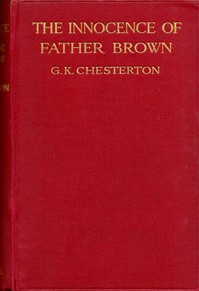
The Innocence of Father Brown
G. K. Chesterton
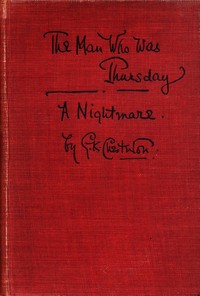
The Man Who Was Thursday
G. K. Chesterton
The Wisdom of Father Brown
Folio
The Wisdom of Father Brown
G. K. Chesterton
The Club of Queer Trades
Folio
The Club of Queer Trades
G. K. Chesterton
The Man Who Knew Too Much
Folio
The Man Who Knew Too Much
G. K. Chesterton
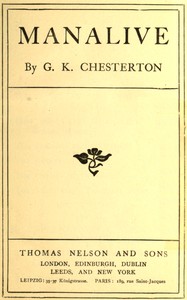
Manalive
G. K. Chesterton
The Trees of Pride
Folio
The Trees of Pride
G. K. Chesterton

The secret of Father Brown
G. K. Chesterton