What Not: A Prophetic Comedy
Folio
What Not: A Prophetic Comedy
first published 1918 · free to read
length
56,377 words
a few pages a day
~8 min
finished in
30 days
full read
3h 55m
At Folio's default of ten pages a day, you finish What Not: A Prophetic Comedy in about 30 days — roughly 8 minutes of reading each morning.
The opening
the first pages of What Not: A Prophetic Comedy, free
"It has come to a fine thing if people cannot live in their homes without being interfered with by the police.... You are upsetting the country altogether with your Food Orders and What Not."
DEFENDANT IN A FOOD-HOARDING CASE, January, 1918.
NOTE.
As this book was written during the war, and intended prophetically, its delay until some months after the armistice calls for a word of explanation.
The book was ready for publication in November, 1918, when it was discovered that a slight alteration in the text was essential, to safeguard it against one of the laws of the realm. As the edition was already bound, this alteration has naturally taken a considerable time.
However, as the date of the happenings described in "What Not" is unspecified, it may still be regarded as a prophecy, not yet disproved.
R. M.
March, 1919
APOLOGY
One cannot write for evermore of life in war-time, even if, as at times seems possible, the war outlasts the youngest of us. Nor can one easily write of life as it was before this thing came upon us, for that is a queer, half-remembered thing, to make one cry. This is a tale of life after the war, in which alone there is hope. So it is, no doubt, inaccurate, too sanguine in part, too pessimistic in part, too foolish and too far removed from life as it will be lived even for a novel. It is a shot in the dark, a bow drawn at a venture. But it is the best one can do in the unfortunate circumstances, which make against all kinds of truth, even that inferior kind which is called accuracy. Truth, indeed, seems to be one of the things, along with lives, wealth, joy, leisure, liberty, and forest trees, which has to be sacrificed on the altar of this all-taking war, this bitter, unsparing god, which may perhaps before the end strip us of everything we possess except the integrity of our so fortunately situated island, our indomitable persistence in the teeth of odds, and the unstemmed eloquence of our leaders, all of which we shall surely retain.
This book is, anyhow, so far as it is anything beyond an attempt to amuse the writer, rather of the nature of suggestion than of prophecy, and many will think it a poor suggestion at that. The suggestion is of a possible remedy for what appears to have always been the chief human ailment, and what will, probably, after these present troubles, be even more pronounced than before. For wars do not conduce to intelligence. They put a sudden end to many of the best intellects, the keenest, finest minds, which would have built up the shattered ruins of the world in due time. And many of the minds that are left are battered and stupefied; the avenues of thought are closed, and people are too tired, too old, or too dulled by violence, to build up anything at all. And besides these dulled and damaged minds, there are the great mass of the minds which neither catastrophe nor emotion nor violence nor age nor any other creature can blunt, because they have never been acute, have never had an edge, can cut no ice nor hew any new roads.
So, unless something drastic is done about it, it seems like a poor look-out.
This book contains the suggestion of a means of cure for this world-old ill, and is offered, free, to a probably inattentive and unresponsive Government, a close and interested study of whom has led the writer to believe that the erection of yet another Department might not be wholly uncongenial.
It will be observed that the general state of the world and of society in this so near and yet so unknown future has been but lightly touched upon. It is unexplored territory, too difficult for the present writer, and must be left to the forecastings of the better informed.
A word as to the title of this work, which may seem vague, or even foolish. Its source I have given. Food Orders we all know; What Not was not defined by the user of the phrase, except by the remark that it upset the country. The businesses described in this tale fulfil that definition; and, if they be not What Not, I do not know what is.
April, 1918.
CONTENTS
I. THE MINISTRY
II. LITTLE CHANTREYS
III. BRAINS SUNDAY
IV. OUR WEEK
V. THE EXPLANATION CAMPAIGN
VI. THE SIMPLE HUMAN EMOTIONS
VII. THE BREAKING POINT
VIII. ON FIXED HEARTS AND CHANGING SCENES
IX. THE COMMON HERD
X. A MINISTRY AT BAY
Keep going from exactly here — Folio remembers your place and serves the next portion tomorrow.
continue reading What Not: A Prophetic ComedyAbout this free edition
What Not: A Prophetic Comedy by Rose Macaulay (1881-1958) is free to read in full. Folio serves it in daily portions you can actually finish, tracks your streak and reading position across devices, and reads every page aloud with a built-in narrator. The text comes from Project Gutenberg.
More like What Not: A Prophetic Comedy
Mystery at Geneva
Folio
Mystery at Geneva
Rose Macaulay
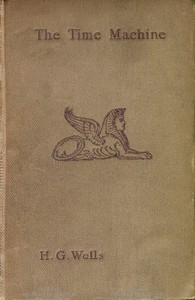
The Time Machine
H. G. Wells
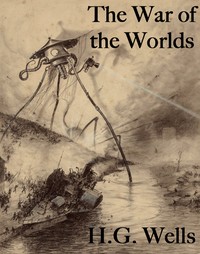
The War of the Worlds
H. G. Wells
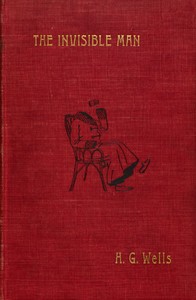
The Invisible Man
H. G. Wells
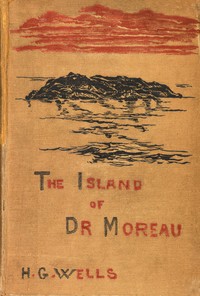
The Island of Doctor Moreau
H. G. Wells
The First Men in the Moon
H. G. Wells
The Sleeper Awakes
Folio
The Sleeper Awakes
H. G. Wells
The Food of the Gods and How It Came to Earth
Folio
The Food of the Gods and How It Came to Earth
H. G. Wells