What Is Man? and Other Essays
Folio
What Is Man? and Other Essays
first published 1906 · free to read
length
94,026 words
a few pages a day
~8 min
finished in
50 days
full read
6h 32m
At Folio's default of ten pages a day, you finish What Is Man? and Other Essays in about 50 days — roughly 8 minutes of reading each morning.
The opening
the first pages of What Is Man? and Other Essays, free
Y.M. Because its performance is not personal. It is the result of the law of construction. It is not a merit that it does the things which it is set to do—it can’t help doing them.
O.M. And it is not a personal demerit in the stone machine that it does so little?
Y.M. Certainly not. It does no more and no less than the law of its make permits and compels it to do. There is nothing personal about it; it cannot choose. In this process of “working up to the matter” is it your idea to work up to the proposition that man and a machine are about the same thing, and that there is no personal merit in the performance of either?
O.M. Yes—but do not be offended; I am meaning no offense. What makes the grand difference between the stone engine and the steel one? Shall we call it training, education? Shall we call the stone engine a savage and the steel one a civilized man? The original rock contained the stuff of which the steel one was built—but along with a lot of sulphur and stone and other obstructing inborn heredities, brought down from the old geologic ages—prejudices, let us call them. Prejudices which nothing within the rock itself had either power to remove or any desire to remove. Will you take note of that phrase?
Y.M. Yes. I have written it down; “Prejudices which nothing within the rock itself had either power to remove or any desire to remove.” Go on.
O.M. Prejudices must be removed by outside influences or not at all. Put that down.
Y.M. Very well; “Must be removed by outside influences or not at all.” Go on.
O.M. The iron’s prejudice against ridding itself of the cumbering rock. To make it more exact, the iron’s absolute indifference as to whether the rock be removed or not. Then comes the outside influence and grinds the rock to powder and sets the ore free. The iron in the ore is still captive. An outside influence smelts it free of the clogging ore. The iron is emancipated iron, now, but indifferent to further progress. An outside influence beguiles it into the Bessemer furnace and refines it into steel of the first quality. It is educated, now—its training is complete. And it has reached its limit. By no possible process can it be educated into gold. Will you set that down?
Y.M. Yes. “Everything has its limit—iron ore cannot be educated into gold.”
O.M. There are gold men, and tin men, and copper men, and leaden men, and steel men, and so on—and each has the limitations of his nature, his heredities, his training, and his environment. You can build engines out of each of these metals, and they will all perform, but you must not require the weak ones to do equal work with the strong ones. In each case, to get the best results, you must free the metal from its obstructing prejudicial ones by education—smelting, refining, and so forth.
Y.M. You have arrived at man, now?
O.M. Yes. Man the machine—man the impersonal engine. Whatsoever a man is, is due to his make, and to the influences brought to bear upon it by his heredities, his habitat, his associations. He is moved, directed, commanded, by exterior influences—solely. He originates nothing, not even a thought.
Y.M. Oh, come! Where did I get my opinion that this which you are talking is all foolishness?
O.M. It is a quite natural opinion—indeed an inevitable opinion—but you did not create the materials out of which it is formed. They are odds and ends of thoughts, impressions, feelings, gathered unconsciously from a thousand books, a thousand conversations, and from streams of thought and feeling which have flowed down into your heart and brain out of the hearts and brains of centuries of ancestors. Personally you did not create even the smallest microscopic fragment of the materials out of which your opinion is made; and personally you cannot claim even the slender merit of putting the borrowed materials together. That was done automatically—by your mental machinery, in strict accordance with the law of that machinery’s construction. And you not only did not make that machinery yourself, but you have not even any command over it.
Keep going from exactly here — Folio remembers your place and serves the next portion tomorrow.
continue reading What Is Man? and Other EssaysAbout this free edition
What Is Man? and Other Essays by Mark Twain (1835-1910) is free to read in full. Folio serves it in daily portions you can actually finish, tracks your streak and reading position across devices, and reads every page aloud with a built-in narrator. The text comes from Project Gutenberg.
More like What Is Man? and Other Essays
Tom Sawyer, Detective
Folio
Tom Sawyer, Detective
Mark Twain
A Double Barrelled Detective Story
Folio
A Double Barrelled Detective Story
Mark Twain
The Stolen White Elephant
Folio
The Stolen White Elephant
Mark Twain
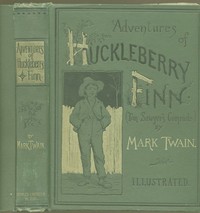
Adventures of Huckleberry Finn
Mark Twain
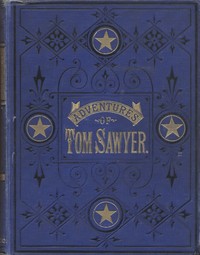
The Adventures of Tom Sawyer
Mark Twain
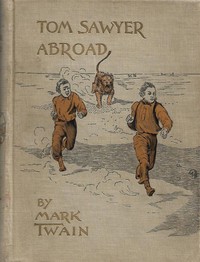
Tom Sawyer Abroad
Mark Twain
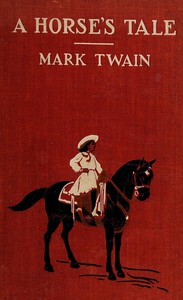
A Horse's Tale
Mark Twain
A Connecticut Yankee in King Arthur's Court
Mark Twain