length
64,109 words
a few pages a day
~8 min
finished in
34 days
full read
4h 27m
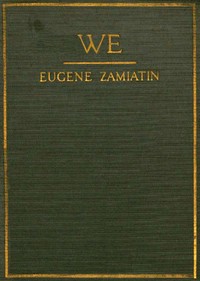
At Folio's default of ten pages a day, you finish We in about 34 days — roughly 8 minutes of reading each morning.
The opening
the first pages of We, free
The artistic and psychological sides of the novel are hardly to be discussed in a preface. Great as the art of a writer may be and profound as his psychology may seem to one, the impression is largely a matter of individual variations, and this side must naturally be left to each individual's judgment and sensibilities.
There is, however, one side of the matter which deserves particular mention and motivated emphasis.
It is perhaps for the first time in the history of the last few decades that a Russian book, inspired by Russian life, written in Russia and in the Russian language, should see its first light not in Russia but abroad, and not in the language it was originally written but translated into a foreign tongue. During the darkest years of Russian history, in the 'forties, 'sixties, 'eighties and 'nineties of the last century, many Russian writers were forced by oppression and reaction to live abroad and to write abroad, yet their writings would reach Russia, as they were intended primarily for the Russian reader and Russian life. Most of Turgeniev's novels were written while he was in France, and with the exception of his last short story which he dictated on his deathbed, all his novels and stories were written in Russian. Hertzen, Kropotkin, and at one time Dostoyevski, were similarly obliged to write while away from their native land.
Here is a book written by an artist who lived and still lives in Russia, and whose intimate love for Russia and her suffering is so great that he finds it impossible to leave Russia even in these days of stress and sorrow. But his book may not appear in the country where it was written. It is a great tragedy--this spiritual loneliness of the artist who cannot speak to his own people. In bringing out this book in English, the author tries to address himself to the world without having the opportunity of being heard by his own people. This situation, however, is to a great extent symbolic of the spiritual mission of Zamiatin, for no matter what the language in which he originally writes, and no matter how typically national his artistic perception and intuition, he is essentially universal and his vision transcends the boundaries of a purely national art. Moreover, is it not true that the more genuinely national a man's art, and the more sincerely national his personality, the more is he universal? Abraham Lincoln is more than an American national figure, and I doubt if the appeal Lincoln's personality makes would be universal as it is if he were not so typically American. It is difficult to find personalities more national than Tolstoi or Dostoyevski, and this is perhaps the reason why they stand out as two of the most typically universal minds with a universal appeal that the nineteenth century gave us.
Zamiatin is not so great as the men referred to above, but despite his youth, he already proves to be the bearer of that quality of greatness which characterizes a personality with a universal appeal.
Keep going from exactly here — Folio remembers your place and serves the next portion tomorrow.
continue reading WeAbout this free edition
We by Evgenii Ivanovich Zamiatin (1884-1937) is free to read in full. Folio serves it in daily portions you can actually finish, tracks your streak and reading position across devices, and reads every page aloud with a built-in narrator. The text comes from Project Gutenberg.
More like We
The Time Machine
H. G. Wells
The War of the Worlds
H. G. Wells
The Invisible Man
H. G. Wells
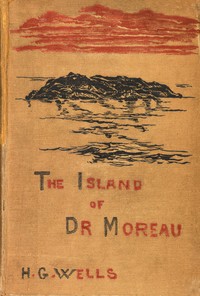
The Island of Doctor Moreau
H. G. Wells
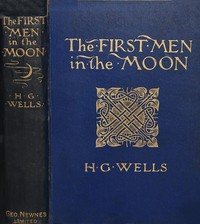
The First Men in the Moon
H. G. Wells
The Sleeper Awakes
Folio
The Sleeper Awakes
H. G. Wells
The Food of the Gods and How It Came to Earth
Folio
The Food of the Gods and How It Came to Earth
H. G. Wells

Frankenstein
Mary Shelley