
Trent's Last Case
first published 1913 · free to read
length
74,422 words
a few pages a day
~8 min
finished in
40 days
full read
5h 10m
At Folio's default of ten pages a day, you finish Trent's Last Case in about 40 days — roughly 8 minutes of reading each morning.
The opening
the first pages of Trent's Last Case, free
I dedicate this story to you. First: because the only really noble motive I had in writing it was the hope that you would enjoy it. Second: because I owe you a book in return for “The Man Who Was Thursday.” Third: because I said I would when I unfolded the plan of it to you, surrounded by Frenchmen, two years ago. Fourth: because I remember the past.
I have been thinking again to-day of those astonishing times when neither of us ever looked at a newspaper; when we were purely happy in the boundless consumption of paper, pencils, tea, and our elders’ patience; when we embraced the most severe literature, and ourselves produced such light reading as was necessary; when (in the words of Canada’s poet) we studied the works of nature, also those little frogs; when, in short, we were extremely young. For the sake of that age I offer you this book.
Yours always, E. C. BENTLEY
Contents
I. Bad News II. Knocking the Town Endways III. Breakfast IV. Handcuffs in the Air V. Poking About VI. Mr. Bunner on the Case VII. The Lady in Black VIII. The Inquest IX. A Hot Scent X. The Wife of Dives XI. Hitherto Unpublished XII. Evil Days XIII. Eruption XIV. Writing a Letter XV. Double Cunning XVI. The Last Straw
[Illustration]
Chapter I. Bad News
Between what matters and what seems to matter, how should the world we know judge wisely?
When the scheming, indomitable brain of Sigsbee Manderson was scattered by a shot from an unknown hand, that world lost nothing worth a single tear; it gained something memorable in a harsh reminder of the vanity of such wealth as this dead man had piled up—without making one loyal friend to mourn him, without doing an act that could help his memory to the least honour. But when the news of his end came, it seemed to those living in the great vortices of business as if the earth too shuddered under a blow.
In all the lurid commercial history of his country there had been no figure that had so imposed itself upon the mind of the trading world. He had a niche apart in its temples. Financial giants, strong to direct and augment the forces of capital, and taking an approved toll in millions for their labour, had existed before; but in the case of Manderson there had been this singularity, that a pale halo of piratical romance, a thing especially dear to the hearts of his countrymen, had remained incongruously about his head through the years when he stood in every eye as the unquestioned guardian of stability, the stamper-out of manipulated crises, the foe of the raiding chieftains that infest the borders of Wall Street.
The fortune left by his grandfather, who had been one of those chieftains on the smaller scale of his day, had descended to him with accretion through his father, who during a long life had quietly continued to lend money and never had margined a stock. Manderson, who had at no time known what it was to be without large sums to his hand, should have been altogether of that newer American plutocracy which is steadied by the tradition and habit of great wealth. But it was not so. While his nurture and education had taught him European ideas of a rich man’s proper external circumstance; while they had rooted in him an instinct for quiet magnificence, the larger costliness which does not shriek of itself with a thousand tongues; there had been handed on to him nevertheless much of the Forty-Niner and financial buccaneer, his forbear. During that first period of his business career which had been called his early bad manner, he had been little more than a gambler of genius, his hand against every man’s—an infant prodigy—who brought to the enthralling pursuit of speculation a brain better endowed than any opposed to it. At St Helena it was laid down that war is une belle occupation; and so the young Manderson had found the multitudinous and complicated dog-fight of the Stock Exchange of New York.
Keep going from exactly here — Folio remembers your place and serves the next portion tomorrow.
continue reading Trent's Last CaseAbout this free edition
Trent's Last Case by E. C. Bentley (1875-1956) is free to read in full. Folio serves it in daily portions you can actually finish, tracks your streak and reading position across devices, and reads every page aloud with a built-in narrator. The text comes from Project Gutenberg.
More like Trent's Last Case
The Woman in Black
Folio
The Woman in Black
E. C. Bentley
The Adventures of Sherlock Holmes
Arthur Conan Doyle
The Hound of the Baskervilles
Arthur Conan Doyle
A Study in Scarlet
Folio
A Study in Scarlet
Arthur Conan Doyle
The Sign of the Four
Arthur Conan Doyle
The Memoirs of Sherlock Holmes
Arthur Conan Doyle
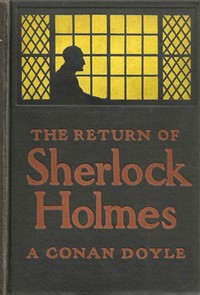
The Return of Sherlock Holmes
Arthur Conan Doyle
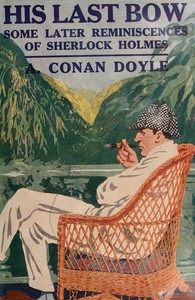
His Last Bow
Arthur Conan Doyle