length
36,578 words
a few pages a day
~8 min
finished in
20 days
full read
2h 32m
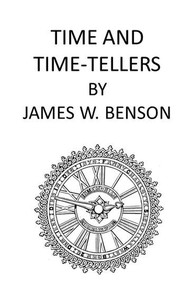
At Folio's default of ten pages a day, you finish Time and Time-Tellers in about 20 days — roughly 8 minutes of reading each morning.
The opening
the first pages of Time and Time-Tellers, free
Time cannot be thoroughly defined, nor even properly comprehended by mankind, for our personal acquaintance with it is so brief that our longest term is compared to a span, and to 'the grass which in the morning is green and groweth up, and in the evening is cut down and withered.' The ordinary thinker can scarcely carry his idea of Time beyond that small portion of it which he has known, under the name of life-time. The metaphysician classes Time with those other mysteries,--Space, Matter, Motion, Force, Consciousness, which are the Gordian knots of Mental Science. Time is naturally divided into three most unequal parts,--whereof the Past includes all that has happened until now from that far-distant period when 'Heaven and Earth rose out of chaos;' the Present is but a moment, expended in a breath, to be again like that breath momentarily renewed; the Future is, as the Past,--'a wide unbounded prospect,' an 'undiscovered country,' into which Prophecy itself penetrates but partially, and even then bears back to us but small information; for its language catches the character of a grander clime, and the denizens of this lower earth are incapable of understanding its gorgeous metaphors; the brightness is as blinding as the darkness. We may attempt to pierce the Future by the light which History throws from the Past, but History's record is imperfect; her chronicles are of the rudest and most unreliable character; her most valued memorials serve but to make Past 'darkness visible,' her most ancient registers reach back but a short distance compared with those testimonies which geologists have discovered, and given us veritable 'sermons in stones' about. The Past is, indeed, scarcely less of a mystery than the Future; even the Present we only know in part, but we do know that the brief term during which man 'flits across the stage' of time ere he goes hence and is no more seen, is of inestimable value. Most of us soon make the discovery that the world has much to teach which there is little time to learn and still less time to apply to good purpose. Ars longa, vita brevis est, is the general expression of human experience. For every man there are duties and labours for which time is all too short; just as he begins to understand and to perform his work wisely and successfully, the 'spirit of the destinies,' as Mr Carlyle would say, 'calls him away;' but whither he goeth is as great a mystery as whence he cometh. This, however, we do know, no wise man ever disregarded Time, inasmuch as of this treasure there is no laying in a fresh store when life's supply has been exhausted; the wasters, the 'killers' of Time, like the foolish virgins who neglected their lamps, are met invariably with the 'Not so,'--as the door of opportunity is shut in their faces. Like the dial with the inscription 'Nulla vestigia retrorsum' each man's steps are taken never to be retraced, the act once done can no more be recalled than the shadow on the dial can go backward. What wonder then that the most thoughtful of men are particularly careful of their time, regulating their use of it with the utmost precision and weighing it out as scrupulously as a miser would his gold? What wonder that they should sigh and grieve over a wasted day, and with bitter self-reproach should say to themselves as Titus did, 'Perdidi diem,'--I have lost a day? What wonder is it that such should teach themselves to wrestle with Time, even as Jacob wrestled with the angel, for a blessing; and to regard those reckless ones, in whose butterfly existence are counted only the 'shining hours,'--as the bee might be supposed to regard the idle gnats which frolic in the sunbeams heedless both of to-day and of to-morrow.
The poets are our best interpreters of Time, and they seem never tired of referring to it and symbolising it by every possible figure, emblem, and trope.[1] Celerity of motion and brevity of duration are discovered to be its chief characteristics. Time is therefore depicted as flying,--fast, noiselessly, and uninterruptedly. It is a river, speeding on with imperceptible but resistless pace to the ocean of eternity. It is a stern vigorous old man--Time is already old--rushing by us with never-slackening strides, bearing blessings for each and all, but we must be upon the alert to strive with him for his gifts--'to seize Time by the forelock'--or he will forget to bestow them.
We too often charge upon Time the evil which is the result of our own lack of energy, and thus it happens that although in kindly moments our poets seem to delight in exalting and glorifying him for all manner of enjoyments, at others they can find no word too coarse or uncivil to apply to him. 'Time,' says Shakespeare, 'is a very bankrupt,' adding,
'Nay, he's a thief too; have you not heard men say That time comes stealing on by night and day?'
+----------------------------------------------------------------------+ | FOOTNOTE: | | | | [1] Poebus Apollo in Ovid's Metamorphoses claims that he is Time's | | special exponent:-- | | | | ----'Per me, quod eritque, fuitque, | | Estque, patet; per me concordant carmina nervis.' | +----------------------------------------------------------------------+
Keep going from exactly here — Folio remembers your place and serves the next portion tomorrow.
continue reading Time and Time-TellersAbout this free edition
Time and Time-Tellers by James W. Benson (active 1857-1887) is free to read in full. Folio serves it in daily portions you can actually finish, tracks your streak and reading position across devices, and reads every page aloud with a built-in narrator. The text comes from Project Gutenberg.
More like Time and Time-Tellers
Meditations
Folio
Meditations
Marcus Aurelius
The Enchiridion
Epictetus

Thus Spake Zarathustra
Friedrich Nietzsche
Beyond Good and Evil
Folio
Beyond Good and Evil
Friedrich Nietzsche
The Genealogy of Morals
Folio
The Genealogy of Morals
Friedrich Nietzsche
The Republic
Folio
The Republic
Plato
Apology
Folio
Apology
Plato
Crito
Folio
Crito
Plato