
length
64,365 words
a few pages a day
~8 min
finished in
34 days
full read
4h 28m
At Folio's default of ten pages a day, you finish The Second Fiddle in about 34 days — roughly 8 minutes of reading each morning.
The opening
the first pages of The Second Fiddle, free
On the whole, Stella preferred the Cottage Dairy Company to the People's Restaurant. It was a shade more expensive, but if you ate less and liked it more, that was your own affair. You were waited on with more arrogance and less speed, but you made up for that artistically by an evasion of visible grossness.
Stella had never gone very much further than a ham sandwich in either place. You knew where you were with a ham sandwich, and you could disguise it with mustard.
On this occasion she took a cup of tea and made her meal an amalgamation. She hoped to leave work early, and she would have no time for tea. She was going to hear Chaliapine.
All London--all the London, that is, which thinks of itself as London--was raving about Chaliapine; but Stella in general neither knew nor cared for the ravings of London. They reached her as vaguely as the sound of breaking surf reaches the denizens of the deeper seas.
It was her sister Eurydice who had brought Chaliapine home to her. She had said quite plainly, with that intensity which distinguished both her utterances and her actions, that if she didn't hear Chaliapine she would die. He was like an ache in her bones.
Eurydice had never discovered that you cannot always do what you want or have what you very ardently wish to have. She believed that disappointment was a coincidence or a lack of fervency, and she set herself before each obstacle to her will like the prophets of Baal before their deaf god. She cut herself with knives till the blood ran.
Stella hovered anxiously by her side, stanching, whenever she was able, the flowing of Eurydice's blood. On this occasion she had only to provide seven shillings and to make, what cost her considerably more, a request to Mr. Leslie Travers to let her off at five.
Mr. Leslie Travers had eyed her with the surprise of a man who runs a perfect machine and feels it pause beneath his fingers. He could not remember that Stella Waring had ever made such a request before.
Her hours were from nine to five daily, but automatically, with the pressure of her work and the increase of her usefulness, they had stretched to six or seven.
Mr. Leslie Travers had never intended to have a woman secretary, but during the illness of a competent clerk he had been obliged to take a stop-gap. Miss Waring had appeared on a busy morning with excellent testimonials and a quiet manner. He told her a little shortly that he did not want a woman in his office. Her fine, humorous eyebrows moved upward, and her speculative gray eyes rested curiously upon his irritable brown ones.
"But I am a worker," she said gently. "If I can do your work, it is my own business whether I am a man or a woman. You shall not notice it."
Mr. Travers felt confused for a moment and as if he had been impertinent. In the course of a strenuous and successful life he had never felt impertinent; he believed it to be a quality found only in underlings. He stared, cleared his throat, read her testimonials, and temporarily engaged her. That was two years ago.
Miss Waring had kept her promise; she was a worker and not a woman. She took pleasure in keeping her wits about her, and Mr. Travers used them as if they were his own. Sometimes he thought they were.
She had many agreeable points besides her wits, but they were the only point she gave to Mr. Travers to notice. She deliberately suppressed her charm. She reduced his work by one half; he never had to say, "You ought to have asked me this," or, "You needn't have brought me that." Her initiative matched her judgment.
It did not occur to Mr. Travers to praise her for this most unusual quality, but he paid her the finest tribute of an efficient worker: he gave her more to do. He woke up to that fact when she tentatively asked him if he could make it convenient for her to leave at five.
Keep going from exactly here — Folio remembers your place and serves the next portion tomorrow.
continue reading The Second FiddleAbout this free edition
The Second Fiddle by Phyllis Bottome (1882-1963) is free to read in full. Folio serves it in daily portions you can actually finish, tracks your streak and reading position across devices, and reads every page aloud with a built-in narrator. The text comes from Project Gutenberg.
More like The Second Fiddle
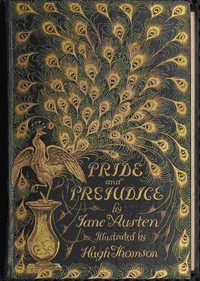
Pride and Prejudice
Jane Austen
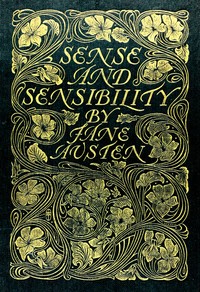
Sense and Sensibility
Jane Austen
Emma
Folio
Emma
Jane Austen
Persuasion
Folio
Persuasion
Jane Austen
Mansfield Park
Folio
Mansfield Park
Jane Austen
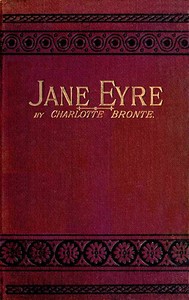
Jane Eyre
Charlotte Brontë
The Tenant of Wildfell Hall
Folio
The Tenant of Wildfell Hall
Anne Brontë
Agnes Grey
Folio
Agnes Grey
Anne Brontë