length
78,356 words
a few pages a day
~8 min
finished in
42 days
full read
5h 26m
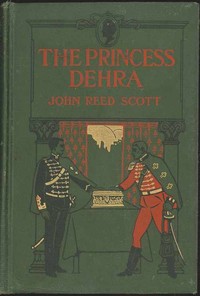
At Folio's default of ten pages a day, you finish The Princess Dehra in about 42 days — roughly 8 minutes of reading each morning.
The opening
the first pages of The Princess Dehra, free
For the first time in a generation the Castle of Lotzen was entertaining its lord. He had come suddenly, a month before, and presently there had followed rumors of strange happenings in Dornlitz, in which the Duke had been too intimately concerned to please the King, and as punishment had been banished to his mountain estates. But Lotzenia was far from the Capital and isolated, and the people cared more for their crops and the amount of the tax levy than for the doings of the Court. And so it concerned them very little why the red banner with the golden cross floated from the highest turret of the old pile of stone, on the spur of the mountain overhanging the foaming Dreer. They knew it meant the Duke himself was in presence; but to them there was but one over-lord: the Dalberg, who reigned in Dornlitz; and in him they had all pride—for was not the Dalberg their hereditary chieftain centuries before he was the King!
True, the Duke of Lotzen had long been the Heir Presumptive, and so, in the prospective, entitled to their loyalty, but lately there had come from across the Sea a new Dalberg, of the blood of the great Henry, who, it was said, had displaced him in the line of Succession, and was to marry the Princess Dehra.
And at her name every woman of them curtsied and every man uncovered; blaming High Heaven the while, that she might not reign over them, when Frederick the King were gone; and well prepared to welcome the new heir if she were to be his queen.
At first the Duke had kept to the seclusion of his own domain, wide and wild enough to let him ride all day without crossing its boundary, but after a time he came at intervals, with a companion or two, into the low-lands, choosing the main highways, and dallying occasionally at some cross-road smithy for a word of gossip with those around the forge.
For Lotzen was not alone in his exile; he might be banished from the Capital, but that was no reason for denying himself all its pleasures; and the lights burned late at the Castle, and when the wind was from the North it strewed the valley with whisps of music and strands of laughter. And the country-side shook its head, and marveled at the turning of night into day, and at people who seemed never to sleep except when others worked; and not much even then, if the tales of such of the servants as belonged to the locality were to be believed.
And the revelry waxed louder and wilder as the days passed, and many times toward evening the whole company would come plunging down the mountain, and, with the great dogs baying before them, go racing through the valleys and back again to the Castle, as though some fiend were hot on their trail or they on his.
And ever beside the Duke, on a great, black horse, went the same woman, slender and sinuous, with raven hair and dead-white cheek; a feather touch on rein, a careless grace in saddle. And as they rode the Duke watched her with glowing eyes; and his cold face warmed with his thoughts, and he would speak to her earnestly and persuasively; and she, swaying toward him, would answer softly and with a tantalizing smile.
Then, one day, she had refused to ride.
“I am tired,” she said, when at the sounding of the horn he had sought her apartments; “let the others go.”
He went over and leaned on the back of her chair.
“Tired—of what?” he asked.
“Of everything—of myself most of all.”
“And of everybody?” smiling down at her.
“One usually tires of self last.”
“And you want to leave me?” he asked.
She shook her head. “No, not you, Ferdinand—the others.”
Keep going from exactly here — Folio remembers your place and serves the next portion tomorrow.
continue reading The Princess DehraAbout this free edition
The Princess Dehra by John Reed Scott (1869-1942) is free to read in full. Folio serves it in daily portions you can actually finish, tracks your streak and reading position across devices, and reads every page aloud with a built-in narrator. The text comes from Project Gutenberg.
More like The Princess Dehra
The Cab of the Sleeping Horse
Folio
The Cab of the Sleeping Horse
John Reed Scott
The Colonel of the Red Huzzars
Folio
The Colonel of the Red Huzzars
John Reed Scott
Beatrix of Clare
John Reed Scott
In Her Own Right
Folio
In Her Own Right
John Reed Scott
Treasure Island
Robert Louis Stevenson
Kidnapped
Robert Louis Stevenson
The Call of the Wild
Jack London
White Fang
Jack London