length
80,112 words
a few pages a day
~8 min
finished in
43 days
full read
5h 34m
At Folio's default of ten pages a day, you finish The Planters of Colonial Virginia in about 43 days — roughly 8 minutes of reading each morning.
The opening
the first pages of The Planters of Colonial Virginia, free
3. Corrections to minor spelling, punctuation, or other errors in the original text appear in a detailed list at the end of this e-text.
4. Notations of inconsistencies in the original text, specifically the Appendix, Footnotes and Index, which have been retained, appear at the end of this e-text.
5. In the chapter "NOTES ON CHAPTERS", Footnotes without anchor points have been marked with a question mark, (ex: ?[5-3]).
The Planters of Colonial Virginia
The PLANTERS OF COLONIAL VIRGINIA
By THOMAS J. WERTENBAKER
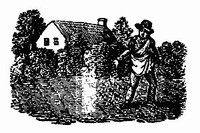
[Illustration]
New York RUSSELL & RUSSELL 1959
COPYRIGHT 1922 BY PRINCETON UNIVERSITY PRESS
COPYRIGHT 1958, 1959 BY THOMAS J. WERTENBAKER
LIBRARY OF CONGRESS CATALOG CARD NUMBER 59-11228
PRINTED IN THE UNITED STATES OF AMERICA
PREFACE
America since the days of Captain John Smith has been the land of hope for multitudes in Europe. In many an humble home, perhaps in some English village, or an Ulster farm, or in the Rhine valley, one might find a family assembled for the reading of a letter from son, or brother, or friend, who had made the great venture of going to the New World. "Land is abundant here and cheap," the letter would state. "Wages are high, food is plentiful, farmers live better than lords. If one will work only five days a week one can live grandly."
In pamphlets intended to encourage immigration the opportunities for advancement were set forth in glowing colors. In Virginia alone, it was stated, in 1649, there were "of kine, oxen, bulls, calves, twenty thousand, large and good." When the traveller Welby came to America he was surprised to "see no misery, no disgusting army of paupers, not even beggars;" while Henry B. Fearson noted that laborers were "more erect in their posture, less careworn in their countenances" than those of Europe.
In Virginia, as in other colonies, it was the cheapness of land and the dearness of labor which gave the newcomer his chance to rise. The rich man might possess many thousands of acres, but they would profit him nothing unless he could find the labor to put them under cultivation. Indentured workers met his needs in part, but they were expensive, hard to acquire, and served for only four years. If he hired freemen he would have to pay wages which in England would have seemed fantastic.
Thus the so-called servants who had completed their terms and men who had come over as freemen found it easy to earn enough to buy small plantations of their own. That thousands did so is shown by the Rent Roll which is published as an appendix to this book. One has only to glance at it to see that the large plantations are vastly outnumbered by the small farms of the yeomen. It proves that Virginia at the beginning of the eighteenth century was not the land of huge estates, worked by servants and slaves, but of a numerous, prosperous middle class.
Owning plantations of from fifty to five hundred acres, cultivating their fields of tobacco, their patches of Indian corn and wheat, their vegetable gardens and orchards with their own labor or the labor of their sons, the yeomen enjoyed a sense of independence and dignity. It was their votes which determined the character of the Assembly, it was they who resisted most strongly all assaults upon the liberties of the people.
As the small farmer, after the day's work was over, sat before his cottage smoking his long clay pipe, he could reflect that for him the country had fulfilled its promise. The land around him was his own; his tobacco brought in enough for him to purchase clothes, farm implements, and household goods.
But he frowned as he thought of the slave ship which had come into the nearby river, and landed a group of Negroes who were all bought by his wealthy neighbors. If Virginia were flooded with slaves, would it not cheapen production and lower the price of tobacco? Could he and his sons, when they hoed their fields with their own hands, compete with slave labor?
Keep going from exactly here — Folio remembers your place and serves the next portion tomorrow.
continue reading The Planters of Colonial VirginiaAbout this free edition
The Planters of Colonial Virginia by Thomas Jefferson Wertenbaker (1879-1966) is free to read in full. Folio serves it in daily portions you can actually finish, tracks your streak and reading position across devices, and reads every page aloud with a built-in narrator. The text comes from Project Gutenberg.
More like The Planters of Colonial Virginia
Bacon's Rebellion, 1676
Folio
Bacon's Rebellion, 1676
Thomas Jefferson Wertenbaker
Patrician and Plebeian
Folio
Patrician and Plebeian
Thomas Jefferson Wertenbaker
Virginia under the Stuarts 1607-1688
Folio
Virginia under the Stuarts 1607-1688
Thomas Jefferson Wertenbaker
The History of the Peloponnesian War
Folio
The History of the Peloponnesian War
Thucydides
The History of Herodotus
Folio
The History of Herodotus
Herodotus
The Gallic Wars
Folio
The Gallic Wars
Julius Caesar
Anabasis
Folio
Anabasis
Xenophon
The Lives of the Twelve Caesars
Folio
The Lives of the Twelve Caesars
Suetonius