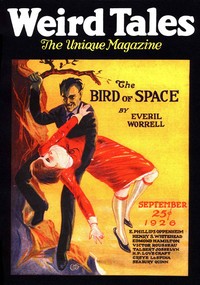
The Night Wire
first published 1926 · free to read
length
2,446 words
a few pages a day
~8 min
finished in
2 days
full read
10 min
At Folio's default of ten pages a day, you finish The Night Wire in about 2 days — roughly 8 minutes of reading each morning.
The opening
the first pages of The Night Wire, free
There’s something ungodly about these night wire jobs. You sit up here on the top floor of a skyscraper and listen in to the whispers of a civilization. New York, London, Calcutta, Bombay, Singapore--they’re your next-door neighbors after the street lights go dim and the world has gone to sleep.
Along in the quiet hours between 2 and 4, the receiving operators doze over their sounders and the news comes in. Fires and disasters and suicides. Murders, crowds, catastrophes. Sometimes an earthquake with a casualty list as long as your arm. The night wire man takes it down almost in his sleep, picking it off on his typewriter with one finger.
Once in a long time you prick up your ears and listen. You’ve heard of someone you knew in Singapore, Halifax or Paris, long ago. Maybe they’ve been promoted, but more probably they’ve been murdered or drowned. Perhaps they just decided to quit and took some bizarre way out. Made it interesting enough to get in the news.
But that doesn’t happen often. Most of the time you sit and doze and tap, tap on your typewriter and wish you were home in bed.
Sometimes, though, queer things happen. One did the other night and I haven’t got over it yet. I wish I could.
You see, I handle the night manager’s desk in a western seaport town; what the name is, doesn’t matter.
There is, or rather was, only one night operator on my staff, a fellow named John Morgan, about forty years of age, I should say, and a sober, hard-working sort.
He was one of the best operators I ever knew, what is known as a “double” man. That means he could handle two instruments at once and type the stories on different typewriters at the same time. He was one of the three men I ever knew who could do it consistently, hour after hour, and never make a mistake.
Generally we used only one wire at night, but sometimes, when it was late and the news was coming fast, the Chicago and Denver stations would open a second wire and then Morgan would do his stuff. He was a wizard, a mechanical automatic wizard which functioned marvelously but was without imagination.
On the night of the sixteenth he complained of feeling tired. It was the first and last time I had ever heard him say a word about himself, and I had known him for three years.
It was at just 3 o’clock and we were running only one wire. I was nodding over reports at my desk and not paying much attention to him when he spoke.
“Jim,” he said, “does it feel close in here to you?”
“Why, no, John,” I answered, “but I’ll open a window if you like.”
“Never mind,” he said. “I reckon I’m just a little tired.”
That was all that was said and I went on working. Every ten minutes or so I would walk over and take a pile of copy that had stacked up neatly beside his typewriter as the messages were printed out in triplicate.
It must have been twenty minutes after he spoke that I noticed he had opened up the other wire and was using both typewriters. I thought it was a little unusual, as there was nothing very “hot” coming in. On my next trip I picked up the copy from both machines and took it back to my desk to sort out the duplicates.
The first wire was running out the usual sort of stuff and I just looked over it hurriedly. Then I turned to the second pile of copy. I remember it particularly because the story was from a town I had never heard of: “Xebico.” Here is the dispatch. I saved a duplicate of it from our files:
“Xebico Sept. 16 CP BULLETIN
Keep going from exactly here — Folio remembers your place and serves the next portion tomorrow.
continue reading The Night WireAbout this free edition
The Night Wire by H. F. Arnold (1902-1963) is free to read in full. Folio serves it in daily portions you can actually finish, tracks your streak and reading position across devices, and reads every page aloud with a built-in narrator. The text comes from Project Gutenberg.
More like The Night Wire
Dracula
Bram Stoker
The Strange Case of Dr. Jekyll and Mr. Hyde
Robert Louis Stevenson
The Turn of the Screw
Folio
The Turn of the Screw
Henry James

The Picture of Dorian Gray
Oscar Wilde
The Fall of the House of Usher
Folio
The Fall of the House of Usher
Edgar Allan Poe

Carmilla
Joseph Sheridan Le Fanu
Uncle Silas
Folio
Uncle Silas
Joseph Sheridan Le Fanu
The Castle of Otranto
Folio
The Castle of Otranto
Horace Walpole