The Moon Metal
Folio
length
24,458 words
a few pages a day
~8 min
finished in
13 days
full read
1h 42m
At Folio's default of ten pages a day, you finish The Moon Metal in about 13 days — roughly 8 minutes of reading each morning.
The opening
the first pages of The Moon Metal, free
When the news came of the discovery of gold at the south pole, nobody suspected that the beginning had been reached of a new era in the world's history. The newsboys cried "Extra!" as they had done a thousand times for murders, battles, fires, and Wall Street panics, but nobody was excited. In fact, the reports at first seemed so exaggerated and improbable that hardly anybody believed a word of them. Who could have been expected to credit a despatch, forwarded by cable from New Zealand, and signed by an unknown name, which contained such a statement as this:
"A seam of gold which can be cut with a knife has been found within ten miles of the south pole."
The discovery of the pole itself had been announced three years before, and several scientific parties were known to be exploring the remarkable continent that surrounds it. But while they had sent home many highly interesting reports, there had been nothing to suggest the possibility of such an amazing discovery as that which was now announced. Accordingly, most sensible people looked upon the New Zealand despatch as a hoax.
But within a week, and from a different source, flashed another despatch which more than confirmed the first. It declared that gold existed near the south pole in practically unlimited quantity. Some geologists said this accounted for the greater depth of the Antarctic Ocean. It had always been noticed that the southern hemisphere appeared to be a little overweighted. People now began to prick up their ears, and many letters of inquiry appeared in the newspapers concerning the wonderful tidings from the south. Some asked for information about the shortest route to the new goldfields.
In a little while several additional reports came, some via New Zealand, others via South America, and all confirming in every respect what had been sent before. Then a New York newspaper sent a swift steamer to the Antarctic, and when this enterprising journal published a four-page cable describing the discoveries in detail, all doubt vanished and the rush began.
Some time I may undertake a description of the wild scenes that occurred when, at last, the inhabitants of the northern hemisphere were convinced that boundless stores of gold existed in the unclaimed and uninhabited wastes surrounding the south pole. But at present I have something more wonderful to relate.
Let me briefly depict the situation.
For many years silver had been absent from the coinage of the world. Its increasing abundance rendered it unsuitable for money, especially when contrasted with gold. The "silver craze," which had raged in the closing decade of the nineteenth century, was already a forgotten incident of financial history. The gold standard had become universal, and business all over the earth had adjusted itself to that condition. The wheels of industry ran smoothly, and there seemed to be no possibility of any disturbance or interruption. The common monetary system prevailing in every land fostered trade and facilitated the exchange of products. Travellers never had to bother their heads about the currency of money; any coin that passed in New York would pass for its face value in London, Paris, Berlin, Rome, Madrid, St. Petersburg, Constantinople, Cairo, Khartoum, Jerusalem, Peking, or Yeddo. It was indeed the "Golden Age," and the world had never been so free from financial storms.
Upon this peaceful scene the south polar gold discoveries burst like an unheralded tempest.
Keep going from exactly here — Folio remembers your place and serves the next portion tomorrow.
continue reading The Moon MetalAbout this free edition
The Moon Metal by Garrett Putman Serviss (1851-1929) is free to read in full. Folio serves it in daily portions you can actually finish, tracks your streak and reading position across devices, and reads every page aloud with a built-in narrator. The text comes from Project Gutenberg.
More like The Moon Metal
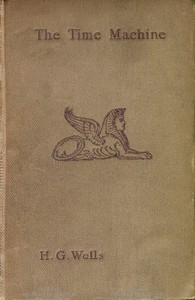
The Time Machine
H. G. Wells

The War of the Worlds
H. G. Wells

The Invisible Man
H. G. Wells
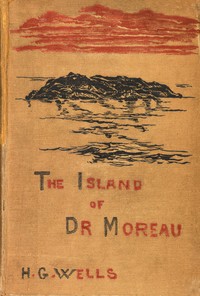
The Island of Doctor Moreau
H. G. Wells
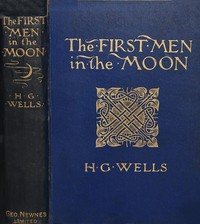
The First Men in the Moon
H. G. Wells
The Sleeper Awakes
Folio
The Sleeper Awakes
H. G. Wells
The Food of the Gods and How It Came to Earth
Folio
The Food of the Gods and How It Came to Earth
H. G. Wells

Frankenstein
Mary Shelley