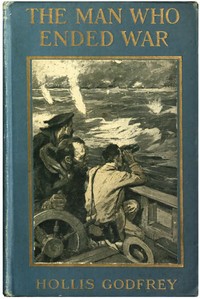
The Man Who Ended War
first published 1908 · free to read
length
68,943 words
a few pages a day
~8 min
finished in
37 days
full read
4h 47m
At Folio's default of ten pages a day, you finish The Man Who Ended War in about 37 days — roughly 8 minutes of reading each morning.
The opening
the first pages of The Man Who Ended War, free
The Secretary of War ended his statement. “That is all there is to tell, gentlemen, concerning the building of the new transports.”
I had closed my notebook and was rising, as Ordway, the private secretary, entered.
“May I give the correspondents that freak letter that came this morning?” he asked. His chief nodded indulgently and left the room. I opened my notebook expectantly.
“This is a very serious matter, and a great piece of news,” Ordway remarked in a mock grandiose manner. “It is a declaration of war against the civilized world in the interests of peace.” He threw himself into an oratorical posture and began:
“To the United States of America and to all other nations--Greeting!”
“Whereas war has too long devastated the earth and the time has now come for peace, I, the man destined to stop all war, hereby declare unto you that you shall, each and all, disarm; that your troops shall be disbanded, your navies sunk or turned to peaceful ends, your fortifications dismantled. One year from this date will I allow for disarmament and no more. At the end of that time, if no heed has been paid to my injunction, I will destroy, in rapid succession, every battleship in the world. By the happenings of the next two months you shall know that my words are the words of truth.
“Given under my hand and seal this first of June, 19--
“Signed--
“THE MAN WHO WILL STOP ALL WAR.”
Ordway ceased and a laughing clamor rose.
“The biggest crank yet.” “Where was it mailed?” “I thought you said you had something really good this time.” “Do you suppose he sent it to any other country than the United States?”
Ordway raised his hand for a hearing and replied to the last question. “The letter was mailed from London, and was sent to other countries. I read the missive to one of the English attachés when it came, and he looked the matter up. This notice has been sent to all the foreign chancelleries, as well as the departments of war and of the navy. It has been done in such a wholesale fashion that I thought you could use it for a column anyway.”
“But is it such a fool idea?” asked Reid, one of the older correspondents. “Couldn’t a man build a submarine in which he could run amuck and destroy battleship after battleship, something as old Jules Verne’s Captain Nemo did?”
“Not to-day,” said Ordway emphatically. “The new armor of the last years, with its permanent torpedo nets, has stopped all that. The only way you can destroy a modern battleship is by ramming, or by another battleship. The day of the torpedo boat and of the submarine ended almost as it began.”
“Well,” said Reid argumentatively, “why couldn’t a man have a battleship? Any one of five hundred men living to-day could afford it.”
“No battleship could be built by a private citizen without some nation knowing it and stopping it,” said Ordway seriously. “It takes months, reaching into years, to build one. It takes skilled naval constructors, hundreds of workmen and thousands of tons of material that must be bought in the markets of the world.”
“Let’s see the paper it’s written on,” I said.
As I held the message, Reid looked over my shoulder and read for a moment. Then, turning, he cried, “Come over here, boys, and look at this a little more closely. That’s old parchment, just like that of some of those papal bulls in the glass cases over in the library.”
As he spoke a sudden remembrance flashed across me. “Anybody got a microscope around here?” I asked quickly.
“There’s a reading glass,” said Ordway, and opening a drawer he handed one to me. I took the paper to the sunlit window, and began examining it closely with the lens. The rest watched me curiously. At last I shook my head. “No use,” I exclaimed. “I thought I had a clue, but it didn’t pan out. There’s a good story though, without anything more. Here, Ordway,” and I handed back the letter.
Keep going from exactly here — Folio remembers your place and serves the next portion tomorrow.
continue reading The Man Who Ended WarAbout this free edition
The Man Who Ended War by Hollis Godfrey (1874-1936) is free to read in full. Folio serves it in daily portions you can actually finish, tracks your streak and reading position across devices, and reads every page aloud with a built-in narrator. The text comes from Project Gutenberg.
More like The Man Who Ended War
The Time Machine
H. G. Wells
The War of the Worlds
H. G. Wells
The Invisible Man
H. G. Wells
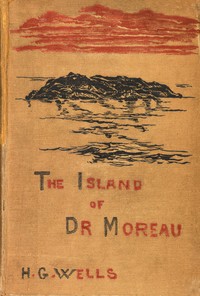
The Island of Doctor Moreau
H. G. Wells
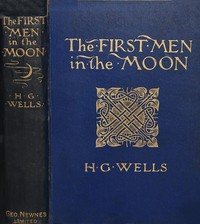
The First Men in the Moon
H. G. Wells
The Sleeper Awakes
Folio
The Sleeper Awakes
H. G. Wells
The Food of the Gods and How It Came to Earth
Folio
The Food of the Gods and How It Came to Earth
H. G. Wells

Frankenstein
Mary Shelley