
length
75,131 words
a few pages a day
~8 min
finished in
40 days
full read
5h 13m
At Folio's default of ten pages a day, you finish The Man in the Brown Suit in about 40 days — roughly 8 minutes of reading each morning.
The opening
the first pages of The Man in the Brown Suit, free
Nadina, the Russian dancer who had taken Paris by storm, swayed to the sound of the applause, bowed and bowed again. Her narrow black eyes narrowed themselves still more, the long line of her scarlet mouth curved faintly upwards. Enthusiastic Frenchmen continued to beat the ground appreciatively as the curtain fell with a swish, hiding the reds and blues and magentas of the bizarre décors. In a swirl of blue and orange draperies the dancer left the stage. A bearded gentleman received her enthusiastically in his arms. It was the Manager.
“Magnificent, petite, magnificent,” he cried. “To-night you have surpassed yourself.” He kissed her gallantly on both cheeks in a somewhat matter-of-fact manner.
Madame Nadina accepted the tribute with the ease of long habit and passed on to her dressing-room, where bouquets were heaped carelessly everywhere, marvellous garments of futuristic design hung on pegs, and the air was hot and sweet with the scent of the massed blossoms and with more sophisticated perfumes and essences. Jeanne, the dresser, ministered to her mistress, talking incessantly and pouring out a stream of fulsome compliment.
A knock at the door interrupted the flow. Jeanne went to answer it, and returned with a card in her hand.
“Madame will receive?”
“Let me see.”
The dancer stretched out a languid hand, but at the sight of the name on the card, “Count Sergius Paulovitch,” a sudden flicker of interest came into her eyes.
“I will see him. The maize peignoir, Jeanne, and quickly. And when the Count comes you may go.”
“Bien, Madame.”
Jeanne brought the peignoir, an exquisite wisp of corn-coloured chiffon and ermine. Nadina slipped into it, and sat smiling to herself, whilst one long white hand beat a slow tattoo on the glass of the dressing-table.
The Count was prompt to avail himself of the privilege accorded to him—a man of medium height, very slim, very elegant, very pale, extraordinarily weary. In feature, little to take hold of, a man difficult to recognize again if one left his mannerisms out of account. He bowed over the dancer’s hand with exaggerated courtliness.
“Madame, this is a pleasure indeed.”
So much Jeanne heard before she went out closing the door behind her. Alone with her visitor, a subtle change came over Nadina’s smile.
“Compatriots though we are, we will not speak Russian, I think,” she observed.
“Since we neither of us know a word of the language, it might be as well,” agreed her guest.
By common consent, they dropped into English, and nobody, now that the Count’s mannerisms had dropped from him, could doubt that it was his native language. He had, indeed, started life as a quick-change music-hall artiste in London.
“You had a great success to-night,” he remarked. “I congratulate you.”
“All the same,” said the woman, “I am disturbed. My position is not what it was. The suspicions aroused during the War have never died down. I am continually watched and spied upon.”
“But no charge of espionage was ever brought against you?”
“Our chief lays his plans too carefully for that.”
“Long life to the ‘Colonel,’” said the Count, smiling. “Amazing news, is it not, that he means to retire? To retire! Just like a doctor, or a butcher, or a plumber——”
“Or any other business man,” finished Nadina. “It should not surprise us. That is what the ‘Colonel’ has always been—an excellent man of business. He has organized crime as another man might organize a boot factory. Without committing himself, he has planned and directed a series of stupendous coups, embracing every branch of what we might call his ‘profession.’ Jewel robberies, forgery, espionage (the latter very profitable in war-time), sabotage, discreet assassination, there is hardly anything he has not touched. Wisest of all, he knows when to stop. The game begins to be dangerous?—he retires gracefully—with an enormous fortune!”
Keep going from exactly here — Folio remembers your place and serves the next portion tomorrow.
continue reading The Man in the Brown SuitAbout this free edition
The Man in the Brown Suit by Agatha Christie (1890-1976) is free to read in full. Folio serves it in daily portions you can actually finish, tracks your streak and reading position across devices, and reads every page aloud with a built-in narrator. The text comes from Project Gutenberg.
More like The Man in the Brown Suit
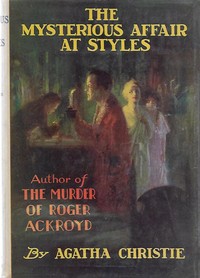
The Mysterious Affair at Styles
Agatha Christie
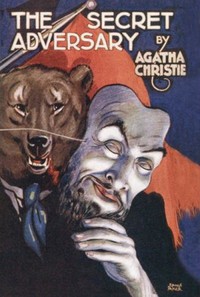
The Secret Adversary
Agatha Christie
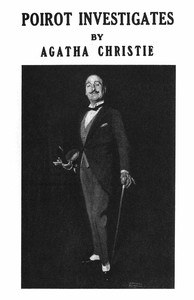
Poirot Investigates
Agatha Christie

The Murder on the Links
Agatha Christie
The Secret of Chimneys
Folio
The Secret of Chimneys
Agatha Christie
The Big Four
Folio
The Big Four
Agatha Christie

The Seven Dials Mystery
Agatha Christie

The Plymouth Express Affair
Agatha Christie