The Last Man
Folio
The Last Man
first published 1826 · free to read
length
174,539 words
a few pages a day
~8 min
finished in
92 days
full read
12h 7m
At Folio's default of ten pages a day, you finish The Last Man in about 92 days — roughly 8 minutes of reading each morning.
The opening
the first pages of The Last Man, free
I visited Naples in the year 1818. On the 8th of December of that year, my companion and I crossed the Bay, to visit the antiquities which are scattered on the shores of Baiæ. The translucent and shining waters of the calm sea covered fragments of old Roman villas, which were interlaced by sea-weed, and received diamond tints from the chequering of the sun-beams; the blue and pellucid element was such as Galatea might have skimmed in her car of mother of pearl; or Cleopatra, more fitly than the Nile, have chosen as the path of her magic ship. Though it was winter, the atmosphere seemed more appropriate to early spring; and its genial warmth contributed to inspire those sensations of placid delight, which are the portion of every traveller, as he lingers, loath to quit the tranquil bays and radiant promontories of Baiæ.
We visited the so called Elysian Fields and Avernus; and wandered through various ruined temples, baths, and classic spots; at length we entered the gloomy cavern of the Cumæan Sibyl. Our Lazzeroni bore flaring torches, which shone red, and almost dusky, in the murky subterranean passages, whose darkness thirstily surrounding them, seemed eager to imbibe more and more of the element of light. We passed by a natural archway, leading to a second gallery, and enquired, if we could not enter there also. The guides pointed to the reflection of their torches on the water that paved it, leaving us to form our own conclusion; but adding it was a pity, for it led to the Sibyl’s Cave. Our curiosity and enthusiasm were excited by this circumstance, and we insisted upon attempting the passage. As is usually the case in the prosecution of such enterprizes, the difficulties decreased on examination. We found, on each side of the humid pathway, “dry land for the sole of the foot.” At length we arrived at a large, desert, dark cavern, which the Lazzeroni assured us was the Sibyl’s Cave. We were sufficiently disappointed—Yet we examined it with care, as if its blank, rocky walls could still bear trace of celestial visitant. On one side was a small opening. Whither does this lead? we asked: can we enter here?—“Questo poi, no,”—said the wild looking savage, who held the torch; “you can advance but a short distance, and nobody visits it.”
“Nevertheless, I will try it,” said my companion; “it may lead to the real cavern. Shall I go alone, or will you accompany me?”
I signified my readiness to proceed, but our guides protested against such a measure. With great volubility, in their native Neapolitan dialect, with which we were not very familiar, they told us that there were spectres, that the roof would fall in, that it was too narrow to admit us, that there was a deep hole within, filled with water, and we might be drowned. My friend shortened the harangue, by taking the man’s torch from him; and we proceeded alone.
Keep going from exactly here — Folio remembers your place and serves the next portion tomorrow.
continue reading The Last ManAbout this free edition
The Last Man by Mary Shelley (1797-1851) is free to read in full. Folio serves it in daily portions you can actually finish, tracks your streak and reading position across devices, and reads every page aloud with a built-in narrator. The text comes from Project Gutenberg.
Books like The Last Man

Frankenstein
Mary Shelley
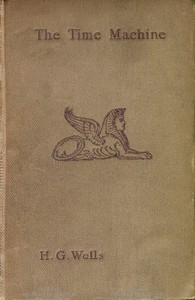
The Time Machine
H. G. Wells

The War of the Worlds
H. G. Wells
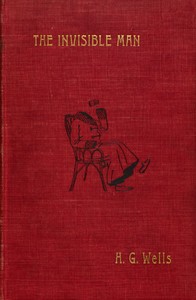
The Invisible Man
H. G. Wells

The Island of Doctor Moreau
H. G. Wells
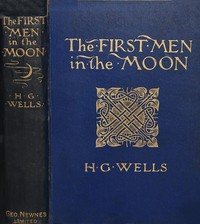
The First Men in the Moon
H. G. Wells
The Sleeper Awakes
Folio
The Sleeper Awakes
H. G. Wells
The Food of the Gods and How It Came to Earth
Folio
The Food of the Gods and How It Came to Earth
H. G. Wells