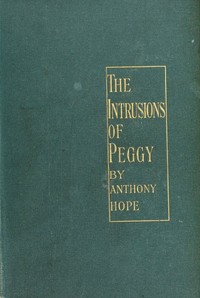
The Intrusions of Peggy
free to read
length
108,017 words
a few pages a day
~8 min
finished in
57 days
full read
7h 30m
At Folio's default of ten pages a day, you finish The Intrusions of Peggy in about 57 days — roughly 8 minutes of reading each morning.
The opening
the first pages of The Intrusions of Peggy, free
The changeful April morning that she watched from the window of her flat looking over the river began a day of significance in the career of Trix Trevalla--of feminine significance, almost milliner's perhaps, but of significance all the same. She had put off her widow's weeds, and for the first time these three years back was dressed in a soft shade of blue; the harmony of her eyes and the gleams of her brown hair welcomed the colour with the cordiality of an old friendship happily renewed. Mrs. Trevalla's maid had been all in a flutter over the momentous transformation; in her mistress it bred a quietly retrospective mood. As she lay in an armchair watching the water and the clouds, she turned back on the course of her life, remembering many things. The beginning of a new era brought the old before her eyes in a protesting flash of vividness. She abandoned herself to recollections--an insidious form of dissipating the mind, which goes well with a relaxed ease of the body.
Not that Mrs. Trevalla's recollections were calculated to promote a sense of luxury, unless indeed they were to act as a provocative contrast.
There was childhood, spent in a whirling succession of lodging-houses. They had little individuality and retained hardly any separate identity; each had consisted of two rooms with folding doors between, and somewhere, at the back or on the floor above, a cupboard for her to sleep in. There was the first baby, her brother, who died when she was six; he had been a helpless, clinging child, incapable of living without far more sympathy and encouragement than he had ever got. Luckily she had been of hardier stuff. There was her mother, a bridling, blushing, weak-kneed woman (Trix's memory was candid); kind save when her nerves were bad, and when they were, unkind in a weak and desultory fashion that did not deserve the name of cruelty. Trix had always felt less anger than contempt for her half-hysterical outbursts, and bore no malice on their account. This pale visitor soon faded--as indeed Mrs. Trevalla herself had--into non-existence, and a different picture took its place. Here was the Reverend Algernon, her father, explaining that he found himself unsuited to pastoral work and indisposed to adopt any other active calling, that inadequate means were a misfortune, not a fault, that a man must follow his temperament, and that he asked only to be allowed to go his own way--he did not add to pay it--in peace and quiet. His utterances came back with the old distinction of manner and the distant politeness with which Mr. Trevalla bore himself towards all disagreeable incidents of life--under which head there was much reason to surmise that he ranked his daughter.
Was he unjust in that? Trix was puzzled. She recalled a sturdy, stubborn, rather self-assertive child. The freshness of delicacy is rubbed off, the appeal of shyness silenced, by a hand-to-mouth existence, by a habit of regarding the leavings of the first-floor lodger in the light of windfalls, by constant flittings unmarked by the discharge of obligations incurred in the abandoned locality, by a practical outlawry from the class to which we should in the ordinary course belong. Trix decided that she must have been an unattractive girl, rather hard, too much awake to the ways of the world, readily retorting its chilliness towards her. All this was natural enough, since neither death nor poverty nor lack of love was strange to her. Natural, yes; pleasant, no, Trix concluded, and with that she extended a degree of pardon to Mr. Trevalla. He had something to say for himself. With a smile she recalled what he always did say for himself, if anyone seemed to challenge the spotlessness of his character. On such painful occasions he would mention that he was, and had been for twenty years, a teetotaler. There were reasons in the Trevalla family history which made the fact remarkable; in its owner's eyes the virtue was so striking and enormous that it had exhausted the moral possibilities of his being, condemned other excellencies to atrophy, and left him, in the flower-show of graces, the self-complacent exhibitor of a single bloom.
Keep going from exactly here — Folio remembers your place and serves the next portion tomorrow.
continue reading The Intrusions of PeggyAbout this free edition
The Intrusions of Peggy by Anthony Hope (1863-1933) is free to read in full. Folio serves it in daily portions you can actually finish, tracks your streak and reading position across devices, and reads every page aloud with a built-in narrator. The text comes from Project Gutenberg.
More like The Intrusions of Peggy
The Secret of the Tower
Folio
The Secret of the Tower
Anthony Hope

The Prisoner of Zenda
Anthony Hope
Rupert of Hentzau
Folio
Rupert of Hentzau
Anthony Hope
The Chronicles of Count Antonio
Anthony Hope
Phroso
Anthony Hope
The Heart of Princess Osra
Folio
The Heart of Princess Osra
Anthony Hope
Frivolous Cupid
Folio
Frivolous Cupid
Anthony Hope
A Man of Mark
Folio
A Man of Mark
Anthony Hope