
The House by the River
free to read
length
64,035 words
a few pages a day
~8 min
finished in
34 days
full read
4h 27m
At Folio's default of ten pages a day, you finish The House by the River in about 34 days — roughly 8 minutes of reading each morning.
The opening
the first pages of The House by the River, free
The Whittakers were At Home every Wednesday. No one else in Hammerton Chase was officially At Home at any time. So every one went to the Whittakers' on Wednesdays.
There are still a few intimate corners in London where people, other than the poor, are positively acquainted with their neighbours. And Hammerton Chase is one of these. In heartless Kensington we know no more of our neighbour than we may gather from furtive references to the Red Book and Who's Who, or stealthy reconnaissances from behind the dining-room curtains as he goes forth in the morning to his work and to his labour. Our communication with him is limited to the throwing back over the garden-wall of his children's balls, aeroplanes, and spears, or--in the lowest parts of Kensington--to testy hammerings with the fire-irons towards the close of his musical evenings. Overt, deliberate, avoidable, social intercourse with any person living in the same street or the same block of mansions is a thing unknown. What true Londoner remembers going to an At Home, a dance, a musical evening, or other entertainment in his own street? Who is there who regards with friendship the occupant of the opposite flat?
Hammerton Chase could scarcely be regarded as a street. A short half-mile of old and dignified houses, clustered irregularly in all shapes and sizes along the sunny side of the Thames, with large trees and little gardens fringing the bank across the road, and, lying opposite, the Island, a long triangle of young willows, the haunt of wild duck and heron and swan--it had a unique, incomparable character of its own. It was like neither street, nor road, nor avenue, nor garden, nor any other urban unit of place in London, or indeed, it was locally supposed, in the world. It had something, perhaps, of an old village and something of a Cathedral Close, something of Venice and something of the sea. But it was sui generis. It was The Chase, W. 6. And the W. 6 was generally considered to be superfluous.
But, whatever it was, it prided itself on the intimate and sociable relations of its members. They were all on friendly terms with each other, and knew exactly the circumstances and employment, the ambitions, plans, and domestic crises of each other at any given moment. They "dropped in" at each other's houses for conversation and informal entertainment; they borrowed wine-glasses for their dinner-parties and tools for their gardens and anchors for their boats. They were a community, a self-sufficient community, isolated geographically from their natural homes in Chelsea and Kensington, W., by the dreary wilderness of West Kensington and the barbarous expanse of Hammersmith, and clinging almost pathetically together in their little oasis of civilization.
And yet they were not suburban. They were in physical fact on the actual borders of London County; they were six miles from Charing Cross. But Ealing and the suburbs are farther still. And the soul of Ealing was many leagues removed from the soul of The Chase, which, like The Chase, was something not elsewhere to be discovered.
So that on Wednesdays the Whittakers were At Home in the evening, and every one went. Andrew Whittaker was an artist and art-critic; though for various reasons he devoted more time to criticism than to execution. Mrs. Whittaker wrote novels in the intervals of engaging a new servant or dismissing an old one, and grappling undaunted with the domestic crisis which either operation produced. They were both exceedingly pleasant, cultivated, and feckless people, and they well represented the soul of The Chase. Indeed, no one else was so well fitted to collect the bodies of The Chase together on Wednesdays.
On this Wednesday there were fewer bodies than usual in the grey drawing-room. It was a moist and thunderous evening, very heavy and still, and many of The Chase were gasping quietly in their own little gardens, reluctant to enter a house of any kind. And there were one or two households vaguely "away in the country." It was rather the habit of true members of The Chase to "go away" in May, or in June, or in any month but August, not simply because it was a wise and sensible thing to do, August being an overrated and tumultuous month in the country, not only because if you lived in the airy Chase the common craving of Londoners to escape from London in August did not affect you, but chiefly because if you lived in The Chase that was the kind of thing you did.
Keep going from exactly here — Folio remembers your place and serves the next portion tomorrow.
continue reading The House by the RiverAbout this free edition
The House by the River by A. P. Herbert (1890-1971) is free to read in full. Folio serves it in daily portions you can actually finish, tracks your streak and reading position across devices, and reads every page aloud with a built-in narrator. The text comes from Project Gutenberg.
More like The House by the River

The Adventures of Sherlock Holmes
Arthur Conan Doyle
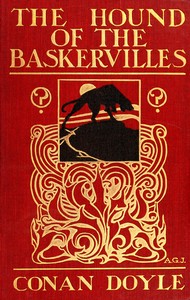
The Hound of the Baskervilles
Arthur Conan Doyle
A Study in Scarlet
Folio
A Study in Scarlet
Arthur Conan Doyle

The Sign of the Four
Arthur Conan Doyle

The Memoirs of Sherlock Holmes
Arthur Conan Doyle
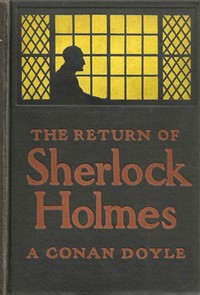
The Return of Sherlock Holmes
Arthur Conan Doyle
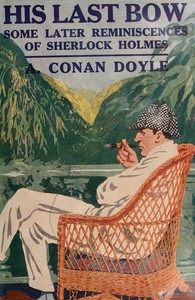
His Last Bow
Arthur Conan Doyle
The Valley of Fear
Arthur Conan Doyle