The History of Sir Richard Calmady: A Romance
Folio
The History of Sir Richard Calmady: A Romance
free to read
length
259,983 words
a few pages a day
~8 min
finished in
137 days
full read
18h 3m
At Folio's default of ten pages a day, you finish The History of Sir Richard Calmady: A Romance in about 137 days — roughly 8 minutes of reading each morning.
The opening
the first pages of The History of Sir Richard Calmady: A Romance, free
In that fortunate hour of English history, when the cruel sights and haunting insecurities of the Middle Ages had passed away, and while, as yet, the fanatic zeal of Puritanism had not cast its blighting shadow over all merry and pleasant things, it seemed good to one Denzil Calmady, esquire, to build himself a stately red-brick and freestone house upon the southern verge of the great plateau of moorland which ranges northward to the confines of Windsor Forest and eastward to the Surrey Hills. And this he did in no vainglorious spirit, with purpose of exalting himself above the county gentlemen, his neighbours, and showing how far better lined his pockets were than theirs. Rather did he do it from an honest love of all that is ingenious and comely, and as the natural outgrowth of an inquiring and philosophic mind. For Denzil Calmady, like so many another son of that happy age, was something more than a mere wealthy country squire, breeder of beef and brewer of ale. He was a courtier and traveler; and, if tradition speaks truly, a poet who could praise his mistress's many charms, or wittily resent her caprices, in well-turned verse. He was a patron of art, having brought back ivories and bronzes from Italy, pictures and china from the Low Countries, and enamels from France. He was a student, and collected the many rare and handsome leather-bound volumes telling of curious arts, obscure speculations, half-fabulous histories, voyages, and adventures, which still constitute the almost unique value of the Brockhurst library. He might claim to be a man of science, moreover--of that delectable old-world science which has no narrow-minded quarrel with miracle or prodigy, wherein angel and demon mingle freely, lending a hand unchallenged to complicate the operations both of nature and of grace--a science which, even yet, in perfect good faith, busied itself with the mysteries of the Rosy Cross, mixed strange ingredients into a possible Elixir of Life, ran far afield in search for the Philosopher's Stone, gathered herbs for the confection of simples during auspicious phases of the moon, and beheld in comet and meteor awful forewarnings of public calamity or of Divine Wrath.
From all of which it may be premised that when, like the wise king, of old, in Jerusalem, Denzil Calmady "builded him houses, made him gardens and orchards, and planted trees in them of all kind of fruits"; when he "made him pools of water to water therewith the wood that bringeth forth trees"; when he "gathered silver and gold and the treasure of provinces," and got him singers, and players of musical instruments, and "the delights of the sons of men,"--he did so that, having tried and sifted all these things, he might, by the exercise of a ripe and untrammeled judgment, decide what amongst them is illusory and but as a passing show, and what--be it never so small a remnant--has in it the promise of eternal subsistence, and therefore of vital worth; and that, having so decided and thus gained an even mind, he might prepare serenely to take leave of the life he had dared so largely to live.
Commencing his labours at Brockhurst during the closing years of the reign of Queen Elizabeth, Denzil Calmady completed them in 1611 with a royal house-warming. For the space of a week, during the autumn of that year,--the last autumn, as it unhappily proved, that graceful and scholarly prince was fated to see,--Henry, Prince of Wales, condescended to be his guest. He was entertained at Brockhurst--as contemporary records inform the curious--with "much feastinge and many joyous masques and gallant pastimes," including "a great slayinge of deer and divers beastes and fowl in the woods and coverts thereunto adjacent." It is added, with unconscious irony, that his host, being a "true lover of all wild creatures, had caused a fine bear-pit to be digged beyond the outer garden wall to the west." And that, on the Sunday afternoon of the Prince's visit, there "was held a most mighty baitinge," to witness which "many noble gentlemen of the neighbourhood did visit Brockhurst and lay there two nights."
Later it is reported of Denzil Calmady, who was an excellent churchman,--suspected even, notwithstanding his little turn for philosophy, of a greater leaning towards the old Mass-Book than towards the modern Book of Common Prayer,--that he notably assisted Laud, then Bishop of St. David's, in respect of certain delicate diplomacies. Laud proved not ungrateful to his friend; who, in due time, was honoured with one of King James's newly instituted baronetcies, not to mention some few score seedling Scotchfirs, which, taking kindly to the light moorland soil, increased and multiplied exceedingly and sowed themselves broadcast over the face of the surrounding country.
Keep going from exactly here — Folio remembers your place and serves the next portion tomorrow.
continue reading The History of Sir Richard Calmady: A RomanceAbout this free edition
The History of Sir Richard Calmady: A Romance by Lucas Malet (1852-1931) is free to read in full. Folio serves it in daily portions you can actually finish, tracks your streak and reading position across devices, and reads every page aloud with a built-in narrator. The text comes from Project Gutenberg.
More like The History of Sir Richard Calmady: A Romance
The Gateless Barrier
Folio
The Gateless Barrier
Lucas Malet
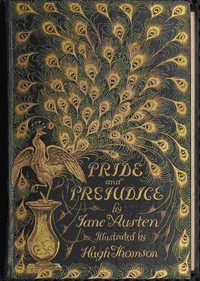
Pride and Prejudice
Jane Austen
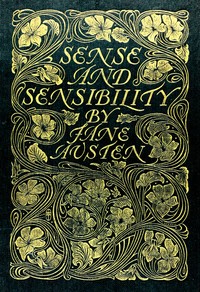
Sense and Sensibility
Jane Austen
Emma
Folio
Emma
Jane Austen
Persuasion
Folio
Persuasion
Jane Austen
Mansfield Park
Folio
Mansfield Park
Jane Austen
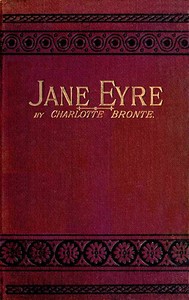
Jane Eyre
Charlotte Brontë
The Tenant of Wildfell Hall
Folio
The Tenant of Wildfell Hall
Anne Brontë