The History of Emily Montague
Folio
length
113,454 words
a few pages a day
~8 min
finished in
60 days
full read
7h 53m
At Folio's default of ten pages a day, you finish The History of Emily Montague in about 60 days — roughly 8 minutes of reading each morning.
The opening
the first pages of The History of Emily Montague, free
As the scene of so great a part of the following work is laid in Canada, I flatter myself there is a peculiar propriety in addressing it to your excellency, to whose probity and enlightened attention the colony owes its happiness, and individuals that tranquillity of mind, without which there can be no exertion of the powers of either the understanding or imagination.
Were I to say all your excellency has done to diffuse, through this province, so happy under your command, a spirit of loyalty and attachment to our excellent Sovereign, of chearful obedience to the laws, and of that union which makes the strength of government, I should hazard your esteem by doing you justice.
I will, therefore, only beg leave to add mine to the general voice of Canada; and to assure your excellency, that
I am, With the utmost esteem and respect, Your most obedient servant, Frances Brooke. London, March 22, 1769.
THE HISTORY OF EMILY MONTAGUE.
LETTER 1.
To John Temple, Esq; at Paris.
Cowes, April 10, 1766.
After spending two or three very agreeable days here, with a party of friends, in exploring the beauties of the Island, and dropping a tender tear at Carisbrook Castle on the memory of the unfortunate Charles the First, I am just setting out for America, on a scheme I once hinted to you, of settling the lands to which I have a right as a lieutenant-colonel on half pay. On enquiry and mature deliberation, I prefer Canada to New-York for two reasons, that it is wilder, and that the women are handsomer: the first, perhaps, every body will not approve; the latter, I am sure, you will.
You may perhaps call my project romantic, but my active temper is ill suited to the lazy character of a reduc'd officer: besides that I am too proud to narrow my circle of life, and not quite unfeeling enough to break in on the little estate which is scarce sufficient to support my mother and sister in the manner to which they have been accustom'd.
What you call a sacrifice, is none at all; I love England, but am not obstinately chain'd down to any spot of earth; nature has charms every where for a man willing to be pleased: at my time of life, the very change of place is amusing; love of variety, and the natural restlessness of man, would give me a relish for this voyage, even if I did not expect, what I really do, to become lord of a principality which will put our large-acred men in England out of countenance. My subjects indeed at present will be only bears and elks, but in time I hope to see the human face divine multiplying around me; and, in thus cultivating what is in the rudest state of nature, I shall taste one of the greatest of all pleasures, that of creation, and see order and beauty gradually rise from chaos.
The vessel is unmoor'd; the winds are fair; a gentle breeze agitates the bosom of the deep; all nature smiles: I go with all the eager hopes of a warm imagination; yet friendship casts a lingering look behind.
Our mutual loss, my dear Temple, will be great. I shall never cease to regret you, nor will you find it easy to replace the friend of your youth. You may find friends of equal merit; you may esteem them equally; but few connexions form'd after five and twenty strike root like that early sympathy, which united us almost from infancy, and has increas'd to the very hour of our separation.
What pleasure is there in the friendships of the spring of life, before the world, the mean unfeeling selfish world, breaks in on the gay mistakes of the just-expanding heart, which sees nothing but truth, and has nothing but happiness in prospect!
I am not surpriz'd the heathens rais'd altars to friendship: 'twas natural for untaught superstition to deify the source of every good; they worship'd friendship, which animates the moral world, on the same principle as they paid adoration to the sun, which gives life to the world of nature.
I am summon'd on board. Adieu!
Ed. Rivers.
LETTER 2.
Keep going from exactly here — Folio remembers your place and serves the next portion tomorrow.
continue reading The History of Emily MontagueAbout this free edition
The History of Emily Montague by Frances Brooke (1724?-1789) is free to read in full. Folio serves it in daily portions you can actually finish, tracks your streak and reading position across devices, and reads every page aloud with a built-in narrator. The text comes from Project Gutenberg.
More like The History of Emily Montague
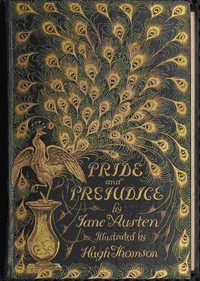
Pride and Prejudice
Jane Austen
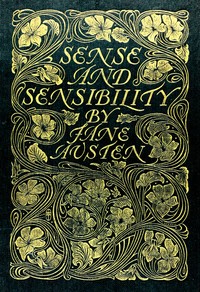
Sense and Sensibility
Jane Austen
Emma
Folio
Emma
Jane Austen
Persuasion
Folio
Persuasion
Jane Austen
Mansfield Park
Folio
Mansfield Park
Jane Austen
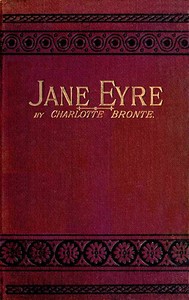
Jane Eyre
Charlotte Brontë
The Tenant of Wildfell Hall
Folio
The Tenant of Wildfell Hall
Anne Brontë
Agnes Grey
Folio
Agnes Grey
Anne Brontë