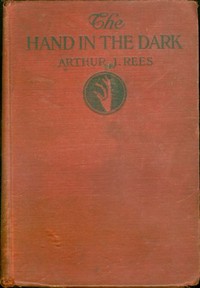
The Hand in the Dark
free to read
length
106,552 words
a few pages a day
~8 min
finished in
57 days
full read
7h 24m
At Folio's default of ten pages a day, you finish The Hand in the Dark in about 57 days — roughly 8 minutes of reading each morning.
The opening
the first pages of The Hand in the Dark, free
Seen in the sad glamour of an English twilight, the old moat-house, emerging from the thin mists which veiled the green flats in which it stood, conveyed the impression of a habitation falling into senility, tired with centuries of existence. Houses grow old like the race of men; the process is not less inevitable, though slower; in both, decay is hastened by events as well as by the passage of Time.
The moat-house was not so old as English country-houses go, but it had aged quickly because of its past. There was a weird and bloody history attached to the place: an historical record of murders and stabbings and quarrels dating back to Saxon days, when a castle had stood on the spot, and every inch of the flat land had been drenched in the blood of serfs fighting under a Saxon tyrant against a Norman tyrant for the sacred catchword of Liberty.
The victorious Norman tyrant had killed the Saxon, taken his castle, and tyrannized over the serfs during his little day, until the greater tyrant, Death, had taught him his first--and last--lesson of humility. After his death some fresh usurper had pulled down his stolen castle, and built a moat-house on the site. During the next few hundred years there had been more fighting for restless ambition, invariably connected with the making and unmaking of tyrants, until an English king lost his head in the cause of Liberty, and the moat-house was destroyed by fire for the same glorious principle.
It was rebuilt by the freebooter who had burnt it down; one Philip Heredith, a descendant of Philip Here-Deith, whose name is inscribed in the Domesday Book as one of the knights of the army of Duke William which had assembled at Dives for the conquest of England. Philip Heredith, who was as great a fighter as his Norman ancestor, established his claim to his new estate, and avoided litigation concerning it, by confining the Royalist owner and his family within the walls of the moat-house before setting it on fire. He afterwards married and settled down in the new house with his young wife. But the honeymoon was disturbed by the ghost of the cavalier he had incinerated, who warned him that as he had founded his line in horror it would end in horror, and the house he had built would fall to the ground.
Philip Heredith, like many other great fighters, was an exceedingly pious man, with a profound belief in the efficacy of prayer. He endeavoured to thwart the ghost's curse by building a church in the moat-house grounds, where he spent his Sundays praying for the eternal welfare of the gentleman he had cut off in the flower of his manhood. Perhaps the prayers were heard, for, when Philip Heredith in the course of time became the first occupant of the brand-new vault he had built for himself and his successors, he left behind him much wealth, and a catalogue of his virtues in his own handwriting. The wealth he left to his heirs, but he expressly stipulated that the record of his virtues was to be carved in stone and placed as an enduring tablet, for the edification of future generations, inside the church he had built.
It was a wise precaution on his part. The dead are dumb as to their own merits, and the living think only of themselves. Time sped away, until the first of the Herediths was forgotten as completely as though he had never existed; even his dust had been crowded off the shelf of his own vault to make room for the numerous descendants of the prolific and prosperous line he had founded. But the tablet remained, and the old moat-house he had built still stood.
It was a wonderful old place and a delight to the eye, this mediaeval moat-house of mellow brick, stone facings, high-pitched roof, with terraced gardens and encircling moat. It had defied Time better than its builder, albeit a little shakily, with signs of decrepitude here and there apparent in the crow's-feet cracks of the brickwork, and decay only too plainly visible in the crazy angles of the tiled roof. But the ivy which covered portions of the brickwork hid some of the ravages of age, and helped the moat-house to show a brave front to the world, a well-preserved survivor of an ornamental period in a commonplace and ugly generation.
Keep going from exactly here — Folio remembers your place and serves the next portion tomorrow.
continue reading The Hand in the DarkAbout this free edition
The Hand in the Dark by Arthur J. Rees (1872-1942) is free to read in full. Folio serves it in daily portions you can actually finish, tracks your streak and reading position across devices, and reads every page aloud with a built-in narrator. The text comes from Project Gutenberg.
More like The Hand in the Dark
The Moon Rock
Folio
The Moon Rock
Arthur J. Rees
The Shrieking Pit
Arthur J. Rees
The Adventures of Sherlock Holmes
Arthur Conan Doyle
The Hound of the Baskervilles
Arthur Conan Doyle
A Study in Scarlet
Folio
A Study in Scarlet
Arthur Conan Doyle
The Sign of the Four
Arthur Conan Doyle

The Memoirs of Sherlock Holmes
Arthur Conan Doyle
The Return of Sherlock Holmes
Arthur Conan Doyle