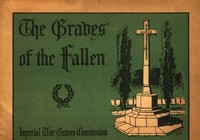
length
2,098 words
a few pages a day
~8 min
finished in
2 days
full read
9 min
At Folio's default of ten pages a day, you finish The Graves of the Fallen in about 2 days — roughly 8 minutes of reading each morning.
The opening
the first pages of The Graves of the Fallen, free
All letters should be addressed to the Secretary, Imperial War Graves Commission, Winchester House, St. James’s Square, S.W. 1; and not to any individual member of the Commission.
Its History.
The origin and development of the Imperial War Graves Commission is very simple. In the first days of the war the different armies engaged created organisations, under the direction of the War Office, to register, mark, and tend the graves of British soldiers, as well as to answer inquiries from relatives, and, where possible, to send them photographs of the graves. Later, a National Committee was constituted, which, on the suggestion of the Prince of Wales, who took a keen personal interest in the work, was expanded into an Imperial Commission, representing the Dominions, India, the Colonies, the fighting Services, Labour, the great public departments interested, and the British Red Cross, which latter had supplied, as it still does to a considerable extent, the funds for photographing and planting the graves.
Its Finance.
The finance of the Commission is Imperial. All parts of the Empire have generously and unreservedly promised to bear their share of the expenses. The Imperial War Conference, having considered the proposals of the Commission, passed the following resolution on June 17, 1918: “The Conference desires to place on record its appreciation of the Labours of the Imperial War Graves Commission, and is in favour of the cost of carrying out the decisions of the Commission being borne by the respective Governments in proportion to the numbers of the graves of their dead.”
[Illustration: A WAR CEMETERY WITH PERMANENT MEMORIALS AS DESIGNED.]
THE CEMETERIES.
With the growth of the war the Commission’s work naturally covered every part of the world where the men of the Empire had served and died--from the vast and known cities of our dead in Flanders and France to hidden and outlying burial-grounds of a few score at the ends of the earth. These resting-places are situated on every conceivable site--on bare hills flayed by years of battle, in orchards and meadows, beside populous towns or little villages, in jungle-glades, at coast ports, in far-away islands, among desert sands, and desolate ravines. It would be as impossible as undesirable to reduce them all to any uniformity of aspect by planting or by architecture.
In a war where the full strength of nations was used without respect of persons, no difference could be made between the graves of officers or men. Yet some sort of central idea was needed that should symbolise our common sacrifice wherever our dead might be laid; and it was realised, above all, that each cemetery and individual grave should be made as permanent as man’s art could devise.
Their Design and Care.
Keep going from exactly here — Folio remembers your place and serves the next portion tomorrow.
continue reading The Graves of the FallenAbout this free edition
The Graves of the Fallen by Rudyard Kipling (1865-1936) is free to read in full. Folio serves it in daily portions you can actually finish, tracks your streak and reading position across devices, and reads every page aloud with a built-in narrator. The text comes from Project Gutenberg.
More like The Graves of the Fallen

The Jungle Book
Rudyard Kipling
Kim
Folio
Kim
Rudyard Kipling
Captains Courageous
Rudyard Kipling
The Second Jungle Book
Rudyard Kipling
The Man Who Would Be King
Folio
The Man Who Would Be King
Rudyard Kipling
Indian Tales
Folio
Indian Tales
Rudyard Kipling
Stories by English Authors: The Orient (Selected by Scribners)
Folio
Stories by English Authors: The Orient (Selected by Scribners)
Rudyard Kipling
Abaft the Funnel
Rudyard Kipling