
The girl from Scotland Yard
free to read
length
62,100 words
a few pages a day
~8 min
finished in
33 days
full read
4h 19m
At Folio's default of ten pages a day, you finish The girl from Scotland Yard in about 33 days — roughly 8 minutes of reading each morning.
The opening
the first pages of The girl from Scotland Yard, free
As Lady Raytham drew aside the long velvet curtains, she looked down into Berkeley Square. It was half-past four o’clock on a cheerless February evening. Rain and sleet were falling and a thin yellow mist added to the gloom of the dying day. An interminable string of cars and taxicabs was turning toward Berkeley Street, their shining black roofs reflecting the glare of the overhead light that had just then hissed and spluttered to life.
She looked blankly toward the desolation of the gardens, a place of bare-limbed trees and shivering shrubs--stared, as though she expected to see some fog wraith take a definite and menacing shape and give tangible form to the shadows that menaced reason and life.
She was a woman of twenty-eight, straight and slim. Hers was the type of classical beauty which would defy the markings of age for the greater part of a lifetime. A fascinating face, calm, austere. Her eyes were a cold English gray. You might imagine her the patrician abbess of some great conventual establishment, or a lady of broad manors defending inexorably the stark castle of her lord against the enemy who came in his absence. Analyse her face, feature by feature, put one with the other, and judge her by the standards which profess to measure such things, and brow and chin said “purpose” with unmistakable emphasis.
She was not in her purposeful mood now; rather was she uncertain and irritable, the nearest emotions to fear that she knew.
She let the curtains fall back until they overlapped, and walked across to the fireplace, glancing at the tiny clock. The salon was half lit; the wall sconces were dark, but the big lamp on the table near the settee glowed brightly. This room bore evidence of money lavishly spent. The greater part of its furnishings would one day reach the museums of millionaire collectors; three pictures that hung upon the apple-green walls were earmarked for the National Gallery.
As she stood looking down into the fire, there was a gentle tap at the door, and the butler came in. He was a tall man, rather portly in his way; a man with double chin and an unlined face. He carried a small salver in his hand, a buff oblong in the centre.
Lady Raytham tore open the envelope. It was dated from Constantinople, and was from Raytham. She had been expecting the telegram all that afternoon. Raytham, of course, had changed his plans. In that sentence was epitomized his life and career. He was going on to Basra and thence to Bushire, to see the interstate oil wells, or the sites of them. He was expensively apologetic for two closely written sheets. If he could not return before April, would she go on to Cannes as she had arranged? He was “awfully sorry,” he must have said that at least four times.
She read it again, folded the pink sheets and laid them on the table.
The butler was waiting, head slightly bent forward as though to catch her slightest whisper. She did not look at him.
“Thank you.”
“Thank you, m’lady.”
He was opening the door when she spoke.
“Druze, I am expecting the Princess Bellini and possibly Mrs. Gurden. I will have tea when they come.”
“Very good, m’lady.”
The door closed softly behind him. She raised her sombre eyes and looked at the polished wood of it with a curious, listening lift of her head as though she expected to hear something. But the butler was going slowly down the stairs, a quizzical smile in his eyes; his white, plump hands sliding in and over one another. He stopped on the landing to admire the little marble statue of Circe that his lordship had brought from Sicily. It was a habit of his to admire that Circe with the sly eyes and the beckoning finger. And as he looked, his mouth was puckered as though he were whistling.
A sharp rat-tat on the door made him withdraw from his contemplation. He reached the hall as the second footman opened the door.
Keep going from exactly here — Folio remembers your place and serves the next portion tomorrow.
continue reading The girl from Scotland YardAbout this free edition
The girl from Scotland Yard by Edgar Wallace (1875-1932) is free to read in full. Folio serves it in daily portions you can actually finish, tracks your streak and reading position across devices, and reads every page aloud with a built-in narrator. The text comes from Project Gutenberg.
More like The girl from Scotland Yard
The Angel of Terror
Folio
The Angel of Terror
Edgar Wallace

The Crimson Circle
Edgar Wallace
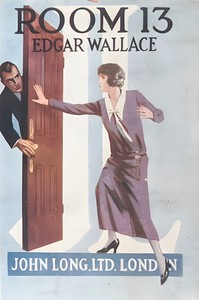
Room 13
Edgar Wallace
The Man Who Knew
Folio
The Man Who Knew
Edgar Wallace
The Clue of the Twisted Candle
Folio
The Clue of the Twisted Candle
Edgar Wallace
The Green Rust
Folio
The Green Rust
Edgar Wallace
The Daffodil Mystery
Folio
The Daffodil Mystery
Edgar Wallace
The Duke in the Suburbs
Edgar Wallace