
The Germ Growers
first published 1892 · free to read
length
61,583 words
a few pages a day
~8 min
finished in
33 days
full read
4h 17m
At Folio's default of ten pages a day, you finish The Germ Growers in about 33 days — roughly 8 minutes of reading each morning.
The opening
the first pages of The Germ Growers, free
When I first heard the name of Kimberley[1] it did not remind me of the strange things which I have here to record, and which I had witnessed somewhere in its neighbourhood years before. But one day, in the end of last summer, I overheard a conversation about its geography which led me to recognise it as a place that I had formerly visited under very extraordinary circumstances. The recognition was in this wise. Jack Wilbraham and I were spending a little while at a hotel in Gippsland, partly on a tour of pleasure and partly, so at least we persuaded ourselves, on business. The fact was, however, that for some days past, the business had quite retreated into the background, or, to speak more correctly, we had left it behind at Bairnsdale, and had come in search of pleasure a little farther south.
[Footnote 1: In North-west Australia.]
It was delicious weather, warm enough for light silk coats in the daytime, and cold enough for two pairs of blankets at night. We had riding and sea-bathing to our hearts’ content, and even a rough kind of yachting and fishing. The ocean was before us—we heard its thunder night and day; and the lakes were behind us, stretching away to the promontory which the Mitchell cuts in two, and thence to the mouth of the Latrobe, which is the highway to Sale. Three times a week a coach passed our door, bound for the Snowy River and the more savage regions beyond. Any day for a few shillings we could be driven to Lake Tyers, to spend a day amidst scenery almost comparable with the incomparable Hawkesbury. Last of all, if we grew tired of the bell-birds and the gum-trees and the roar of the ocean, we were within a day’s journey of Melbourne by lake and river and rail.
It was our custom to be out all day, but home early and early to bed. We used to take our meals in a low long room which was well aired but poorly lighted, whether by day or night. And here, when tea was over and the womenkind had retired, we smoked, whenever, as often happened, the evening was cold enough to make a shelter desirable; smoked and chatted. There was light enough to see the smoke of your pipe and the faces of those near you; but if you were listening to the chatter of a group in the other end of the room the faces of the speakers were so indistinct as often to give a startling challenge to your imagination if you had one, and if it was accustomed to take the bit in its teeth. I sometimes caught myself partly listening to a story-teller in the other end of the room and partly fashioning a face out of his dimly seen features, which quite belied the honest fellow’s real countenance when the flash of a pipelight or a shifted lamp revealed it more fully.
Jack and I were more of listeners than talkers, and we were usually amongst the earliest who retired. But one evening there was a good deal of talk about the new gold-field in the north-west, and a keen-looking bushman who seemed to have just returned from the place began to describe its whereabouts. Then I listened attentively, and at one point in his talk, I started and looked over at Jack, and I saw that he was already looking at me. I got up and left the room without a sign to him, but I knew that he would follow me, and he did. It was bright moonlight, and when we met outside we strolled down to the beach together. It was a wide, long, and lonely beach, lonely to the very last degree, and it was divided from the house by a belt of scrub near a mile wide. We said not a word to one another till we got quite near the sea. Then I turned round and looked Jack in the face and said, “Why, man, it must have been quite near the place.”
“No,” said he, “it may have been fifty miles or more away, their knowledge is loose, and their description looser, but it must be somewhere in the neighbourhood, and I suppose they are sure to find it.”
“I do not know,” said I; and after a pause I added, “Jack, it seems to me they might pass all over the place and see nothing of what we saw.”
“God knows,” he muttered, and then he sat down on a hummock of sand and I beside him. Then he said, “Why have you never told the story, Bob?”
“Don’t you know why, Jack?” I answered. “They would lock me up in a madhouse; there would be no one to corroborate me but you, and if you did so you would be locked up along with me.”
“That might be,” said he, “if they believed you; but they would not believe you, they would think you were simply romancing.”
“What would be the good of speaking then?” said I.
“Don’t speak,” he repeated, “but write, litera scripta manet, you will be believed sometime. But meanwhile you can take as your motto that verse in Virgil about the gate of ivory, and that will save you from being thought mad. You have a knack of the pen, Bob, you ought to try it.”
Keep going from exactly here — Folio remembers your place and serves the next portion tomorrow.
continue reading The Germ GrowersAbout this free edition
The Germ Growers by Robert Potter (1831-1908) is free to read in full. Folio serves it in daily portions you can actually finish, tracks your streak and reading position across devices, and reads every page aloud with a built-in narrator. The text comes from Project Gutenberg.
More like The Germ Growers

The Time Machine
H. G. Wells

The War of the Worlds
H. G. Wells

The Invisible Man
H. G. Wells
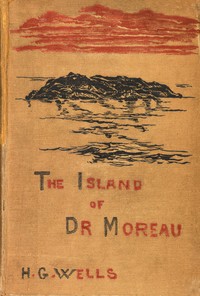
The Island of Doctor Moreau
H. G. Wells
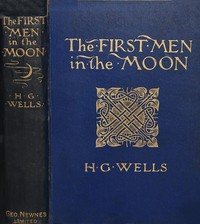
The First Men in the Moon
H. G. Wells
The Sleeper Awakes
Folio
The Sleeper Awakes
H. G. Wells
The Food of the Gods and How It Came to Earth
Folio
The Food of the Gods and How It Came to Earth
H. G. Wells

Frankenstein
Mary Shelley