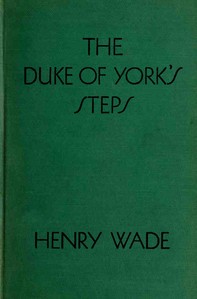
The Duke of York's steps
free to read
length
79,273 words
a few pages a day
~8 min
finished in
42 days
full read
5h 30m
At Folio's default of ten pages a day, you finish The Duke of York's steps in about 42 days — roughly 8 minutes of reading each morning.
The opening
the first pages of The Duke of York's steps, free
“Too much vintage port last night, I’m afraid, Leo. Old Grendonian dinner. ‘Hair of the dog that bit you’ may be all right with champagne, but port—no.”
His companion laughed.
“I should have thought you were too old a Grendonian to fall into that trap,” he said. “Where was it? The Grandleigh? They generally give you pretty good stuff there. I hate those functions myself—not that there are any Old-Boy dinners of the school I went to.”
There was a trace of bitterness in Hessel’s voice, but his companion ignored it.
“I don’t like them myself,” he said. “I haven’t been to one for years, but this was a ter-centenary affair and I rather had to go. The wine was all right—it was the speeches that were the trouble—they kept at it till nearly eleven. I got mine over early—and shortly—but some of them took the opportunity to let off steam. Pretty indifferent steam most of it was, too. One has to drink something—toasts and general boredom. I couldn’t drink the brandy—1812 on the bottle and 1912 inside it—the usual Napoleon ramp. But the Cockburn was genuine stuff—’96. Must have got outside the best part of a bottle—not wise in these soft days. Have some coffee, old man. Shall we have it here? The guests’ smoking-room is sure to be packed now, and it’s after two—we can smoke in here.”
The two men were sitting at a small corner table in the handsome dining-room of the City Constitutional Club, of which the elder, Sir Garth Fratten, was a member. Chairman of the well-known “family” bank which bears his name, Sir Garth occupied an assured position in the esteem, not only of this exclusive club, but of the “City” generally. Still well on the right side of seventy, the banker was commonly regarded as being at the peak of a long and honourable financial career. He had kept his mind abreast of the rapidly changing conditions of post-war finance, and this faculty, coupled with his great practical knowledge and experience, caused his opinion and his approval to be valued very highly, not only by individuals, but even at times by the Treasury. He had been knighted for his services, financial and otherwise, to the country in the Great War and it was thought not unlikely that his specialized knowledge might lead him to a seat in the Upper House.
His companion, Leopold Hessel, was about eight years his junior, though his scanty hair was at least as grey as Fratten’s—probably because his path in life had been less smooth. His skin, however, was clean and, apart from the eyes, unlined, and his figure slim. He had the dark eyes and sensitive hands, but none of the more exaggerated features of his race, and the charm of his appearance was confirmed by the fact of his close friendship with a man of Sir Garth Fratten’s discrimination. This friendship had been of untold value to Hessel in the war, when the position of men of even remote German descent had been extremely difficult. Fratten, however, had insisted upon Hessel retaining his position upon the directorate of the bank and this action by so prominent a citizen, being regarded as a certificate of Hessel’s patriotism, had saved him the worst of the ignominies that were the lot of many less fortunate than himself. None the less, the scar of those harrowing years remained and was probably reflected in the conversation that was now taking place.
“I wish you’d let me put you up for this place, Leo,” Fratten was saying. “I hate having to treat you as a guest—you know what I mean—and take you into that poky little smoking-room on the rare occasions when you consent to lunch with me.”
Hessel smiled rather bitterly and shook his head.
“It’s good of you, Fratten,” he said. “In many ways I’d like to belong here, but . . .” he paused, as if seeking how best to express a refusal that might appear ungracious. “Perhaps I haven’t the courage to risk a licking now,” he concluded.
Fratten’s gesture of denial was emphatic.
“You’re not still thinking of that damned war business, are you? That’s all forgotten long ago—not that it ever applied to you. Or is it Wendheim and Lemuels? They weren’t blackballed because they were . . . because of their religion. It was simply that this club has always asked for other qualifications besides wealth and business success. That ass Erdlingham didn’t realize it, or they’d got the whip hand of him or something—he’s in all their things—and he put them up and of course they just got pilled—not the sort we want here. You are—you’d get in without the least doubt.”
Keep going from exactly here — Folio remembers your place and serves the next portion tomorrow.
continue reading The Duke of York's stepsAbout this free edition
The Duke of York's steps by Henry Wade (1887-1969) is free to read in full. Folio serves it in daily portions you can actually finish, tracks your streak and reading position across devices, and reads every page aloud with a built-in narrator. The text comes from Project Gutenberg.
More like The Duke of York's steps
The Adventures of Sherlock Holmes
Arthur Conan Doyle
The Hound of the Baskervilles
Arthur Conan Doyle
A Study in Scarlet
Folio
A Study in Scarlet
Arthur Conan Doyle
The Sign of the Four
Arthur Conan Doyle
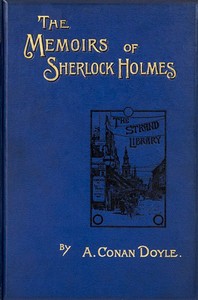
The Memoirs of Sherlock Holmes
Arthur Conan Doyle
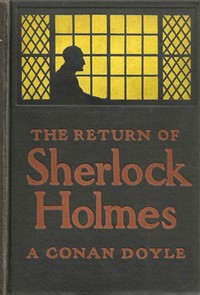
The Return of Sherlock Holmes
Arthur Conan Doyle
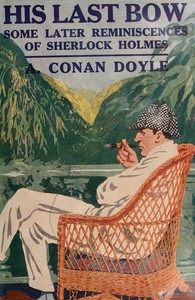
His Last Bow
Arthur Conan Doyle
The Valley of Fear
Arthur Conan Doyle