The Desert of Wheat
Folio
length
117,450 words
a few pages a day
~8 min
finished in
62 days
full read
8h 9m
At Folio's default of ten pages a day, you finish The Desert of Wheat in about 62 days — roughly 8 minutes of reading each morning.
The opening
the first pages of The Desert of Wheat, free
Late in June the vast northwestern desert of wheat began to take on a tinge of gold, lending an austere beauty to that endless, rolling, smooth world of treeless hills, where miles of fallow ground and miles of waving grain sloped up to the far-separated homes of the heroic men who had conquered over sage and sand.
These simple homes of farmers seemed lost on an immensity of soft gray and golden billows of land, insignificant dots here and there on distant hills, so far apart that nature only seemed accountable for those broad squares of alternate gold and brown, extending on and on to the waving horizon-line. A lonely, hard, heroic country, where flowers and fruit were not, nor birds and brooks, nor green pastures. Whirling strings of dust looped up over fallow ground, the short, dry wheat lay back from the wind, the haze in the distance was drab and smoky, heavy with substance.
A thousand hills lay bare to the sky, and half of every hill was wheat and half was fallow ground; and all of them, with the shallow valleys between, seemed big and strange and isolated. The beauty of them was austere, as if the hand of man had been held back from making green his home site, as if the immensity of the task had left no time for youth and freshness. Years, long years, were there in the round-hilled, many-furrowed gray old earth. And the wheat looked a century old. Here and there a straight, dusty road stretched from hill to hill, becoming a thin white line, to disappear in the distance. The sun shone hot, the wind blew hard; and over the boundless undulating expanse hovered a shadow that was neither hood of dust nor hue of gold. It was not physical, but lonely, waiting, prophetic, and weird. No wild desert of wastelands, once the home of other races of man, and now gone to decay and death, could have shown so barren an acreage. Half of this wandering patchwork of squares was earth, brown and gray, curried and disked, and rolled and combed and harrowed, with not a tiny leaf of green in all the miles. The other half had only a faint golden promise of mellow harvest; and at long distance it seemed to shimmer and retreat under the hot sun. A singularly beautiful effect of harmony lay in the long, slowly rising slopes, in the rounded hills, in the endless curving lines on all sides. The scene was heroic because of the labor of horny hands; it was sublime because not a hundred harvests, nor three generations of toiling men, could ever rob nature of its limitless space and scorching sun and sweeping dust, of its resistless age-long creep back toward the desert that it had been.
* * * * *
Here was grown the most bounteous, the richest and finest wheat in all the world. Strange and unfathomable that so much of the bread of man, the staff of life, the hope of civilization in this tragic year 1917, should come from a vast, treeless, waterless, dreary desert!
This wonderful place was an immense valley of considerable altitude called the Columbia Basin, surrounded by the Cascade Mountains on the west, the Coeur d'Alene and Bitter Root Mountains on the east, the Okanozan range to the north, and the Blue Mountains to the south. The valley floor was basalt, from the lava flow of volcanoes in ages past. The rainfall was slight except in the foot-hills of the mountains. The Columbia River, making a prodigious and meandering curve, bordered on three sides what was known as the Bend country. South of this vast area, across the range, began the fertile, many-watered region that extended on down into verdant Oregon. Among the desert hills of this Bend country, near the center of the Basin, where the best wheat was raised, lay widely separated little towns, the names of which gave evidence of the mixed population. It was, of course, an exceedingly prosperous country, a fact manifest in the substantial little towns, if not in the crude and unpretentious homes of the farmers. The acreage of farms ran from a section, six hundred and forty acres, up into the thousands.
Keep going from exactly here — Folio remembers your place and serves the next portion tomorrow.
continue reading The Desert of WheatAbout this free edition
The Desert of Wheat by Zane Grey (1872-1939) is free to read in full. Folio serves it in daily portions you can actually finish, tracks your streak and reading position across devices, and reads every page aloud with a built-in narrator. The text comes from Project Gutenberg.
More like The Desert of Wheat
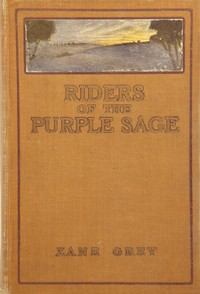
Riders of the Purple Sage
Zane Grey
The Lone Star Ranger
Folio
The Lone Star Ranger
Zane Grey
The Light of the Western Stars
Zane Grey
Desert Gold
Folio
Desert Gold
Zane Grey
The Last Trail
Folio
The Last Trail
Zane Grey
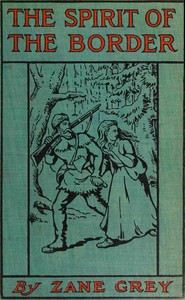
The Spirit of the Border
Zane Grey
The Rainbow Trail
Folio
The Rainbow Trail
Zane Grey
Wildfire
Folio
Wildfire
Zane Grey