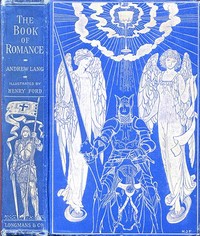
The Book of Romance
free to read
length
98,120 words
a few pages a day
~8 min
finished in
52 days
full read
6h 49m
At Folio's default of ten pages a day, you finish The Book of Romance in about 52 days — roughly 8 minutes of reading each morning.
The opening
the first pages of The Book of Romance, free
It is to be supposed that children do not read Prefaces; these are Bluebeard's rooms, which they are not curious to unlock. A few words may therefore be said about the Romances contained in this book. In the editor's opinion, romances are only fairy tales grown up. The whole mass of the plot and incident of romance was invented by nobody knows who, nobody knows when, nobody knows where. Almost every people has the Cinderella story, with all sorts of variations: a boy hero in place of a girl heroine, a beast in place of a fairy godmother, and so on. The Zuñis, an agricultural tribe of New Mexico, have a version in which the moral turns out to be against poor Cinderella, who comes to an ill end. The Red Indians have the tale of Orpheus and Eurydice, told in a very touching shape, but without the music. On the other hand, the negroes in the States have the Orpheus tale, adapted to plantation life, in a form which is certainly borrowed from Europeans. This version was sent to me some years ago, by Mr. Barnet Phillips, Brooklyn, New York, and I give it here for its curiosity. If the proper names, Jim Orpus and Dicey, had not been given, we might not feel absolutely certain that the story was borrowed. It is a good example of adaptation from the heroic age of Greece to the servile age of Africans.
DICEY AND ORPUS
Dat war eber so long ago, 'cause me granmammy tell me so. It h'aint no white-folks yarn--no Sah. Gall she war call Dicey, an' she war borned on de plantation. Whar Jim Orpus kum from, granmammy she disremember. He war a boss-fiddler, he war, an' jus' that powerful, dat when de mules in de cotton field listen to um, dey no budge in de furrer. Orpus he neber want no mess of fish, ketched wid a angle. He just take him fiddle an' fool along de branch, an' play a tune, an' up dey comes, an' he cotch 'em in he hans. He war mighty sot on Dicey, an' dey war married all proper an' reg'lar. Hit war so long ago, dat de railroad war a bran-new spick an' span ting in dose days. Dicey once she lounge 'round de track, 'cause she tink she hear Orpus a fiddlin' in de fur-fur-away. Onyways de hengine smash her. Den Jim Orpus he took on turrible, an' when she war buried, he sot him down on de grave, an' he fiddle an' he fiddle till most yo' heart was bruk.
An' he play so long dat de groun' crummle (crumble) an' sink, an' nex' day, when de peoples look for Jim Orpus, dey no find um; oney big-hole in de lot, an' nobody never see Jim Orpus no mo'. An' dey do say, dat ef yo' go inter a darky's burial-groun', providin' no white man been planted thar, an' yo' clap yo' ear to de groun', yo' can hear Jim's fiddle way down deep belo', a folloin' Dicey fru' de lan' of de Golden Slippah.[1]
[Footnote 1: Mr. Phillips, writing in 1896, says that the tale was told him by a plantation hand, thirty years ago, 'long before the Uncle Remus period.']
* * * * *
Keep going from exactly here — Folio remembers your place and serves the next portion tomorrow.
continue reading The Book of RomanceAbout this free edition
The Book of Romance by Andrew Lang (1844-1912) is free to read in full. Folio serves it in daily portions you can actually finish, tracks your streak and reading position across devices, and reads every page aloud with a built-in narrator. The text comes from Project Gutenberg.
More like The Book of Romance
Historical Mysteries
Folio
Historical Mysteries
Andrew Lang

The Mark of Cain
Andrew Lang
Much Darker Days
Folio
Much Darker Days
Andrew Lang
The Arabian Nights Entertainments
Folio
The Arabian Nights Entertainments
Andrew Lang
The Blue Fairy Book
Folio
The Blue Fairy Book
Andrew Lang
The Gold Of Fairnilee
Folio
The Gold Of Fairnilee
Andrew Lang
The Red Romance Book
Andrew Lang
He
Andrew Lang