
The adventures of Heine
free to read
length
89,529 words
a few pages a day
~8 min
finished in
48 days
full read
6h 13m
At Folio's default of ten pages a day, you finish The adventures of Heine in about 48 days — roughly 8 minutes of reading each morning.
The opening
the first pages of The adventures of Heine, free
Secret Service work is a joke in peace time and it is paid on joke rates. People talk of the fabulous sums of money which our Government spend on this kind of work, and I have no doubt a very large sum was spent every year, but it had to go a long way. Even Herr Kressler, of the Bremen-America Line, who gave me my monthly cheque, used to nod and wink when he handed over my two hundred marks.
“Ah, my good Heine,” he would say, stroking his stubbly beard, “they make a fool of me, the Government, but I suppose I mustn’t ask who is your other paymaster?”
“Herr Kressler,” said I earnestly, “I assure you that this is the whole sum I receive from the Government.”
“So!” he would say and shake his head: “Ah, you are close fellows and I mustn’t ask questions!”
There was little to do save now and again to keep track of some of the bad men, the extreme Socialists, and the fellows who ran away from Germany to avoid military service. I often wished there were more, because it would have been possible to have made a little on one’s expenses. Fortunately, two or three of the very big men in New York and Chicago knew the work I was doing, and credited me with a much larger income than I possessed. The reputation of being well off is a very useful one, and in my case, it brought me all sorts of commissions and little tips which I could profitably exploit on Wall Street, and in one way or another I lived comfortably, had a nice apartment on Riverside Drive, backed horses, and enjoyed an occasional trip to Washington, at my Government’s expense.
I first knew that war was likely to break out in July. I think we Germans understood the European situation much better than the English, and certainly much better than the Americans, and we knew that the event at Serajevo--by the way, poor Klein of our service and an old colleague of mine, was killed by the bomb which was intended for the Archduke, though nobody seems to have noticed the fact--would produce the war which Austria had been expecting or seeking an excuse to wage for two years.
If I remember aright the assassination was committed on the Sunday morning. The New York papers published the story on that day and on the Monday afternoon I was summoned to Washington, and saw the Secretary, who was in charge of our Department, on the Tuesday evening after dinner.
All the big people, even his Excellency, called me by my Christian name, for I was at college with many of the officials who are prominent in the world to-day, and I served as volunteer in the engineers of the guard and afterwards served a probation on the Great General Staff, Survey Department.
The Secretary was very grave and told me that war was almost certain, and that Austria was determined to settle with Serbia for good, but that it was feared that Russia would come in and that the war could not be localised because, if Russia made war, Germany and France would also be involved.
Personally, I have never liked the French, and my French is not particularly good. I was hoping that he was going to tell us that England was concerned, and I asked him if this was not the case. To my disappointment, he told me that England would certainly not fight; that she would remain neutral, and that strict orders had been issued that nothing was to be done which would in any way annoy the English.
“Their army,” he said, “is beneath contempt, but their navy is the most powerful in the world and its employment might have very serious consequences.”
It seemed very early to talk about war, with the newspapers still full of long descriptions of the Serajevo murder and the removal of the Archduke’s body, and I remembered after with what astounding assurance our Secretary had spoken.
Keep going from exactly here — Folio remembers your place and serves the next portion tomorrow.
continue reading The adventures of HeineAbout this free edition
The adventures of Heine by Edgar Wallace (1875-1932) is free to read in full. Folio serves it in daily portions you can actually finish, tracks your streak and reading position across devices, and reads every page aloud with a built-in narrator. The text comes from Project Gutenberg.
More like The adventures of Heine
The Angel of Terror
Folio
The Angel of Terror
Edgar Wallace

The Crimson Circle
Edgar Wallace
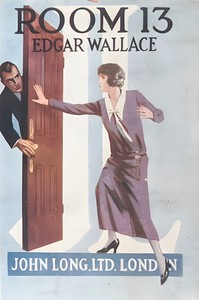
Room 13
Edgar Wallace
The Man Who Knew
Folio
The Man Who Knew
Edgar Wallace
The Clue of the Twisted Candle
Folio
The Clue of the Twisted Candle
Edgar Wallace
The Green Rust
Folio
The Green Rust
Edgar Wallace
The Daffodil Mystery
Folio
The Daffodil Mystery
Edgar Wallace
The Duke in the Suburbs
Edgar Wallace