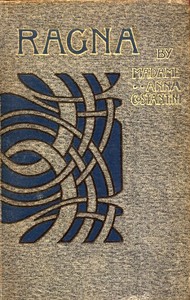
length
109,049 words
a few pages a day
~8 min
finished in
58 days
full read
7h 34m
At Folio's default of ten pages a day, you finish Ragna in about 58 days — roughly 8 minutes of reading each morning.
The opening
the first pages of Ragna, free
We see her first, a tall child with wind-blown hair standing on the rocky point of a barren promontory where fjord and ocean meet, wild as the sea-birds that circle about her head--indeed at this time wildness was the keynote of her nature. The household tasks and lessons disposed of, she spent the rest of the day in rambles over the rugged country side, or in exploits that kept the older members of the family in breathless suspense. It was she who mounted bareback the unbroken horses in the pasture, she who sailed her boat down the foaming fjord in the teeth of the storm. Danger heightened her enjoyment, and true descendant of the vikings of old, she looked her best, lithe and straight, breasting the gale, the joy of the struggle gleaming in her sea-blue eyes, flushing her cheeks, her long golden hair flung out on the wind like a triumphal banner.
Her home was a long, low, timber house, sheltering amid pines and firs, under the lee of a high rocky hill, a home built for the long northern winters, the long months when the country lay snow-bound. The winter afternoons and evenings were spent in sewing or embroidery, when the father or the mother read aloud, or grandmother told tales of the Old Times, and of the family. The favourite was that of brave young Uncle Olaf, who had sailed to the frozen North in his whaler, never to return. Grandmother always wept at the end of this tale, and father would wipe his spectacles and gaze intently into the fire, but to the children it was a splendid myth, and on clear days they would climb to the bare headland to the north of the house, and stand looking out to sea, watching for Uncle Olaf with his ship, bringing home treasure untold.
To Ragna especially, Uncle Olaf was an embodiment of the spirit of adventure and of the sea; he became in her imagination a sort of "Flying Dutchman," doomed to sail forever and ever the Northern Seas, passing the fjord and his old home in the whirling storm, doomed never to bring his ship into port, never to rest in the haven where he fain would be. She loved him, the tall, beautiful young sailor, with the waving fair hair and deep-set blue eyes, and she imagined him amongst his grey-bearded seamen,--they would grow old, but he, never. Some days when she took her boat out in the open water, beyond the sheltering fjord, she would imagine that far away against the dark horizon, against the gathering storm-clouds, she saw the phantom vessel, flying before the wind, all sails set, half veiled in the blowing scud. Her two sisters would talk of when Uncle Olaf should come home, of the riches he would bring, and the wonderful tales of adventure in far countries he would tell, but only Ragna knew that he would never come, that his mysterious doom was to sail on and on till the Judgment Day, longing for peace and home, family and joy, but never to find them; seeing his comrades grow old and grey, and die--but himself, always young, always stretching longing arms toward the happiness and rest he might never attain to--and so on and on for ever, till the end of the world.
Ragna, as you may see, was impulsive and visionary, and while her sisters both became capable little housewives, she took but little interest in homely duties. Eagerly she read whatever fell in her way, but especially she loved the old Sagas, with their great fierce women, and strong, terribly human men. She heard the call of the Valkyries in the wind, saw their shapes in the battling clouds; the Aurora Borealis to her, lighted the feasting of heroes in Valhalla. Naturally, she wrote verses herself, but in secret, hiding her copy-book deep in her clothes press. There her sister Lotte found it one fateful day, and produced it, in a fit of childish mischief, after supper in the family circle. Poor Ragna, all confusion and blushes, fearing the inevitable reprimand for foolish waste of time, tried to snatch her darling, but the father held up his hand.
"Give that book to me, Lotte," he said, and when she had complied, he locked it up in his desk, and nothing further was said.
A week passed, and still Ragna trembled for the fate of her treasure, but dared not inquire. She stood in awe of her father, and would as soon have bearded a lion in his den, as question him. When he finally summoned her to his study, and bade her close the door behind her, she entered timidly, not daring to look him in the face. If he was secretly amused by her air of conscious guilt, he gave no sign.
Keep going from exactly here — Folio remembers your place and serves the next portion tomorrow.
continue reading RagnaAbout this free edition
Ragna by Anna Miller Costantini (1880-) is free to read in full. Folio serves it in daily portions you can actually finish, tracks your streak and reading position across devices, and reads every page aloud with a built-in narrator. The text comes from Project Gutenberg.
More like Ragna
Pride and Prejudice
Jane Austen
Sense and Sensibility
Jane Austen
Emma
Folio
Emma
Jane Austen
Persuasion
Folio
Persuasion
Jane Austen
Mansfield Park
Folio
Mansfield Park
Jane Austen
Jane Eyre
Charlotte Brontë
The Tenant of Wildfell Hall
Folio
The Tenant of Wildfell Hall
Anne Brontë
Agnes Grey
Folio
Agnes Grey
Anne Brontë