Quotes and Images from Celebrated Crimes
Folio
length
4,220 words
a few pages a day
~8 min
finished in
3 days
full read
18 min
At Folio's default of ten pages a day, you finish Quotes and Images from Celebrated Crimes in about 3 days — roughly 8 minutes of reading each morning.
The opening
the first pages of Quotes and Images from Celebrated Crimes, free
NOTE: Dumas's 'Celebrated Crimes' was not written for children. The novelist has spared no language--has minced no words--to describe the violent scenes of a violent time.
INTRODUCTION
The contents of these volumes of 'Celebrated Crimes', as well as the motives which led to their inception, are unique. They are a series of stories based upon historical records, from the pen of Alexandre Dumas, pere, when he was not "the elder," nor yet the author of D'Artagnan or Monte Cristo, but was a rising young dramatist and a lion in the literary set and world of fashion.
Dumas, in fact, wrote his 'Crimes Celebres' just prior to launching upon his wonderful series of historical novels, and they may therefore be considered as source books, whence he was to draw so much of that far-reaching and intimate knowledge of inner history which has perennially astonished his readers. The Crimes were published in Paris, in 1839-40, in eight volumes, comprising eighteen titles--all of which now appear in the present carefully translated text. The success of the original work was instantaneous. Dumas laughingly said that he thought he had exhausted the subject of famous crimes, until the work was off the press, when he immediately became deluged with letters from every province in France, supplying him with material upon other deeds of violence! The subjects which he has chosen, however, are of both historic and dramatic importance, and they have the added value of giving the modern reader a clear picture of the state of semi-lawlessness which existed in Europe, during the middle ages. "The Borgias, the Cenci, Urbain Grandier, the Marchioness of Brinvilliers, the Marchioness of Ganges, and the rest--what subjects for the pen of Dumas!" exclaims Garnett.
Space does not permit us to consider in detail the material here collected, although each title will be found to present points of special interest. The first volume comprises the annals of the Borgias and the Cenci. The name of the noted and notorious Florentine family has become a synonym for intrigue and violence, and yet the Borgias have not been without stanch defenders in history.
Another famous Italian story is that of the Cenci. The beautiful Beatrice Cenci--celebrated in the painting of Guido, the sixteenth century romance of Guerrazi, and the poetic tragedy of Shelley, not to mention numerous succeeding works inspired by her hapless fate--will always remain a shadowy figure and one of infinite pathos.
The second volume chronicles the sanguinary deeds in the south of France, carried on in the name of religion, but drenching in blood the fair country round about Avignon, for a long period of years.
The third volume is devoted to the story of Mary Queen of Scots, another woman who suffered a violent death, and around whose name an endless controversy has waged. Dumas goes carefully into the dubious episodes of her stormy career, but does not allow these to blind his sympathy for her fate. Mary, it should be remembered, was closely allied to France by education and marriage, and the French never forgave Elizabeth the part she played in the tragedy.
The fourth volume comprises three widely dissimilar tales. One of the strangest stories is that of Urbain Grandier, the innocent victim of a cunning and relentless religious plot. His story was dramatised by Dumas, in 1850. A famous German crime is that of Karl-Ludwig Sand, whose murder of Kotzebue, Councillor of the Russian Legation, caused an international upheaval which was not to subside for many years.
An especially interesting volume is number six, containing, among other material, the famous "Man in the Iron Mask." This unsolved puzzle of history was later incorporated by Dumas in one of the D'Artagnan Romances a section of the Vicomte de Bragelonne, to which it gave its name. But in this later form, the true story of this singular man doomed to wear an iron vizor over his features during his entire lifetime could only be treated episodically. While as a special subject in the Crimes, Dumas indulges his curiosity, and that of his reader, to the full. Hugo's unfinished tragedy,'Les Jumeaux', is on the same subject; as also are others by Fournier, in French, and Zschokke, in German.
Keep going from exactly here — Folio remembers your place and serves the next portion tomorrow.
continue reading Quotes and Images from Celebrated CrimesAbout this free edition
Quotes and Images from Celebrated Crimes by Alexandre Dumas (1802-1870) is free to read in full. Folio serves it in daily portions you can actually finish, tracks your streak and reading position across devices, and reads every page aloud with a built-in narrator. The text comes from Project Gutenberg.
More like Quotes and Images from Celebrated Crimes
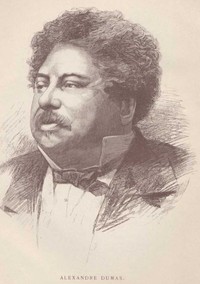
Derues
Alexandre Dumas
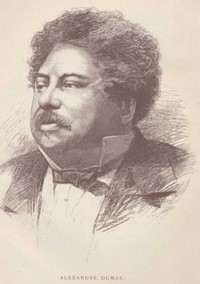
Marquise Brinvillier
Alexandre Dumas
Widger's Quotations from the Project Gutenberg Editions of Dumas' Celebrated Crimes
Folio
Widger's Quotations from the Project Gutenberg Editions of Dumas' Celebrated Crimes
Alexandre Dumas
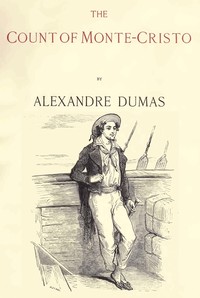
The Count of Monte Cristo
Alexandre Dumas
The Three Musketeers
Folio
The Three Musketeers
Alexandre Dumas
The Man in the Iron Mask
Folio
The Man in the Iron Mask
Alexandre Dumas

Twenty Years After
Alexandre Dumas
The Vicomte de Bragelonne
Folio
The Vicomte de Bragelonne
Alexandre Dumas