Pirates
Folio
length
22,861 words
a few pages a day
~8 min
finished in
13 days
full read
1h 35m
At Folio's default of ten pages a day, you finish Pirates in about 13 days — roughly 8 minutes of reading each morning.
The opening
the first pages of Pirates, free
Time, though a good Collector, is not always a reliable Historian. That is to say, that although nothing of interest or importance is lost, yet an affair may be occasionally invested with a glamour that is not wholly its own. I venture to think that Piracy has fortuned in this particular. We are apt to base our ideas of Piracy on the somewhat vague ambitions of our childhood; and I suppose, were such a thing possible, the consensus of opinion in our nurseries as to a future profession in life would place Piracy but little below the glittering heights of the police force and engine-driving. Incapable of forgetting this in more mature years, are we not inclined to deck Her (the "H" capital, for I speak of an ideal), if not in purple and fine linen, at least with a lavish display of tinsel and gilt? Nursery lore remains with us, whether we would or not, for all our lives; and generations of ourselves, as schoolboys and pre-schoolboys, have tricked out Piracy in so resplendent a dress that she has fairly ousted in our affections, not only her sister profession of "High Toby and the Road," but every other splendid and villainous vocation. Yet Teach, Kid, and Avery were as terrible or grim as Duval, Turpin, and Sheppard were courtly or whimsical. And the terrible is a more vital affair than the whimsical. Is it, then, unnatural that, after a lapse of nigh on two centuries, we should shake our wise heads and allow that which is still nursery within us to deplore the loss of those days when we ran--before a favouring "Trade"--the very good chance of being robbed, maimed, or murdered by Captain Howel Davis or Captain Neil Gow? It is as well to remember that the "Captains" in this book were seamen whose sole qualifications to the title were ready wit, a clear head, and, maybe, that certain indefinable "power of the eye" that is the birth-right of all true leaders. The piratical hero of our childhood is traceable in a great extent to the "thrillers," toy plays, and penny theatres of our grandfathers. Here our Pirate was, as often as not, a noble, dignified, if gloomy gentleman, with a leaning to Byronic soliloquy. Though stern in exterior, his heart could (and would) melt at the distresses of the heroine. Elvira's eyes were certain to awaken in his mind the recollection of "other eyes as innocent as thine, child." In short, he was that most touching of all beings, the Hero-cum-Villain. And it was with a sigh of relief that we saw him at the eleventh hour, having successfully twitted the "Government Men" and the Excise (should he have an additional penchant for smuggling), safely restored to the arms of the long-suffering possessor of the other eyes.
Alas! this little book mentions no Poll of Portsmouth, nor does it favour us with a "Yeo, heave, oh!" nor is there so very much "cut and thrust" about it. It was written in that uninspiring day when Pirates were a very real nuisance to such law-abiding folk as you and I; but it has the merit of being written, if not by a Pirate, at least by one who came into actual contact with them. I am not at all sure that "merit" is the right word to use in this instance, for to be a Pirate does not necessarily ensure you making a good author. Indeed, it might almost be considered as a ban to the fine literary technique of an Addison or a Temple. It has, however, the virtue of being in close touch with some of the happenings chronicled. Not that our author saw above a tithe of what he records--had he done so he would have been "set a-sun-drying" at Execution Dock long before he had had the opportunity of putting pen to paper; but, as far as posterity was concerned, he was lucky in his friend William Ingram--evidently a fellow of good memory and a ready tongue--"who," as our author states in his Preface, "was a Pirate under Anstis, Roberts, and many others," and who eventually was hanged in good piratical company on the 11th of June, 1714.
The actual history of the little book, the major part of which is here reprinted, is as follows:
Its full title is "The History and Lives of all the most Notorious Pirates and their Crews," and the fifth edition, from which our text is taken, was printed in 1735. A reproduction of the original title-page is given overleaf.
As a matter of fact, the title is misleading. How could a book that makes no mention of Morgan or Lollonois be a history of all the most notorious Pirates? It deals with the last few years of the seventeenth century and the first quarter of the eighteenth, a period that might with justice be called "The Decline and Fall of Piracy," for after 1730 Piracy became but a mean broken-backed affair that bordered perilously on mere sea-pilfering.
[Illustration: THE
HISTORY and LIVES
Of all the most Notorious
PIRATES,
AND THEIR
CREWS;
From Capt. AVERY, who first settled at Madagascar, to Captain John Gow, and James Williams, his Lieutenant, &c. who were hang'd at Execution Dock, June 11, 1725, for Piracy and Murther; and afterwards hang'd in Chains between Blackwall and Deptford. And in this Edition continued down to the present Year 1735.
Keep going from exactly here — Folio remembers your place and serves the next portion tomorrow.
continue reading PiratesAbout this free edition
Pirates by Charles Johnson (active 1724-1731) is free to read in full. Folio serves it in daily portions you can actually finish, tracks your streak and reading position across devices, and reads every page aloud with a built-in narrator. The text comes from Project Gutenberg.
More like Pirates
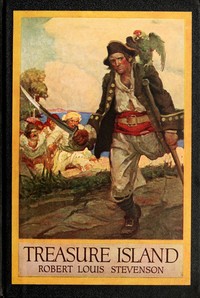
Treasure Island
Robert Louis Stevenson
Kidnapped
Robert Louis Stevenson
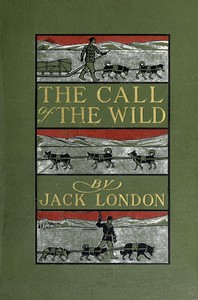
The Call of the Wild
Jack London
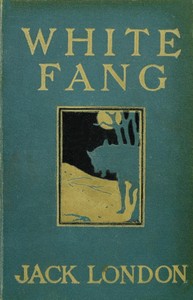
White Fang
Jack London
The Sea-Wolf
Jack London
The Count of Monte Cristo
Alexandre Dumas
The Three Musketeers
Folio
The Three Musketeers
Alexandre Dumas
Robinson Crusoe
Folio
Robinson Crusoe
Daniel Defoe