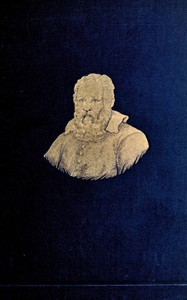
Pioneers of Science
free to read
length
111,601 words
a few pages a day
~8 min
finished in
59 days
full read
7h 45m
At Folio's default of ten pages a day, you finish Pioneers of Science in about 59 days — roughly 8 minutes of reading each morning.
The opening
the first pages of Pioneers of Science, free
The punctuation and spelling from the original text have been faithfully preserved. Only obvious typographical errors have been corrected.
There are several mathematical formulas within the text. They are represented as follows: Superscripts: x^3 Subscripts: x_3 Square Root: [square root] Greek Letters: [pi], [theta].
Greek star names are represented as [alpha], [gamma], for example.
PIONEERS OF SCIENCE
[Illustration]
[Illustration: NEWTON
From the picture by Kneller, 1689, now at Cambridge]
PIONEERS OF SCIENCE
BY OLIVER LODGE, F.R.S.
PROFESSOR OF PHYSICS IN VICTORIA UNIVERSITY COLLEGE, LIVERPOOL
WITH PORTRAITS AND OTHER ILLUSTRATIONS
London MACMILLAN AND CO. AND NEW YORK 1893
RICHARD CLAY AND SONS, LIMITED, LONDON AND BUNGAY.
PREFACE
This book takes its origin in a course of lectures on the history and progress of Astronomy arranged for me in the year 1887 by three of my colleagues (A.C.B., J.M., G.H.R.), one of whom gave the course its name.
The lectures having been found interesting, it was natural to write them out in full and publish.
If I may claim for them any merit, I should say it consists in their simple statement and explanation of scientific facts and laws. The biographical details are compiled from all readily available sources, there is no novelty or originality about them; though it is hoped that there may be some vividness. I have simply tried to present a living figure of each Pioneer in turn, and to trace his influence on the progress of thought.
I am indebted to many biographers and writers, among others to Mr. E.J.C. Morton, whose excellent set of lives published by the S.P.C.K. saved me much trouble in the early part of the course.
As we approach recent times the subject grows more complex, and the men more nearly contemporaries; hence the biographical aspect diminishes and the scientific treatment becomes fuller, but in no case has it been allowed to become technical and generally unreadable.
To the friends (C.C.C., F.W.H.M., E.F.R.) who with great kindness have revised the proofs, and have indicated places where the facts could be made more readily intelligible by a clearer statement, I express my genuine gratitude.
UNIVERSITY COLLEGE, LIVERPOOL, November, 1892.
CONTENTS
PART I
LECTURE I
PAGE
COPERNICUS AND THE MOTION OF THE EARTH 2
LECTURE II
TYCHO BRAHÉ AND THE EARLIEST OBSERVATORY 32
LECTURE III
KEPLER AND THE LAWS OF PLANETARY MOTION 56
LECTURE IV
GALILEO AND THE INVENTION OF THE TELESCOPE 80
LECTURE V
GALILEO AND THE INQUISITION 108
LECTURE VI
DESCARTES AND HIS THEORY OF VORTICES 136
LECTURE VII
SIR ISAAC NEWTON 159
LECTURE VIII
NEWTON AND THE LAW OF GRAVITATION 180
LECTURE IX
NEWTON'S "PRINCIPIA" 203
PART II
LECTURE X
ROEMER AND BRADLEY AND THE VELOCITY OF LIGHT 232
LECTURE XI
LAGRANGE AND LAPLACE--THE STABILITY OF THE SOLAR SYSTEM, AND THE NEBULAR HYPOTHESIS 254
LECTURE XII
HERSCHEL AND THE MOTION OF THE FIXED STARS 273
LECTURE XIII
THE DISCOVERY OF THE ASTEROIDS 294
LECTURE XIV
BESSEL--THE DISTANCES OF THE STARS, AND THE DISCOVERY OF STELLAR PLANETS 304
LECTURE XV
THE DISCOVERY OF NEPTUNE 317
LECTURE XVI
COMETS AND METEORS 331
LECTURE XVII
THE TIDES 353
LECTURE XVIII
THE TIDES, AND PLANETARY EVOLUTION 379
ILLUSTRATIONS
FIG. PAGE
1. ARCHIMEDES 8
2. LEONARDO DA VINCI 10
3. COPERNICUS 12
4. HOMERIC COSMOGONY 15
5. EGYPTIAN SYMBOL OF THE UNIVERSE 16
6. HINDOO EARTH 17
Keep going from exactly here — Folio remembers your place and serves the next portion tomorrow.
continue reading Pioneers of ScienceAbout this free edition
Pioneers of Science by Oliver Lodge (1851-1940) is free to read in full. Folio serves it in daily portions you can actually finish, tracks your streak and reading position across devices, and reads every page aloud with a built-in narrator. The text comes from Project Gutenberg.
More like Pioneers of Science
Raymond; or, Life and Death With examples of the evidence for survival of memory and affection after death.
Folio
Raymond; or, Life and Death With examples of the evidence for survival of memory and affection after death.
Oliver Lodge
The History of the Peloponnesian War
Folio
The History of the Peloponnesian War
Thucydides
The History of Herodotus
Folio
The History of Herodotus
Herodotus
The Gallic Wars
Folio
The Gallic Wars
Julius Caesar
Anabasis
Folio
Anabasis
Xenophon
The Lives of the Twelve Caesars
Folio
The Lives of the Twelve Caesars
Suetonius
Germania
Folio
Germania
Tacitus
The History of the Decline and Fall of the Roman Empire
Edward Gibbon