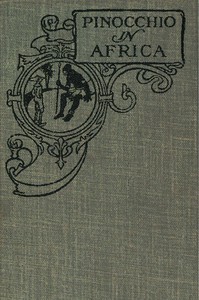
length
24,516 words
a few pages a day
~8 min
finished in
13 days
full read
1h 42m
At Folio's default of ten pages a day, you finish Pinocchio in Africa in about 13 days — roughly 8 minutes of reading each morning.
The opening
the first pages of Pinocchio in Africa, free
Collodis Pinocchio tells the story of a wooden marionette and of his efforts to become a real boy. Although he was kindly treated by the old woodcutter, Geppetto, who had fashioned him out of a piece of kindling wood, he was continually getting into trouble and disgrace. Even Fatina, the Fairy with the Blue Hair, could not at once change an idle, selfish marionette into a studious and reliable boy. His adventures, including his brief transformation into a donkey, give the author an opportunity to teach a needed and wholesome lesson without disagreeable moralizing.
Pinocchio immediately leaped into favor as the hero of Italian juvenile romance. The wooden marionette became a popular subject for the artists pencil and the storytellers invention. Brought across the seas, he was welcomed by American children and now appears in a new volume which sets forth his travels in Africa. The lessons underlying his fantastic experiences are clear to the youngest readers but are never allowed to become obtrusive. The amusing illustrations of the original are fully equaled in the present edition, while the whimsical nonsense which delights Italian children has been reproduced as closely as a translation permits.
CHAPTER I WHY PINOCCHIO DID NOT GO TO SCHOOL
One morning Pinocchio slipped out of bed before daybreak. He got up with a great desire to study, a feeling, it must be confessed, which did not often take hold of him. He dipped his wooden head into the cool, refreshing water, puffed very hard, dried himself, jumped up and down to stretch his legs, and in a few moments was seated at his small worktable.
There was his home work for the day,twelve sums, four pages of penmanship, and the fable of The Dog and the Rabbit to learn by heart. He began with the fable, reciting it in a loud voice, like the hero in the play: A dog was roaming about the fields, when from behind a little hill jumped a rabbit, which had been nibbling the tender grass.
Roaming, nibbling.The teacher says this is beautiful language. Maybe it is; I have nothing to say about that. Well, one more.
A dog was roaming about the fieldswhen he sawrun outa rabbit whichwhich I dont know it; lets begin again. A dog was running about eating, eating But eating what? Surely he did not eat grass!
This fable is very hard; I cannot learn it. Well, I never did have much luck with dogs and rabbits! Let me try the sums. Eight and seven, seventeen; and three, nineteen; and six, twenty-three, put down two and carry three. Nine and three, eleven; and four, fourteen; put down the whole numberone, four; total, four hundred thirteen.
Ah! good! very good! I do not wish to boast, but I have always had a great liking for arithmetic. Now to prove the answer: eight and seven, sixteen; and three, twenty-one; and six, twenty-four; put down four why! its wrong! Eight and seven, fourteen; and three, nineteen; and sixwrong again!
I know what the trouble is; the wind is not in the right quarter to-day for sums. Perhaps it would be better to take a walk in the open.
No sooner said than done. Pinocchio went out into the street and filled his lungs with the fresh morning air.
Ah! here, at least, one can breathe. It is a pity that I am beginning to feel hungry! Strange how things go wrong sometimes! Take the lessons he went on.
Listen! A noise of creaking wheels, of bells ringing, the voices of people, the cries of animals! Pinocchio stopped short. What could it all mean?
Keep going from exactly here — Folio remembers your place and serves the next portion tomorrow.
continue reading Pinocchio in AfricaAbout this free edition
Pinocchio in Africa by Eugenio Cherubini is free to read in full. Folio serves it in daily portions you can actually finish, tracks your streak and reading position across devices, and reads every page aloud with a built-in narrator. The text comes from Project Gutenberg.
More like Pinocchio in Africa
Treasure Island
Robert Louis Stevenson
Kidnapped
Robert Louis Stevenson
The Call of the Wild
Jack London
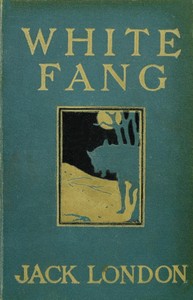
White Fang
Jack London
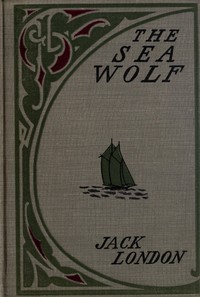
The Sea-Wolf
Jack London
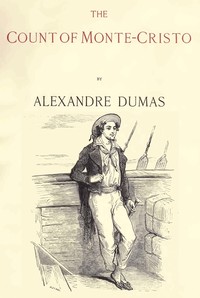
The Count of Monte Cristo
Alexandre Dumas
The Three Musketeers
Folio
The Three Musketeers
Alexandre Dumas
Robinson Crusoe
Folio
Robinson Crusoe
Daniel Defoe