Paul the Courageous
Folio
length
21,143 words
a few pages a day
~8 min
finished in
12 days
full read
1h 28m
At Folio's default of ten pages a day, you finish Paul the Courageous in about 12 days — roughly 8 minutes of reading each morning.
The opening
the first pages of Paul the Courageous, free
Slewbury was a very fine town in its way; a little quiet and sleepy perhaps, as country towns often are, but it was large and handsome, and beautifully situated on the side of a steep hill. It had a grand market-place, a large town-hall where concerts were often given, and some well-kept public gardens, of all of which the Slewbury people were very proud, and justly so.
But then, as Paul Anketell and his friends often remarked, "What was there for boys?" There was absolutely nothing. No river, no sea, no mountains, or anything. All there was for them in the way of amusement was to go for walks and pick flowers, and wander about a field or two. Certainly one could climb a tree, and whittle sticks or make whistles, but one could not be doing that all the time. No, Paul had long since come to the conclusion that Slewbury was a miserable place in which to live; he hated it; and he could not understand why his father had ever settled there.
When he was a man, he declared over and over again to Stella and Michael, he would have a house close to a river, a mountain, and the sea, then he would have boats and rods, and a sailing boat, so that he would never be hard up for something to do. To a great extent Paul was right; Slewbury was a dull, sleepy and prim old town, but boys ought to be able to make amusements for themselves anywhere; they should have resources within themselves. Paul had loads of toys, and books, and tools, and a nice large garden to play in when the weather was fine. But he was a restless boy, full of longing for adventure and travel, and new sights, and sounds, and experiences, and the happiest time of the whole year to him was the summer holiday when all the family went away to the sea, or to some beautiful spot amongst the mountains.
True, the sea had always been the English sea--at least it had come to them at an English seaside town--and the mountains had been either Welsh or Scotch mountains, but the three little Anketells were true British children and were quite sure there could be no more beautiful mountains or coasts anywhere in the world.
As soon as the Christmas holidays were over and school work had set in, the children began to think of where they should go when the summer holidays came, and what they would do, and many and many a discussion they had as to their favourite spots, and whether they should go to an old favourite, or try a new one. Plans were made, toys collected, and boxes packed long before the happy day came, but it all added to the pleasure and excitement and importance of the long-looked-forward-to event.
But dearly as they loved their own country, they had no objection to going further afield, and when one day Mr. Anketell suggested that that year they should spend their holiday in Norway, their excitement knew no bounds. All previous travels and expeditions seemed to sink into insignificance beside this. To be actually going to live, and sleep, and eat, on board a real steamer, and to cross the sea to another land seemed to them a splendid outlook. Every book and picture that could tell them anything about Norway was eagerly hunted up, all the Norwegian fairy tales were read again and again, until Stella and Michael at last felt quite sure that they would meet fairies, and dwarfs, and Vikings wherever they went. They had no idea what a Viking was like, but they thought it must be something between a giant and a knight, with all the good qualities of both.
There never could have been a greater inducement to learn geography and history than this long-talked-of trip. All through the term Stella and Mike studied the map of Norway until they very nearly knew it by heart, and when Paul came home for the Easter holidays they met him brimful of information on the subject. But Paul was not going to allow himself to be taught anything by 'the children,' as he called them, and he soon had them sufficiently awed by his superior knowledge and loftier understanding. He cared nothing for fairies, and quickly dashed all Stella's hopes of seeing any, but he could teach them a great deal about the sports, and the shooting, and the other attractions to be found there--at least, he thought he could--but his father and mother had often to smile to themselves as they listened to the marvellous stories he told the children, and sometimes they had to check him to set him right on various points, a thing he objected to very much indeed. For Paul had read so much, heard so much, and thought so much of the marvels of that northern land, that nothing was too impossible and improbable for him to believe, and one night, just as he was going to bed, a new idea came to him, an idea so splendid that it prevented for a long time his going to sleep, and even after he was asleep he dreamed the whole night through that he was having a terrific fight with a huge bear, and when he awoke in the morning and thought that his dream might very likely prove a reality, he hardly knew how to contain himself until he had made sure.
Keep going from exactly here — Folio remembers your place and serves the next portion tomorrow.
continue reading Paul the CourageousAbout this free edition
Paul the Courageous by Mabel Quiller-Couch (1865-1924) is free to read in full. Folio serves it in daily portions you can actually finish, tracks your streak and reading position across devices, and reads every page aloud with a built-in narrator. The text comes from Project Gutenberg.
More like Paul the Courageous
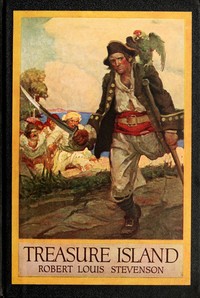
Treasure Island
Robert Louis Stevenson
Kidnapped
Robert Louis Stevenson
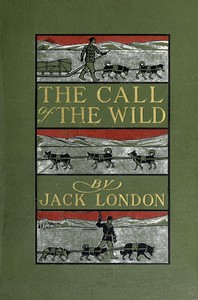
The Call of the Wild
Jack London
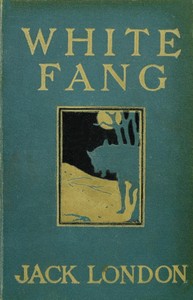
White Fang
Jack London
The Sea-Wolf
Jack London
The Count of Monte Cristo
Alexandre Dumas
The Three Musketeers
Folio
The Three Musketeers
Alexandre Dumas
Robinson Crusoe
Folio
Robinson Crusoe
Daniel Defoe