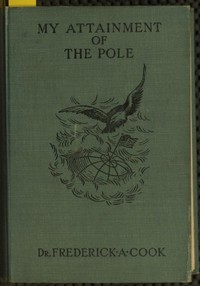
length
184,039 words
a few pages a day
~8 min
finished in
97 days
full read
12h 47m
At Folio's default of ten pages a day, you finish My Attainment of the Pole in about 97 days — roughly 8 minutes of reading each morning.
The opening
the first pages of My Attainment of the Pole, free
To the Indian who invented pemmican and snowshoes; To the Eskimo who gave the art of sled traveling; To this twin family of wild folk who have no flag Goes the first credit. To the forgotten trail makers whose book of experience has been a guide; To the fallen victors whose bleached bones mark steps in the ascent of the ladder of latitudes; To these, the pathfinders--past, present and future--I inscribe the first page. In the ultimate success there is glory enough To go to the graves of the dead and to the heads of the living.
THE PRESENT STATUS OF THE POLAR CONTROVERSY
DR. COOK IS VINDICATED. HIS DISCOVERY OF THE NORTH POLE IS ENDORSED BY THE EXPLORERS OF ALL THE WORLD.
In placing Dr. Cook on the Chautauqua platform as a lecturer, we have been compelled to study the statements issued for and against the rival polar claims with special reference to the facts bearing upon the present status of the Polar Controversy.
Though the question has been argued during four years, we find that it is almost the unanimous opinion of arctic explorers today, that Dr. Cook reached the North Pole on April 21, 1909.
With officer Peary's first announcement he chose to force a press campaign to deny Dr. Cook's success and to proclaim himself as the sole Polar Victor. Peary aimed to be retired as a Rear-Admiral on a pension of $6,000 per year. This ambition was granted; but the American Congress rejected his claim for priority by eliminating from the pension bill the words "Discovery of the Pole." The European geographical societies, forced under diplomatic pressure to honor Peary, have also refused him the title of "Discoverer." By a final verdict of the American government and of the highest European authorities, Peary is therefore denied the assumption of being the discoverer of the Pole, though his claim as a re-discoverer is allowed. The evasive inscriptions on the Peary medals prove this statement.
Following the acute excitement of the first announcement, it seemed to be desirable to bring the question to a focus by submitting to some authoritative body for decision. Such an institution, however, did not exist. Previously, explorers had been rated by the slow process of historic digestion and assimilation of the facts offered, but it was thought that an academic examination would meet the demands. Officer Peary first submitted his case to a commission appointed by the National Geographical Society of Washington, D. C. This jury promptly said that in their "opinion" Peary reached the Pole on April 6, 1909; but a year later in congress the same men unwillingly admitted that in the Peary proofs there was no positive proof.
Dr. Cook's data was sent to a commission appointed by the University of Copenhagen. The Danes reported that the material presented was incomplete and did not constitute positive proof. This verdict, however, did not carry the interpretation that the Pole had not been reached. The Danes have never said, as they have been quoted by the press, that Dr. Cook did not reach the Pole; quite to the contrary, the University of Copenhagen conferred the degree of Ph. D. and the Royal Danish Geographical Society gave a gold medal, both in recognition of the merits of the Polar effort.
This early examination was based mostly upon the nautical calculations for position, and both verdicts when analyzed gave the version that in such observations there was no positive proof. The Washington jury ventured an opinion. The Danes refused to give an opinion, but showed their belief in Dr. Cook's success by conferring honorary degrees.
It is the unfair interpretation of the respective verdicts by the newspapers which has precipitated the turbulent air of distrust which previously rested over the entire Polar achievement. All this, however, has now been cleared by the final word of fifty of the foremost Polar explorers and scientific experts.
Keep going from exactly here — Folio remembers your place and serves the next portion tomorrow.
continue reading My Attainment of the PoleAbout this free edition
My Attainment of the Pole by Frederick Albert Cook (1865-1940) is free to read in full. Folio serves it in daily portions you can actually finish, tracks your streak and reading position across devices, and reads every page aloud with a built-in narrator. The text comes from Project Gutenberg.
More like My Attainment of the Pole
Treasure Island
Robert Louis Stevenson
Kidnapped
Robert Louis Stevenson
The Call of the Wild
Jack London
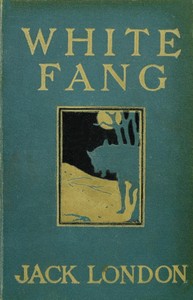
White Fang
Jack London
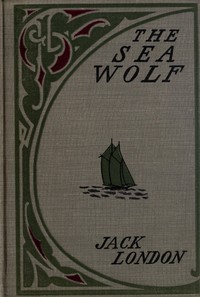
The Sea-Wolf
Jack London
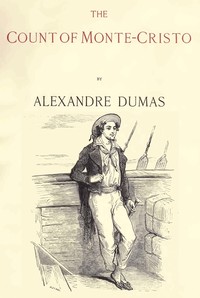
The Count of Monte Cristo
Alexandre Dumas
The Three Musketeers
Folio
The Three Musketeers
Alexandre Dumas
Robinson Crusoe
Folio
Robinson Crusoe
Daniel Defoe