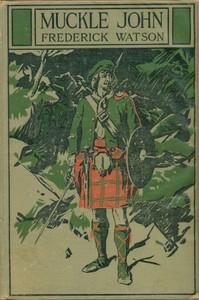
length
68,405 words
a few pages a day
~8 min
finished in
37 days
full read
4h 45m
At Folio's default of ten pages a day, you finish Muckle John in about 37 days — roughly 8 minutes of reading each morning.
The opening
the first pages of Muckle John, free
All the world knows the tale of the Rising of 1745. It is a story that each generation cherishes with undiminished affection. Some have called it the last burst of chivalry in modern history, and doubtless for that reason when other more vital aspects are forgotten, the campaign of Prince Charlie will sustain its fascination and its glamour.
In an age peculiarly commonplace and sordid, it carried the spirit of romance well-nigh to the throne itself; in a period almost destitute of loyalty and patriotism it glorified the reckless gallantry and self-sacrifice of devotion.
That Charles Edward Stuart could land with only seven followers and carry all before him into the very heart of England is wonderful enough. But that in the days of his misfortune and flight no one was found to claim the reward for his life is finer still. That poor, unarmed, uneducated men were ready to die in hundreds is a testimony not easily forgotten.
Of those great days when the Jacobite army marched south much has been written, and the facts are familiar to all. But of those grey days following Culloden Moor less is known, and in the last fluttering of the Jacobite Cause there is much that must necessarily baffle and perplex the casual reader.
The Highlands were to a large extent divided in opinion. There were Jacobite clans, and Hanoverian clans, while between the two were men like Major Fraser of our story, anxious to keep clear of both. There were devoted chiefs like Lochiel, scheming chiefs like Lovat, chiefs who wavered and trifled like Macleod, or were downright traitors like Glengarry and Barisdale, and there were the tragi-comedians like poor Murray of Broughton, who was more hated than he deserved.
Finally there were, like poppies in the grain, the adventurers, men with nothing to lose and something to gain (such as Muckle John himself), serving no chief, nor clan, marauders more Jacobite than Hanoverian, like birds of prey hovering for the kill. It is of this side of the '45 that I have principally treated.
Clan jealousies again must not be forgotten, and the universal hatred of the Campbells played, as always, its miserable part. Those who condemn Cumberland and his troops must not forget that in the persecution after Culloden the hunting down of the fugitives was ardently pursued by the Highland militia and the men from Argyllshire.
The story of a campaign is but a lightning flash in the history of a nation. Long after, the thunder rolls into silence. The Rebellion of the '45 was only the fuse that destroyed at a blow the clan system of centuries. From Culloden onwards the transit of the old into the new was swift and tragic in its coming.
FREDERICK WATSON
MUCKLE JOHN
CHAPTER I
HOW PRINCE CHARLIE CAME TO INVERNESS
It is often your stupidest boy who is most likeable in a helpless sort of way. Not that Rob Fraser was a nincompoop, but there was a confiding innocency in his shadowless blue eyes that only a rascal could have turned to his own advantage.
Rob was not accounted promising at school, and during the study of such subjects as Latin and Greek his mind appeared to be focussed upon the next county, nor was he regarded as reliable at games, for his movements were in tune with his thoughts, which were more often on the trout in the pool than on the ball in his hand.
It was this abstraction that divided him from the other boys of his age, not because he was unpopular, not because he lacked pluck, but just because he was silent for days at a time, and made no confidences. It was a state of mind that drove his aunt, good woman, to a kind of arctic fury. For years she strove to beat it out of him, but it served no purpose except to send him upon the hills for days together.
Keep going from exactly here — Folio remembers your place and serves the next portion tomorrow.
continue reading Muckle JohnAbout this free edition
Muckle John by Frederick Watson (1885-1935) is free to read in full. Folio serves it in daily portions you can actually finish, tracks your streak and reading position across devices, and reads every page aloud with a built-in narrator. The text comes from Project Gutenberg.
More like Muckle John
Treasure Island
Robert Louis Stevenson
Kidnapped
Robert Louis Stevenson
The Call of the Wild
Jack London
White Fang
Jack London
The Sea-Wolf
Jack London
The Count of Monte Cristo
Alexandre Dumas
The Three Musketeers
Folio
The Three Musketeers
Alexandre Dumas
Robinson Crusoe
Folio
Robinson Crusoe
Daniel Defoe