length
158,834 words
a few pages a day
~8 min
finished in
84 days
full read
11h 2m
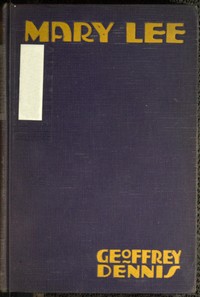
At Folio's default of ten pages a day, you finish Mary Lee in about 84 days — roughly 8 minutes of reading each morning.
The opening
the first pages of Mary Lee, free
It seems to have been a great year in the history books. Fires of revolution sweeping over Europe; half the capitals aflame. From Prague to Palermo, from Paris to Pesth, the peoples rising against their rulers. Wars and rumours of wars; civil strife everywhere. Radicals in Prussia, revolutionaries in Italy, rebels in Austria, republicans in France. Even in old England we had our chartists.
All such troubles failed to touch Tawborough. What did she know of it all, or care if she knew? She was a good old peaceful English country town, with her own day's work to do. The great world might go its way for all she cared--a wild and noisy way it seemed. She would go hers.
Not that Tawborough had always been without a say in England's affairs. She had indeed a long and honourable history. At the dawn of time there was a settlement in the marshes where the little stream of Yeo empties itself into the Taw: a primitive village of wattled huts, known to the Britons as Artavia. The Phoenicians record the name for us, and describe the place as a great mart for their commerce. Here the tin of the western mines was bartered against the rich products of the East: camphire and calamus, spikenard and saffron, fine linen and purple silk. This was the origin of Tawborough market, which is the first in Devonshire to this day. Artavia seems to have been an important seat of the old British worship. The see of the Arch-Druid of the West was near at hand in the Valley of the Rocks at Lynton; from the sacred oak-groves above the Taw on a clear day the Druids could see the fires of the great altar on the Promontory of Hercules--Hartland Point they call it now.
Religion, indeed, in one way or another, seems to have coloured most of the big events of the town's history. The next great fight was between pagans and Christian men.
It was the foeman from the North, threatening the men of Wessex with desolation. One day the terrified townsfolk heard clanging in their ears the great ivory horns of the Northmen, and beheld the blood-red banners sailing up the Taw. One of the standards had upon it a Raven. Then the Englishmen knew their foe for the wild Hubba, King of the Vikings; since the Raven floated always at his mast. The banner was of crimson. It had been worked by the King's three sisters in a noontide and blessed by a strange Icelandic wizard, who endowed the Raven sewn upon it with this magical gift: that she clapped her wings to announce success to the Viking arms, and drooped them to presage failure. Never till this day had the black wings drooped; they drooped this winter's morning. So the English took heart. Odin, Earl of Devon, sallied forth from Kenwith Castle, defeated and slew King Hubba, and captured the magic banner. Then came peace for a while. King Alfred, full of piety, came to Tawborough and set up the great Mound by the Castle. King Athelstan gave the town a charter, and housed himself in a magnificent palace at Umberleigh hard by.
In the wake of the Normans came the religious orders. The Cluniacs built a monastery in the town, the Benedictines another at Pilton just outside. With the monks came light and learning, better lives and milder ways. Tawborough became rich and prosperous. Her trade excelled that of Bristol. Her fair and market were famous "tyme out of mynde." For many years the Taw--that "greate, hugy, mighty, perylous and dredful water"--became a highway for the ships of all nations.
Keep going from exactly here — Folio remembers your place and serves the next portion tomorrow.
continue reading Mary LeeAbout this free edition
Mary Lee by Geoffrey Dennis (1892-1963) is free to read in full. Folio serves it in daily portions you can actually finish, tracks your streak and reading position across devices, and reads every page aloud with a built-in narrator. The text comes from Project Gutenberg.
More like Mary Lee
Pride and Prejudice
Jane Austen
Sense and Sensibility
Jane Austen
Emma
Folio
Emma
Jane Austen
Persuasion
Folio
Persuasion
Jane Austen
Mansfield Park
Folio
Mansfield Park
Jane Austen
Jane Eyre
Charlotte Brontë
The Tenant of Wildfell Hall
Folio
The Tenant of Wildfell Hall
Anne Brontë
Agnes Grey
Folio
Agnes Grey
Anne Brontë