Mark Twain's Letters
Folio
Mark Twain's Letters
first published 1917 · free to read
length
42,688 words
a few pages a day
~8 min
finished in
23 days
full read
2h 58m
At Folio's default of ten pages a day, you finish Mark Twain's Letters in about 23 days — roughly 8 minutes of reading each morning.
The opening
the first pages of Mark Twain's Letters, free
Nowhere is the human being more truly revealed than in his letters. Not in literary letters--prepared with care, and the thought of possible publication--but in those letters wrought out of the press of circumstances, and with no idea of print in mind. A collection of such documents, written by one whose life has become of interest to mankind at large, has a value quite aside from literature, in that it reflects in some degree at least the soul of the writer.
The letters of Mark Twain are peculiarly of the revealing sort. He was a man of few restraints and of no affectations. In his correspondence, as in his talk, he spoke what was in his mind, untrammeled by literary conventions.
Necessarily such a collection does not constitute a detailed life story, but is supplementary to it. An extended biography of Mark Twain has already been published. His letters are here gathered for those who wish to pursue the subject somewhat more exhaustively from the strictly personal side. Selections from this correspondence were used in the biography mentioned. Most of these are here reprinted in the belief that an owner of the “Letters” will wish the collection to be reasonably complete.
[Etext Editor's Note: A. B. Paine considers this compendium a supplement to his “Mark Twain, A Biography”, I have arranged the volumes of the “Letters” to correspond as closely as possible with the dates of the Project Gutenberg six volumes of the “Biography”. D.W.]
MARK TWAIN--A BIOGRAPHICAL SUMMARY
SAMUEL LANGHORNE CLEMENS, for nearly half a century known and celebrated as “Mark Twain,” was born in Florida, Missouri, on November 30, 1835. He was one of the foremost American philosophers of his day; he was the world's most famous humorist of any day. During the later years of his life he ranked not only as America's chief man of letters, but likewise as her best known and best loved citizen.
The beginnings of that life were sufficiently unpromising. The family was a good one, of old Virginia and Kentucky stock, but its circumstances were reduced, its environment meager and disheartening. The father, John Marshall Clemens--a lawyer by profession, a merchant by vocation--had brought his household to Florida from Jamestown, Tennessee, somewhat after the manner of judge Hawkins as pictured in The Gilded Age. Florida was a small town then, a mere village of twenty-one houses located on Salt River, but judge Clemens, as he was usually called, optimistic and speculative in his temperament, believed in its future. Salt River would be made navigable; Florida would become a metropolis. He established a small business there, and located his family in the humble frame cottage where, five months later, was born a baby boy to whom they gave the name of Samuel--a family name--and added Langhorne, after an old Virginia friend of his father.
The child was puny, and did not make a very sturdy fight for life. Still he weathered along, season after season, and survived two stronger children, Margaret and Benjamin. By 1839 Judge Clemens had lost faith in Florida. He removed his family to Hannibal, and in this Mississippi River town the little lad whom the world was to know as Mark Twain spent his early life. In Tom Sawyer we have a picture of the Hannibal of those days and the atmosphere of his boyhood there.
His schooling was brief and of a desultory kind. It ended one day in 1847, when his father died and it became necessary that each one should help somewhat in the domestic crisis. His brother Orion, ten years his senior, was already a printer by trade. Pamela, his sister; also considerably older, had acquired music, and now took a few pupils. The little boy Sam, at twelve, was apprenticed to a printer named Ament. His wages consisted of his board and clothes--“more board than clothes,” as he once remarked to the writer.
He remained with Ament until his brother Orion bought out a small paper in Hannibal in 1850. The paper, in time, was moved into a part of the Clemens home, and the two brothers ran it, the younger setting most of the type. A still younger brother, Henry, entered the office as an apprentice. The Hannibal journal was no great paper from the beginning, and it did not improve with time. Still, it managed to survive--country papers nearly always manage to survive--year after year, bringing in some sort of return. It was on this paper that young Sam Clemens began his writings--burlesque, as a rule, of local characters and conditions--usually published in his brother's absence; generally resulting in trouble on his return. Yet they made the paper sell, and if Orion had but realized his brother's talent he might have turned it into capital even then.
Keep going from exactly here — Folio remembers your place and serves the next portion tomorrow.
continue reading Mark Twain's LettersAbout this free edition
Mark Twain's Letters by Mark Twain (1835-1910) is free to read in full. Folio serves it in daily portions you can actually finish, tracks your streak and reading position across devices, and reads every page aloud with a built-in narrator. The text comes from Project Gutenberg.
More like Mark Twain's Letters
Tom Sawyer, Detective
Folio
Tom Sawyer, Detective
Mark Twain
A Double Barrelled Detective Story
Folio
A Double Barrelled Detective Story
Mark Twain
The Stolen White Elephant
Folio
The Stolen White Elephant
Mark Twain
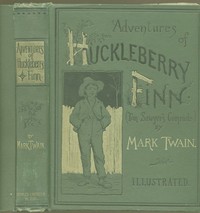
Adventures of Huckleberry Finn
Mark Twain
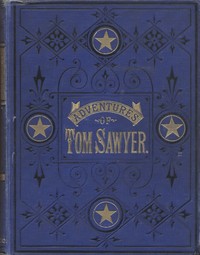
The Adventures of Tom Sawyer
Mark Twain
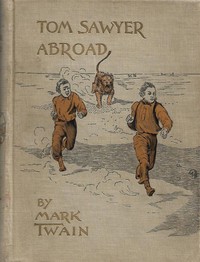
Tom Sawyer Abroad
Mark Twain
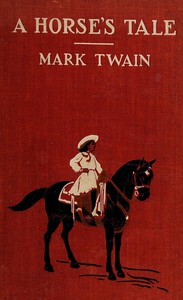
A Horse's Tale
Mark Twain
A Connecticut Yankee in King Arthur's Court
Mark Twain